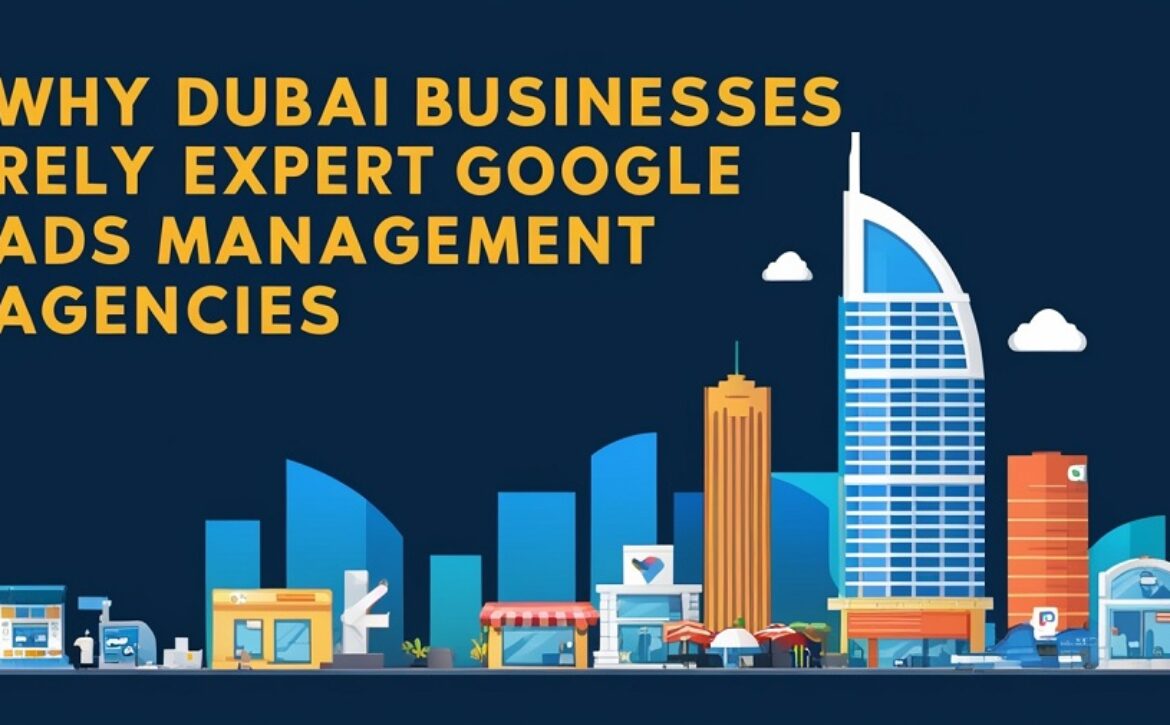
Why Dubai Businesses Rely on Expert Google Ads Management Agencies

Dubai’s skyline isn’t the solely issue accomplishing new heights—its corporations are too, fueled by a relentless force to seize interest in a bustling world market. With Google dealing with over 8.5 billion searches daily, it’s no shock that corporations in this shiny metropolis are turning to an specialist AdWords company Dubai to stand out.

These businesses don’t simply run ads; they craft campaigns that flip clicks into customers, making sure each and every dirham spent supplies actual value. So, why do Dubai corporations have confidence in these specialists to navigate the complicated world of Google Ads?

Let’s dive into the reasons, exploring how these companies power growth, increase visibility, and make a measurable effect in one of the world’s most aggressive markets.


The Role of Google Ads in Dubai’s Thriving Economy

—————————

Dubai is a town of ambition, the place industries like real estate, tourism, e-commerce, and finance compete fiercely for attention. Google Ads affords a direct route to connect with potential customers—whether they’re locals looking for a new restaurant or vacationers searching for luxurious experiences. But going for walks, wonderful campaign,s isn’t as easy as choosing a few key phrases and hoping for the best.

It requires strategy, precision, and a deep perception of Dubai’s special market dynamics, inclusive of know-how in Google Ads suspension healing to preserve marketing campaign continuity.

Google’s dominance as a search engine potential organisations can faucet into a big audience, from Dubai residents to world visitors.

  • With a multicultural populace of locals, expatriates, and tourists, advertisements have to resonate throughout cultural and linguistic lines.
  • Competitive sectors like hospitality and retail demand campaigns that supply consequences except losing budgets on beside the point.
  • Partnering with a specialist Google Ads corporation in Dubai ensures groups maximise their ad spend, reaching the proper human beings at the right time with tailor-made messaging.

What Makes Expert Google Ads Agencies Essential?

—————————

In a metropolis as fast-paced as Dubai, corporations can’t have the funds for to go away their advertising and marketing to chance. Expert Google Ads businesses carry a special combo of technical expertise, innovative flair, and neighbourhood market perception that units them apart from in-house groups or DIY efforts. Here’s why they’re indispensable.


Crafting Campaigns with Precision

Agencies don’t simply launch ads—they construct techniques that align with a business’s goals, whether or not it’s using sales, producing leads, or boosting manufacturer awareness. They begin by examining the target audience, diving into their behaviours, preferences, and search habits. Using superior tools, they become aware of high-value key phrases that make sure advertisements show up for applicable searches—a method specifically advantageous for organisations leveraging a Google Ads account for lease to scale rapidly and efficiently.

For example, a Dubai real property company would possibly goal phrases like “luxury villas for sale in Dubai” to entice serious buyers, whilst a boutique resort would possibly centre of attention on “best resorts in Dubai Marina” to seize traveller interest.

  • Agencies use records to phase audiences via location, age, interests, and even system type, making sure commercials reach the most applicable prospects.
  • They diagram campaigns that stability vast attain with area of interest targeting, maximising each visibility and conversions.
  • Budgets are allotted strategically, prioritizing high-performing commercials to supply the exceptional return on investment.

Optimizing for Maximum Impact

Running a Google Ads marketing campaign isn’t a one-and-done task—it’s an ongoing procedure of refinement. Agencies reveal overall performance metrics like click-through rates, conversion rates, and cost-per-click, making changes to maintain campaigns on track.

They run A/B exams on advert copy, visuals, and touchdown pages to find out what resonates most with audiences. If an advert isn’t performing, they pivot quickly, tweaking bids or refining key phrases to continue to be in advance of competitors, whilst additionally making sure Google Ads account suspension recuperation to keep away from disruptions.

  • A/B Testing: Testing a couple of advert editions helps perceive the most high quality messaging and design.
  • Performance Tracking: Tools like Google Analytics furnish real-time insights into marketing campaign success, from clicks to conversions.
  • Competitor Analysis: Agencies preserve an eye on competitors’ strategies, making sure consumers remain one step ahead.

Mastering Dubai’s Unique Market

Dubai’s market is in contrast to any other, with its mixture of cultural range and seasonal trends. Agencies recognize the nuances of concentrated on Arabic-speaking locals, expatriates from round the world, and vacationers touring for occasions like the Dubai Shopping Festival or Expo. They craft commercials that resonate culturally, the usage of splendid language and imagery.

For instance, throughout Ramadan, they would possibly create campaigns that spotlight family-friendly choices or unique promotions, tapping into the season’s spirit of generosity, a method that works nicely for these who lease Google Ads accounts.

  • Cultural Relevance: Ads are tailor-made to join with Dubai’s various audience, from normal values to modern-day lifestyles.
  • Seasonal Timing: Campaigns align with key activities like Eid, Black Friday, or industry-specific change shows.
  • Local Insights: Agencies leverage understanding of Dubai’s neighborhoods, from Deira’s bustling markets to Downtown’s luxurious hubs.

The Tangible Benefits of Hiring a Google Ads Agency

—————————

Partnering with an expert agency delivers measurable advantages that help businesses thrive in Dubai’s competitive market.

Here’s a breakdown of the key benefits:

Benefit How It Helps Dubai Businesses
Maximized ROI Optimised campaigns ensure higher returns by targeting high-intent customers efficiently
Time Efficiency Frees up business owners to focus on operations while experts manage complex ad strategies
Advanced Expertise Certified professionals bring deep knowledge of Google Ads, ensuring cutting-edge strategies
Scalable Solutions Campaigns grow with the business, from local startups to international brands
Competitive Edge Data-driven insights and competitor analysis keep businesses ahead in crowded markets.
  • Precision Targeting: Agencies use sophisticated tools to reach specific demographics, like high-net-worth individuals or budget-conscious shoppers.
  • Cost Savings: By eliminating wasted clicks and focusing on quality leads, agencies reduce overall ad spend.
  • Creative Excellence: Compelling ad copy and visuals drive higher engagement and conversions.

How Agencies Fuel Business Success in Dubai?

—————————

Expert Google Ads organizations do extra than manipulate campaigns—they force measurable growth. Here’s how they assist Dubai groups soar.


Skyrocketing Online Visibility

In a metropolis the place each enterprise is vying for attention, acting at the pinnacle of Google search outcomes is critical. A Google Ads business enterprise in Dubai ensures advertisements rank excessive for applicable searches, boosting company exposure.

For example, a Dubai-based e-commerce save promoting luxurious watches can dominate searches for “premium watches Dubai,” attracting serious buyers.

Driving Higher Conversions

Clicks by myself aren’t enough—conversions are the goal. Agencies optimize touchdown pages and advert reproduction to create seamless person experiences that inspire movements like purchases, sign-ups, or inquiries.

They make certain advertisements lead to fast-loading, mobile-friendly pages that align with consumer intent, turning hobby into income whilst addressing challenges like Google Ads suspension recovery.


Driving Higher Conversions

Whether a commercial enterprise is a startup in JLT or a international manufacturer in DIFC, businesses tailor campaigns to scale. They alter techniques as organizations expand, focused on new markets or launching new products.

For instance, a developing F&B chain may begin with nearby advertisements in Dubai and later scale to Abu Dhabi or global markets, leveraging selections to lease Google Ads debts for flexibility.


Key Takeaways

Partnering with a Google Ads employer in Dubai presents a strategic benefit with the aid of turning in surprisingly focused campaigns that resonate with the city’s numerous audience. These professionals keep groups time and cash via data-driven optimization and particular budgeting.

Their deep perception of Dubai’s special market ensures advertisements align with cultural and seasonal trends, maximizing relevance. By boosting visibility and conversions, businesses assist groups of all sizes attain sustainable boom in a aggressive landscape.


Conclusion

Dubai’s dynamic market needs greater than simply advertising—it requires precision, creativity, and know-how to make an impact. Expert Google Ads administration companies furnish the equipment and techniques organizations want to succeed, from crafting centered campaigns to optimising each click on for most ROI.

With their neighborhood insights and data-driven approach, these organizations assist Dubai companies navigate the complexities of on-line advertising, turning searches into income and aspirations into achievements.

For businesses searching to thrive in this world hub, trusting an specialist Google Ads employer in Dubai with information in Google Ads suspension recuperation is the key to unlocking Google Ads’ full potential..


Read More
Sanju July 28, 2025 0 Comments

Future of WooCommerce User Dashboards: AI-Personalization and Smart Navigation

When we talk about WooCommerce, the main focus is always on the product’s web pages, funnels for checkout, as well as payment methods. However, once a sale has been made, where do buyers go? They go to the section of the site where most store owners do not spend enough time contemplating their WooCommerce My Account Page. This is where customers who return look up their orders, download files, control address information, monitor points, and more.

With more stores shifting to providing returning customers with more options and more options for account management, the default page doesn’t suffice anymore. It’s basic. It’s effective, yes. But it doesn’t do much else. In the present, as AI devices are getting more prevalent and stores are learning about how customers use their dashboards, the future is beginning to appear different. We’re moving into a new era in which AI-based personalization and smart navigation will be standard and not an optional extra.

So let’s look at the future of shopping. It’s not just about the technology, however, but what it actually will mean for admins, users, and store owners who are trying to improve the shopping experience.


Why the Account Dashboard Matters More Than You Think

———————————–

The majority of people log on to their accounts to fulfill a purpose. It’s more than just browsing. They’re trying to discover something, fix the issue, or take up where they had left off. This moment of intent is powerful and important. If your dashboard gets in the way or gets in their way, it’s an opportunity lost.

The My Account page on WooCommerce usually ends up being an uninteresting list of hyperlinks. Orders, addresses, and account details. That’s it. It doesn’t tell anything about what users are interested in. It doesn’t offer suggestions or make things easier. In 2025, this kind of dashboard will not work anymore.

Customers expect smart interfaces. This isn’t because they’re spoilt and spoiled, but because it will save time. They’re looking to find out what’s important to them. If they’ve made a recent order, perhaps they’d like to follow the order. If you downloaded a file on the last day and would not like to comb through menus to locate the file again. This is where the concept of personalized navigation and personalization comes into play.


What AI-Personalization Can Do

Let’s make this process as simple as we possibly can. AI doesn’t mean that your dashboard is talking to users with robot voices or offering long-winded recommendations. It’s not an issue to be discussed.

AI personalization is the process of paying close attention to the habits and behaviors of the user. It then alters things the user is exposed to on account of the information it has gathered. If a user constantly clicks on the “Downloads” tab, maybe it will appear first the next time they sign in. If they made an order late last night, the dashboard could show that order at the top with no click needed.

Plugins that let you personalize the WooCommerce My Account Page are already beginning to accommodate this. Some let you display or hide tabs according to the user’s role. Some let you display banners that show only specific pages or actions. In addition, it’s not just about visibility but timing as well.

Imagine a user who has accrued reward points. If they log in the next session, a pop-up displays to inform users that “You’ve earned 120 points.. Here’s how you can use the items.” It’s not a magical event. It’s smart logic developed with a unique approach within the brain. It’s effective.


Smart Navigation Is About Doing, Not Searching

———————————–

Many retailers believe they’re helping by introducing more options on the dashboard. However, the more options you include, the more difficult it will be to find something. People don’t wish to comb through 12 tabs in order to find “Wishlist” or “License Keys.” They’d rather go in and take what they’ve come to do, and then get out.

Smart navigation is the process of making things easier. This is not done by removing options but by better organizing them. This could involve putting related items into sections that can be collapsed. It could also mean giving priority to the tabs most used and hiding tabs that people don’t click. This also implies the ability to let users search for items by their behavior.

Perhaps your shop supports both wholesale and retail buyers. Why should you show the identical options to all of them? By setting up a dashboard with a role-based structure, it’s possible to show one layout to regular buyers and another one to wholesale accounts. Reduced clutter. More value.

Certain plugins already allow you to assign roles to users on each endpoint. You can select which tabs display for what roles, and even which widgets or banners are displayed for them. The dashboard appears to be designed specifically for the user, not merely a template.


AI Can Recommend Content, Not Just Products

———————————–

Let’s not forget that customers don’t just come back to reorder. Sometimes they need support. Or guides. Or a license renewal. The dashboard is the perfect place to recommend these things, especially if the customer just completed a related action.

Say someone just bought a camera. On their next visit, the dashboard could show a banner linking to setup tutorials. Or maybe they downloaded a file last week, and they could see a link to the updated version. These small things make the account dashboard feel alive. Like it’s working in the background to help them.

AI recommendations inside the WooCommerce My Account Page aren’t just for upselling. They’re for building a smarter connection. You’re showing that your store is aware of the user’s history and that you’ve got something relevant to show them. That could be a product, a guide, or a form.


Design Still Matters: Layout and Interaction

———————————–

The many advanced features you can avail do not make sense if your dashboard appears like something from an Excel worksheet. The design is the primary element that determines the perception people get from using dashboards. It’s not just about looks but also the layout clarity, clarity, and layout, as in addition to the capacity to adapt.

Modern dashboard plugins provide an option to change the layout. Users can select which menus they would like to display. The menus will be displayed either on the left, right side, or at the top. You can decide what size banners to use. You can alter the dimensions of the icons, as well as how far apart labels are, as well as how big the font is. The aim is to make the dashboard look clean and simple to comprehend.

It is able to display information in various ways. Certain dashboards show information from users in tables. Certain dashboards use cards that have icons, as well as tiny amounts of text. Users are also able to upload avatars and alter the design of the dashboards they choose to use.

Banners are a major component within the previous. They’re not used only for decoration. The right banners can guide users to perform tasks that require a lot of time, for example, such as changing the passwords for account holders, downloading fresh files, or signing up for deals. Banners are able to be accessible only to those with specific roles, or connect them to specific areas, and track the frequency at which they click.


What’s Coming Next for Dashboard Features

———————————–

Looking ahead, there’s one clear direction: more control for the store owner, and a more intuitive experience for the customer.

We’re going to see more plugins and dashboard tools that let you create dynamic dashboards. Not just static links and pages, but dashboards that update based on data. Think activity summaries. Loyalty statuses. Account alerts. These things will appear automatically based on customer behavior.

And integrations will go deeper, too. Tracking tools like Google Tag Manager are already being used to monitor what users click inside dashboards. Store owners can see what tabs are popular, what banners get ignored, and what content gets viewed. This data can then be used to rebuild the dashboard for better results.

Eventually, we might even see dashboards that completely change based on season, product category, or account history. For example, a dashboard in December might highlight gift orders. In January, it might show the order history from the holidays. And if a customer hasn’t logged in for 90 days, the dashboard might show a special offer or reactivation message.


Wrapping Up

The WooCommerce My Account Page is no longer just a site to view the status of your previous orders. It’s becoming an essential hub. A custom control panel that is tailored to every customer. The more efficient the panel is, the more likely they will be to return to your store.

Artificial Intelligence-based Personalization and Smart Navigation aren’t just trendy. They’re intelligent next steps. They allow customers to save time, discover the information they require, and feel as if they’re getting something and not just being processed.

If you’re still using your default dashboard, now is the time to think about changing this. There is no need for custom code to build a smart dashboard. All you need is the proper tools, a small amount of setup, and an eye on what your customers do after purchasing.

The post-purchase experience is where loyalty truly begins. Your account dashboard is where you will experience that feeling every time.

Read More
Sanju July 27, 2025 0 Comments

How On-Page Factors Affect Your SEO Performance

The vast bulk of search engine optimization lies in on-page factors such as keyword placement, content quality and linking structures. However, many of these factors are commonly misunderstood with unscrupulous content marketers using methods such as keyword stuffing or paying too much attention to keyword density.

This article takes a look at the various on-page features which play an important part in your search engine ranking.


1 – Keyword Usage

Having your keyword placed in the title, H1 and description tag is important, so long as it is not overused and still blends in naturally with the rest of the wording. Likewise, keywords placed once in the title of a page, as well as a few times in the content itself, are still significant relevance signals which help the search engine crawlers to identify and index your content. The keyword should also feature in the URL, which ideally, should be a contraction of the title of the webpage.

The importance of keyword density has become somewhat of a myth these days, and paying too much attention to it often ends up leading to over-optimized content which can have the opposite effect to what you intend.


2 – Content Length

One of the reasons why many of the once highly ranking article directories and online magazines were severely hit by Google’s algorithm updates is that they tended to feature huge numbers of short articles. Much of such content is also low in quality and filled with errors, although this is another matter. In order to help mitigate the effects of the algorithm updates, many sites increased the minimum number of words for article submissions.

Articles such as blog posts, for example, should ideally be at least 500 words long. As far as Google is concerned, longer pieces of content indicate a more in-depth look into a subject unlike content which appears vague and overly generic.


3 – Image Optimization

Google’s Image Search feature is getting better all the time, and many people use it to search specifically for visual content. You can either use a text query or search by an image itself in order to find other appearances of the same image or similar images.

Image optimization involves naming the image files appropriately and filling in the caption, description and alt text. Optimization your images makes them more valuable for SEO purposes.


4 – New Content and Updates

Particularly when it comes to blogging, new content is always an important factor in increasing your search engine ranking. Although many websites are also static (i.e. they do not change), it is still important to provide up-to-date information and get rid of any outdated content which is no longer relevant.

Blogs should be updated on a regular basis, preferably several times per week at least. A website which is frequently modified, added to or updated appears “alive,” and is thus significantly less likely to drift to the end of the search results.


5 – Original Content

Google has a zero tolerance policy on plagiarized content, and although it is harder to distinguish through automated means, this also includes content which is rewritten or spun. Plagiarized content will likely end up getting taken down with the website which published it being severely punished, if not de-indexed altogether. However, even if the content has not been plagiarized, yet is still published on multiple sites, the copies will not rank as highly as the original.


6 – Outbound Links

Although controversial, a lot of SEO experts believe that linking to other authoritative sources, particularly when linking to reference material, helps to increase trust and improve your search engine standing as a result. However, overusing outbound links can have quite the opposite effect, particularly since the recent Google Penguin update.

Broken links, whether internal or external can also hurt your search engine standing, since it indicates that a website is either poorly maintained or has been abandoned entirely. It’s a good idea to periodically test your website with a broken link checker.


7 – Content Quality

Nowadays, the quality of content is by far the most influential factor when it comes to getting in the first page of the search engine results. Google’s algorithms are constantly improving in order to provide higher quality and more relevant search results while penalizing sites written primarily with the search engine crawlers in mind rather than their human readers. Impeccable grammar and spelling may also play a part in search engine ranking, but even if they don’t, it is still essential for holding onto your human readers.

Read More
Sanju July 26, 2025 0 Comments

Top 10 Frameworks for Modern Web App Development

Summary: The top web development frameworks in 2025 include React, Next.js, Vue, FastAPI, and Django. These frameworks offer strong performance, scalability, and ecosystem support. Whether you’re building SPAs, APIs, or fullstack apps, the right choice depends on your project goals, team expertise, and need for long-term maintainability.


Introduction

Modern applications span frontends that must feel instantaneous, backends that serve content in milliseconds, and architectures that can scale, evolve, and integrate across platforms. At the center of this complexity sits a critical decision: choosing the right framework.

In 2025, web frameworks define how teams structure their applications, collaborate on features, handle deployments, and adapt to change. The shift toward edge rendering, hybrid architectures, API-first backends, and increasingly async workloads means developers must weigh more than syntax or speed. They need to consider developer experience, ecosystem maturity, scalability under load, and long-term viability.

This guide highlights the ten frameworks that are setting the pace in modern web development. Whether you’re building internal tools, global-scale SaaS platforms, or data-rich mobile backends, these frameworks reflect the current best practices and the near future of web architecture. Choosing well can reduce friction, improve maintainability, and give your team the leverage to ship quality software, on time and at scale.


Evaluation Criteria for Modern Web Frameworks 

——————————–

Before diving into individual tools, it helps to establish what matters. Picking the right web framework today demands a practical fit. You’re building real applications, often under pressure, and the framework you choose will shape everything from your architecture to your team’s workflow.

  • Developer experience or DX matters more than most people admit. Good DX means clean APIs, helpful error messages, strong defaults, and a mental model that does not fight you. If you’re working in a team, even more so.
  • Whether you’re delivering instant interactions in the browser or handling tens of thousands of concurrent API calls, the framework needs to hold up, both at runtime and at scale. Performance and scalability are important criteria for evaluation.
  • The ecosystem and tooling is a critical criteria. Robust CLI tools, dev servers, testing utilities, and seamless integrations with modern build systems save hours (if not days) over the life of a project.
  • Language alignment must not be ignored either. If your stack leans heavily on TypeScript, Python, or Java, frameworks that natively support these ecosystems tend to give you better safety, better tooling, and fewer surprises.
  • Finally, ensure the framework matches your use case. This is important because every tool may not be built for SPAs or enterprise dashboards. You must choose your framework like your codebase depends on it because it does.

The Top 10 Frameworks to Know in 2025

——————————–

With that in mind, here are ten frameworks worth your attention in 2025. Whether you’re optimizing for velocity, scalability, developer onboarding, or operational maturity, these ten frameworks are shaping how modern applications get built.


Framework Language Type Strengths Ideal For
React JavaScript / TypeScript Frontend Component model, rich ecosystem, declarative UI SPAs, real-time dashboards, highly interactive UIs
Next.js JavaScript / TypeScript Fullstack (React-based) Hybrid rendering (SSR, SSG, ISR), Vercel integration, SEO support eCommerce, SaaS platforms, JAMstack sites
Vue.js JavaScript / TypeScript Frontend Progressive adoption, Single File Components, clean reactivity system Dashboards, internal tools, PWAs
FastAPI Python Backend Async support, Pydantic-based validation, OpenAPI docs High-throughput APIs, ML services, microservices
Angular TypeScript Frontend Built-in CLI, dependency injection, RxJS integration Enterprise apps, large-scale frontend systems
Svelte/SvelteKit JavaScript / TypeScript Frontend / Fullstack Compiled output, minimal runtime, built-in reactivity High-performance UIs, static sites, lean fullstack apps
Remix JavaScript / TypeScript Fullstack (React-based) Server-first architecture, nested routing, form-first development UX-first applications, complex routing needs, progressive enhancement
Django Python Backend Batteries-included, strong admin, security, ORM MVPs, CMSs, dashboards, content-heavy apps
Spring Boot Java Backend Enterprise-grade tooling, DI, modularity, production-ready microservices Secure APIs, financial systems, complex Java applications
Express.js JavaScript Backend Minimalist, flexible, extensive middleware and plugin ecosystem REST APIs, real-time services, custom Node.js backends


1. React

Language: JavaScript / TypeScript

Framework Type: Frontend

If you’ve touched frontend development in the last five years, chances are you’ve run into React, and for good reason. React introduced a way of thinking in components that have reshaped how we build UIs. JSX might seem odd at first glance, but once you’re in the rhythm, it just clicks; it’s intuitive, expressive, and reflects how UI behaves.

What keeps React relevant in 2025 is the ecosystem it brings with it. From routing (React Router) to data fetching (TanStack Query, SWR) to state management (Zustand, Redux if you must), you’re stepping into a mature, battle-tested world. When you pair React with something like Next.js, it becomes a full-stack experience with built-in performance, routing, and rendering flexibility.

React shines when you’re building rich, interactive interfaces, whether that’s a sleek website or a complex SPA with real-time updates.

Ideal for:

  • SPAs and real-time dashboards
  • Projects that benefit from a vast ecosystem
  • Teams that want flexibility without being locked into conventions

Used by: Instagram, Discord, Airbnb, and probably half the tools you use daily.


2. Next.js

Language: JavaScript / TypeScript

Framework Type: Fullstack (React-based)

If React is the engine, Next.js is the fully built-out vehicle. It takes everything great about React and adds structure, performance tooling, and out-of-the-box rendering strategies, so you can ship a production-grade app without stitching 12 libraries together.

Next.js handles the critical areas of web development like routing, bundling, image optimization, internationalization, and SEO seamlessly. It can support hybrid rendering, which means you can use static generation (SSG), server-side rendering (SSR), or even Incremental Static Regeneration (ISR) in the same project. This makes it incredibly versatile for everything from fast-loading landing pages to personalized dashboards.

It’s tightly integrated with Vercel, the platform created by the same team. That means deploying globally distributed apps with edge functions and caching strategies is essentially a push away. Next.js gives you a professional-grade toolset without the boilerplate.

Ideal for:

  • eCommerce sites
  • SaaS products
  • SEO-friendly content platforms
  • Teams that want a React-based full-stack experience

You’ll see it in: Notion, HashiCorp, TikTok web, Twitch.dev


3. Vue.js

Language: JavaScript / TypeScript
Framework Type: Frontend

If React feels too unopinionated and Angular too heavy-handed, Vue.js is the elegant middle ground. It’s approachable without being simplistic, and structured without boxing you in. Designed with progressive adoption in mind, Vue lets you start small, maybe just enhancing a legacy page, and scale up to full-blown SPAs with routing, state management, and server-side rendering.

One of Vue’s standout features is its Single File Components (SFCs) where template, logic, and styling live together in a .vue file. It creates a clear mental model for how your UI is structured, especially in complex applications. And behind the scenes, Vue’s reactivity system is lightweight and intuitive, offering a clean, predictable way to manage state changes without writing a ton of boilerplate.

The modern Vue 3 ecosystem, powered by tools like Vite and Pinia, has matured into a seriously developer-friendly environment. Whether you’re building a slick internal tool, a performance-conscious dashboard, or a polished PWA, Vue can help you get there faster, and keep things maintainable.

Ideal for:

  • Dashboards and admin panels
  • Internal business apps
  • Progressive web apps
  • Teams that want clarity, reactivity, and rapid iteration

You’ll see it in: Alibaba, GitLab, Xiaomi, Behance


4. FastAPI (modern async Python framework)

Language: Python
Framework Type: Backend

If you’re working in Python and need serious performance without sacrificing readability, FastAPI is hard to beat. It’s built on modern Python features like async/await, type hints, and data classes, and it turns them into real productivity tools. You write clean, type-safe code, and FastAPI handles the rest: from request validation to autogenerated OpenAPI docs, right out of the box.

What really sets it apart is its async-first mindset and tight integration with Pydantic. You get robust data validation and serialization without extra glue code. It’s perfect for high-throughput APIs, where you need fast responses and predictable behavior, whether you’re powering a real-time ML inference service, a backend for a data dashboard, or a swarm of microservices.

The developer experience is clean, the performance is near-Go-tier (thanks to Starlette and Uvicorn under the hood), and the documentation is among the best of any framework, Python or otherwise.

Ideal for:

  • High-concurrency APIs and async services
  • ML model deployment and inference layers
  • Lightweight backends for modern web and mobile apps
  • Teams already fluent in Python looking for a modern, typed framework

You’ll see it in: Explosion.ai, Uber Ludwig, Microsoft’s internal ML tools, and many AI-native startups


5. Angular

Language: TypeScript
Framework Type: Frontend

Angular is a popular, full-fledged, and opinionated framework. Backed by Google and used in some of the most demanding enterprise environments, Angular offers a highly structured approach to building large-scale applications. If you value consistency, powerful tooling, and long-term maintainability, Angular brings a lot to the table.

It ships with a built-in CLI, dependency injection system, and RxJS for reactive programming, all tightly integrated. That means less setup, fewer architectural decisions left to chance, and more time writing business logic. Features like two-way binding, component-based architecture, and strong TypeScript support make it a reliable choice for teams that need structure at scale.

While the learning curve is steeper compared to frameworks like Vue or React, Angular rewards you with a battle-tested toolkit. It’s particularly strong for building complex enterprise dashboards, multi-role admin systems, and regulated or high-stakes internal apps where clarity and maintainability matter more than micro-optimizations.

Ideal for:

  • Enterprise web apps with complex state and logic
  • Teams that benefit from strict architecture conventions
  • Long-lived projects needing strong maintainability patterns

You’ll see it in: Google products, PayPal, Upwork, Deutsche Bank, and Fortune 500 internal systems


6. Svelte / SvelteKit

Language: JavaScript / TypeScript
Framework Type: Frontend / Fullstack

Svelte takes a fundamentally different approach to building UI. Instead of shipping a framework to the browser, it compiles your components at build time into lean, vanilla JavaScript. It functions more like native HTML/CSS/JS, but with modern features integrated. There is no virtual DOM or runtime diffing, resulting in fast and minimal output that runs directly in the browser.

Where Svelte is great for UI components and single-page behavior, SvelteKit brings routing, SSR (server-side rendering), file-based structure, and API endpoints, making it a compelling full-stack option. You get tight control over performance without giving up developer experience.

What developers love most is how little ceremony Svelte requires. The syntax is clean, reactive updates are built in (no useState here), and bundling with Vite makes the whole thing snappy. If you care about performance, bundle size, and developer delight, Svelte is worth a serious look.

Ideal for:

  • High-performance UIs and animation-heavy apps
  • Static sites, PWAs, and JAMstack apps
  • Teams looking for simplicity without sacrificing modern capabilities
  • Startups or solo devs who want speed without React’s overhead

You’ll see it in: The Guardian, IKEA’s web experiences


7. Remix

Language: JavaScript / TypeScript
Framework Type: Fullstack (React-based)

Remix rethinks how we build modern web apps by flipping the data-fetching model on its head. Unlike many SPA-first frameworks, Remix is server-first. It leans on standard web APIs and embraces progressive enhancement, making it a strong contender for apps that need to be fast, reliable, and accessible from the first load.

Built on top of React, Remix gives you nested routes that map directly to your component hierarchy, each with its own data requirements and error boundaries. This modular approach improves performance and makes state management feel almost effortless compared to client-heavy models.

One of Remix’s biggest strengths is its form handling. It treats forms as first-class citizens again, just like the web originally intended, while still supporting the needs of modern interactivity and dynamic data. You write less boilerplate, manage fewer client-side states, and get better performance out of the box.

Ideal for:

  • UX-first web apps that prioritize speed, reliability, and accessibility
  • Content-heavy or route-rich applications
  • Teams who want React without needing to over-engineer data management
  • Developers who like web fundamentals and don’t want to reinvent forms and fetch logic

You’ll see it in: Shopify Hydrogen, indie SaaS products


8. Django

Language: Python
Framework Type: Backend

If you’re working in Python and want to move fast without reinventing the wheel, Django is still one of the best backend frameworks out there. It’s built on the philosophy of ‘batteries included’, meaning it comes with everything you need: ORM, authentication, admin panel, security best practices, and templates, all wired up and ready to use.

Django shines when you need to get a fully functional application live with minimal friction. It’s a favorite for startups building MVPs, but it’s equally at home in production systems handling serious scale. The built-in admin interface is a huge productivity boost, especially for internal tools or CMS-driven apps.

Its MTV architecture (Model-Template-View) offers a clean separation of concerns, and its ORM makes working with databases elegant and maintainable. The Python ecosystem is also a major draw, whether you’re integrating with data science pipelines or building a REST API with Django REST Framework.

Ideal for:

  • Rapid prototyping, MVPs, and CRUD-heavy applications
  • CMS platforms, dashboards, and internal portals
  • Teams already invested in the Python ecosystem
  • Projects where security, scalability, and convention over configuration matter

You’ll see it in: Instagram, Pinterest, Mozilla, Disqus


9. Spring Boot 

Language: Java
Framework Type: Backend

If you’re building for scale, security, and long-term maintainability, Spring Boot is still the heavyweight in the room. It’s built on top of the Spring framework, but with much of the boilerplate trimmed away. That means you get enterprise-grade power (dependency injection, robust configuration, and powerful integrations) with a significantly smoother developer experience.

Spring Boot excels in large, modular systems where performance and security are non-negotiable. It’s highly opinionated but flexible, giving teams a strong foundation for building RESTful APIs, microservices, and even event-driven systems.

The ecosystem around Spring is vast. From Spring Security for auth, to Spring Cloud for distributed systems, it’s all built with interoperability in mind. You also get deep tooling support via IntelliJ, Eclipse, and first-class integration with cloud platforms like AWS, GCP, and Azure.

Ideal for:

  • B2B platforms, banking apps, and enterprise software
  • Microservice-heavy architectures
  • Teams that need mature dependency management, observability, and testing support
  • Developers who prioritize maintainability and system architecture

You’ll see it in: Netflix, Alibaba, JPMorgan Chase

10. Express.js

Language: JavaScript
Framework Type: Backend

If you’re building backend APIs in Node.js, Express.js is probably your starting point—and with good reason. It’s small, fast, and unopinionated, giving you just enough to get started without getting in your way. You decide on the architecture, middleware, and tooling. For better or worse, it’s all in your hands.

Express is especially great for developers who want fine-grained control over their stack. It supports all the basics (routing, middleware, templating) and the Node ecosystem fills in the rest. Whether you’re building a REST API, a GraphQL service, or a real-time backend over WebSockets, Express is up for it.

Its minimalism also makes it ideal for microservices, lightweight backend layers, and projects that prioritize speed of development. You can go lean with just a few routes or scale it into a full app using TypeScript, ORMs like Prisma or Sequelize, and testing tools like Supertest or Jest.

Ideal for:

  • REST APIs and backend services
  • Real-time applications (chat, notifications)
  • Teams that prefer flexibility and composition over convention
  • Fast prototyping or lean microservices architecture

You’ll see it in: Uber, Myspace, Accenture


Conclusion

Choosing a web framework is a technical decision with long-term implications. It should be guided by the specific needs of your application, the capabilities of your team, and the long-term maintainability of the solution.

Understanding the fundamentals like how data flows, how systems scale, how teams collaborate, is more valuable than favoring the newest or most popular option. What matters is how well frameworks serve your architecture, your constraints, and your ability to iterate with confidence.

Invest in learning one stack deeply. Build reliable habits around testing, deployment, and performance. As your expertise grows, exploring additional tools will come with greater clarity and less risk.

Sound choices made early reduce rework later. Pick tools that align with your goals. A well-matched framework reduces ramp-up time and future maintenance risk. Thoughtful selection early on helps avoid costly rewrites later.

Read More
Sanju July 25, 2025 0 Comments

How the WooCommerce Size Chart Guide Increases Customer Satisfaction

Online shoppers often hesitate at checkout when they aren’t sure which size will fit. Lack of reliable sizing information leads to abandoned carts, frustrated emails, and extra work handling returns. The WooCommerce Size Chart Guide steps in here: it gives clear, easy‑to‑access measurements that match each product’s fit. By using the WooCommerce size chart on your product pages, you build shopper confidence right from the start, cutting doubts and turning clicks into happy customers.


The Challenge of Finding the Right Fit

——————————

Many brands have their own size labels. What’s a “Medium” in one label might be “Large” elsewhere. That mismatch causes guesswork:

  • Customers buy multiple sizes “just to be safe”
  • They return the one that doesn’t fit, raising your return costs
  • Shoppers get annoyed by sizing surprises and may shop elsewhere

Without a WooCommerce size chart, visitors often abandon carts or leave frustrated reviews. They lack clarity on bust, waist, hip, or length metrics tied to your specific products.


How the Size Chart Guide Works 

——————————

The guide gives store owners a flexible plugin to build and display tailored charts. Here’s how it lays out:

Create and Assign Multiple Charts

  • Unlimited charts: Make as many guides as you need for different clothing lines or brands.
  • Product and category rules: Assign a chart to individual items or entire collections.

Display Options That Fit Your Theme

  • Tabs: Embed a chart under a “Size Guide” tab on the product page.
  • Popups: Show a button that opens a modal overlay—no page reload needed.
  • Shortcodes: Insert the chart anywhere you like (sidebars, footers, custom blocks).

Easy Custom Styling

  • Colors and fonts: Match your brand’s palette for buttons, headers, and table text.
  • Animations: Choose fade, slide, or zoom effects to keep the experience lively.
  • Image uploads: If you prefer a designed chart graphic, just upload it and skip manual formatting.

Boosting Confidence at Checkout

——————————

When a shopper sees precise measurements right beside “Add to Cart,” doubts melt away. The WooCommerce size chart:

  1. Provides clarity: Exact chest, waist, or inseam numbers eliminate guesswork.
  2. Speaks buyer language: Clear labels like “Hip circumference (cm/in)” make data easy to understand.
  3. Keeps shoppers on page: Popups prevent shoppers from leaving the product page, keeping momentum for customers.

As customers feel sure about their choice, they move through checkout faster, and you will see fewer abandoned carts.


Crafting Custom Size Charts for Niche Products

——————————

Every special item needs its own size guide. Picture hats, gloves, or corsets; each calls for different numbers. With the WooCommerce size chart plugin, you can whip up a chart for any product line. First, jot down the main measures: head size for hats, glove length from wrist to fingertip, or under-bust and waist for corsets.

Then, bunch similar products into one table. For instance, make one sheet for girls hats and another for guys. Link each sheet to the right category or item. That way, shoppers see only the guide meant for them.

Keep the notes simple and friendly. Show every number in inches and centimeters. Add a quick tip-say, Measure just above your eyebrows, they nail it the first time. By building these tight guides, you turn guessing into easy steps. Your niche fans will return less and buy again more.


Visual Guides: Using Images

——————————

Tables can share facts, but a well-timed image speaks louder. A single picture shows exactly where you mean, look here for the chest, there for the waist or inseam. Whip up a quick sketch with arrows and labels, then drop that graphic into your WooCommerce size-chart block.

Keep lines bold and letters large. Skip busy backgrounds-your chart must stay crisp, whether shoppers use a phone or a laptop. No fancy software needed; plugins let anyone drag, drop, and label in five minutes.

When your image is done, pick the Image option and upload. Place it in a tab or popup so customers can click it and look around without leaving the page. A clean visual cuts confusion and lets buyers nail the right size with one quick glance.


Cutting Returns and Lowering Support Tickets

——————————

Exchanges damage profits and jam the support queue. A solid WooCommerce size chart helps in three ways:

  • First, it slashes return rates because buyers who nail the right fit the first time rarely send items back.
  • Second, cutting happens when fewer shoppers email, What size should I buy? so that question frees up hours for your team.
  • Third, satisfied customers post more five-star reviews because the only surprise is how well the item fits.

Fewer mix-ups also lighten the warehouse load and help fulfillment teams ship orders correctly on the first pass.


Building Trust and Loyalty

——————————

Trust grows when you tackle a customer’s pain point head-on. A sizing chart lends that credibility by letting you:

  • Show expertise with a clear guide that proves you know clothes and what shoppers really need.
  • Deliver honesty from the start because no measurement is hidden every size sits right there in plain talk.
  • Encourage repeat buys as shoppers come back to brands that make figuring out fit feel almost effortless.

With that extra layer of care, a one-time buyer can quickly turn into a loyal fan willing to spread the word.


Best Practices for Your WooCommerce Size Chart Guide

——————————

To get the most from your product size charts plugin for WooCommerce, keep these basics in mind:

  1. Keep charts up to date by revisiting each guide every time a new style lands on the floor.
  2. List both metric and imperial numbers to cover US buyers and shoppers from around the globe.
  3. Highlight key spots by bolding waist, chest, and other crucial measures so they pop for anyone scanning.
  4. Run a mobile test: Pop­ups and tabs should look sharp on phones and tablets.
  5. Add a link in promo e­mails: Remind shoppers about the size guide so they feel sure before clicking through.

Each step makes customers feel informed and ready to buy. You can also read about how to add WooCommerce size chart to your store in more detail.


Measuring Success

——————————

Keep an eye on these numbers to see how the WooCommerce size chart is doing:

  • Return rate change: See how returns Before and After the chart compare.
  • Cart abandonment rate: Watch for fewer customers dropping off on product pages.
  • Support ticket volume: Count size questions that come in before and after the chart goes live.
  • Conversion uplift: Track sales growth on items that show the chart.

Review these figures regularly so you can tweak the chart and make shoppers even happier.


Conclusion

Add a simple WooCommerce size chart to your shop, and you tackle sizing worries right away, cut down returns, and boost sales. When shoppers find clear measurements in a handy tab, they feel sure about their choice and complete the purchase. That confidence usually shows up as glowing reviews, repeat visitors, and less money spent on handling returns. Implement the guide today, monitor your key metrics, and enjoy a smoother, more satisfying shopping experience for everyone.


Frequently Asked Questions

What is a WooCommerce size chart?

A WooCommerce size chart is a handy pop-up or table that shows customers important body measurements, waist, and hip-so they can pick the right size before buying.

How do I add a size chart to my WooCommerce store?

First, install the free Size Chart Guide plugin, then use the dashboard to build a chart, pick how it shows up-a tab, a popup, or a shortcode and finally link it to specific products or whole categories.

Can I upload my own size chart image?

Definitely. The plugin lets you upload a ready-made image, so you avoid the time-consuming work of setting up columns and rows by hand.

Will a size chart reduce returns?

For sure. When shoppers see clear sizing details, they guess less and choose the right size the first time, which cuts returns and costly exchanges.

How do I track the impact of my size chart?

Just watch return rates, cart drop-offs, help tickets, and sales numbers on pages that show the chart; those changes show you how well the plugin is working.

Read More
Sanju July 23, 2025 0 Comments

The Future of Marketing: How Customer Segmentation Software is Changing the Game

Marketing stands at a revolutionary juncture with advanced technology reshaping how companies interact with customers. At the core of this transformation is customer segmentation software, a powerful tool that enables businesses to dissect and understand their markets more precisely than ever before. The implications for marketing strategies are profound, offering a level of personalization that was once a mere fantasy. As we dive into this pivotal topic, we will explore the multifaceted dimensions and the potential it holds for businesses looking to thrive in a competitive landscape. Keep reading to uncover the intricacies and advantages of these sophisticated systems.


The Evolution of Customer Segmentation in the Digital Age

————————————

The digital age has transformed customer segmentation from broad demographic targeting into a refined strategy based on behavior, preferences, and predictive data. This shift allows businesses to tailor marketing efforts more personally, improving engagement and loyalty.

Tools like Adestra have led the charge in this evolution. With advanced algorithms and machine learning, the top customer segmentation software now helps businesses adapt in real time to changing customer profiles, boosting retention and overall performance.


Advancements in Customer Segmentation Software Technology

————————————

Modern customer segmentation software leverages advanced data-driven algorithms and real-time analytics to deliver immediate, actionable insights. These tools integrate data from multiple channels—such as social media, email, web activity, and purchase history—to provide a comprehensive view of consumer behavior.

Machine learning enhances this process by allowing the software to continuously learn and improve, resulting in increasingly precise targeting. The user interfaces have become more intuitive, enabling marketers of all skill levels to utilize the technology effectively. This democratization of access empowers broader teams to optimize campaigns using refined segmentation and tailored messaging based on evolving consumer data.


Impact of Artificial Intelligence on Marketing Personalization

————————————

Artificial intelligence (AI) is revolutionizing marketing by enabling deep personalization through behavior analysis, preference learning, and predictive insights. AI-driven platforms surpass traditional segmentation by dynamically adjusting customer groups based on real-time interactions, keeping campaigns relevant and effective.

Formerly overlooked data points are now vital, helping AI uncover trends that guide marketers in delivering timely, targeted messages. This leads to more engaging customer experiences and higher conversion rates. As AI advances, its ability to anticipate consumer needs will sharpen, allowing marketers to tailor campaigns with near-individual precision. This ongoing evolution is redefining how businesses interact with and influence their audiences.


The Role of Big Data in Refining Customer Segmentation Strategies

————————————

Big data has transformed customer segmentation by enabling deeper insights into consumer behavior through vast, fast, and diverse data sources. With advanced analytics, businesses can identify hidden trends and patterns, allowing for highly targeted segmentation strategies. This granularity improves the efficiency of marketing efforts, boosting ROI by focusing on responsive audiences.

Big data also drives innovation by revealing niche markets and specific customer needs, informing both product development and personalized campaigns. Importantly, access to powerful analytics tools is no longer limited to large corporations—small and mid-sized businesses can now leverage these insights, making data-driven segmentation a standard practice across all business sizes.


Predictive Analytics: The New Frontier in Targeted Marketing Campaigns

————————————

Predictive analytics is transforming targeted marketing by enabling businesses to anticipate customer behavior and proactively tailor engagement. Unlike past reactive strategies, marketers now use predictive tools to model scenarios and guide smarter decision-making. This approach helps craft campaigns that align with future trends, boosting effectiveness and competitiveness.

Customer segmentation software with predictive capabilities can identify high-value prospects and churn risks, allowing for personalized outreach that maximizes customer lifetime value. As data becomes more robust and algorithms more sophisticated, marketers will gain deeper insights into behavior, enabling even more refined and impactful segmentation strategies.

Altogether, the integration of customer segmentation software into marketing strategies has introduced a depth of insight that is profoundly impacting how businesses engage with their audiences. The technology described promises to enable even more personalized, efficient, and forward-thinking marketing efforts in the years to come.

Read More
Sanju July 22, 2025 0 Comments

The Ultimate Guide to Enterprise Mobile App Development for Businesses

In today’s tech-driven world, if your business is still operated using traditional, manual processes, it will be difficult to compete with the competition. Following traditional business processes will result in inefficient workflows, delayed decisions, and missed opportunities.

In such scenarios, the only way to survive the competition is to boost workflow efficiency and productivity. And this becomes possible by having a dedicated enterprise mobile app development for your organization. The mobile app will offer a unified way for your employees to collaborate and help them achieve sustainable growth through enhanced efficiency.

However, most businesses today are unaware of what enterprise mobile app development is. That’s why this blog will give you the ultimate guide to enterprise mobile app development for businesses.


Understanding Enterprise Mobile App Development

—————————–

Enterprise mobile app development involves creating custom mobile applications for businesses to improve workflow efficiency and employee productivity.

Meant to improve overall efficiency, enterprise apps can be easily integrated with existing systems like CRMs and ERPs, which is usually found challenging through consumer apps.


Why Choose Enterprise Mobile Apps

—————————–

When it comes to enterprise mobile apps, businesses always wonder why they should have one. Enterprise apps are designed solely for businesses, resulting in enhanced efficiency needed by organizations for effective growth. Besides, enterprise mobile apps offer several amazing benefits, which make them go-to solutions for organizations.


Enhanced Employee Productivity

Employee productivity is key to successful organizational growth. However, ensuring efficient employee productivity is the most challenging aspect for businesses, especially for organizations with a larger employee base.

Enterprise mobile apps overcome this challenge through their ease of access. Employees can easily access work tools, submit reports, and collaborate with the tip of their fingers. This makes it easy to manage on-site and remote workers, eventually leading to better productivity.


Improved Decision Making

Important strategy and planning can take several days and sometimes weeks to complete. This is because organizations need to analyze huge amounts of customer data manually to identify key needs and solutions. Besides, manual data tracking is prone to errors and does not guarantee the right decisions.

In such scenarios, enterprise apps prove beneficial. The enterprise apps are embedded with AI-powered data analytics tools that can quickly analyze bulk data.

Moreover, data analytics helps analyze future needs and recommend strategies to fulfill those needs. This allows organizations to make essential strategies and evolve in the right way and at the right time.


Automated Workflows

In today’s competitive landscape, the only way for businesses to survive is to adapt quickly to changing needs. Enterprise mobile app development can help.

As enterprise apps are designed solely for businesses, they can effectively boost employee productivity and streamline work operations through automation, eventually leading to better and lasting growth.


The Step-by-Step Process for Enterprise Mobile App Development

—————————–

Now, let’s break down the process needed to build an enterprise mobile app.

Step 1: Thorough Requirement Analysis

The first step is to identify your needs and goals for the mobile app. What major challenge are you currently facing in your work operation, and how will the enterprise app overcome that challenge?

Answering such questions will help you understand the app’s key needs.


Step 2: Design and Development

Once you are familiar with the key essentials of your enterprise app, you need to plan the interface design. As the mobile app is meant to be used by your employees and customers, a clean and intuitive interface design ensures easy navigation and adoption.

After finalizing the design, you can build it using the core technologies needed to meet the app’s required features and functionalities.


Step 3: Integration with Existing Ecosystem

After the desired features are built, you can easily integrate them with your existing CRMs and ERPs. This will allow you to manage everything from a single location in a unified way.


Step 4: Quality Testing and Assurance

Application testing is an essential stage of the app development process. Rigorous testing will allow you to prevent errors and ensure hassle-free usage. So, ideally, test your enterprise app before launching it to avoid future hassle.


Step 5: Deploy and Maintain

Finally, after your app is ready, it’s time to launch it in the desired environment. However, proper app functioning depends on how well you maintain it. That’s why performing and maintaining timely checks for updates becomes necessary.


Final Say

Today, businesses in every industry, from education to eCommerce, strive to cope with the competition. Enterprise mobile apps can be the perfect solution to lead the competition.

With its easy accessibility, improved decision-making, and automated workflows, enterprise mobile can easily help you enhance productivity and achieve efficient and lasting growth.

If you are considering an enterprise mobile app for your organization, Technocrats Horizons becomes your effective partner. Our designed enterprise apps are embedded with AI-powered automation, an intuitive interface, and real-time analytics tools, which help every organization achieve effective growth.

Contact us now to have access to lasting workflow productivity and efficiency.

Read More
Sanju July 21, 2025 0 Comments

Mobile SEO and Image Formats That Drive Sales: A Complete Guide

Nowadays, mobile devices rule the roost of on-the-go Internet activities in the modern busy digitalized world. Mobile devices are used to access the internet and estimates indicate that over 60 percent of the traffic on the internet is accessed through mobile devices and the figure is rising. A mobile optimised site does not only mean securing potential customers, but also profits.

However, mobile SEO is more than responsive design and quick downloads. It is also about the selection of the image formats. Images that are designed appropriately can enhance conversions, enhance user experience (UX) and accelerate your site. As a matter of fact, the nexus between mobile SEO and image format is not much emphasized though very potent in terms of converting sales.

In this comprehensive guide, you’ll learn:

  • What mobile SEO is and why it matters
  • How mobile SEO impacts sales
  • Why image formats are critical for mobile SEO
  • Best image formats for mobile optimization
  • Practical tips to boost sales through mobile SEO and image optimization

What Is Mobile SEO?

———————-

Mobile SEO simply refers to optimizing your web site to operate on mobile gadgets and other mobile devices like tablets and smartphones. It makes your site quick, looks fine and uses great usability on small screens.


Why Is Mobile SEO Important?

  • Google uses mobile-first indexing: This implies that Google would mostly rely on the mobile version of your site to rank the pages.
  • Mobile drives traffic: Mobile devices have been providing web traffic in more than 65 percent in the whole world since the year 2025.
  • Users expect speed: 53 percent of mobile users leave a site when they have to wait more than 3 seconds to load the site.
  • Sales depend on experience: Bad mobile experience results in a loss of users to competitors and optimum mobile sites convert better.

Mobile SEO Checklist:

  • Responsive design
  • Quick page loading time
  • Appropriate fonts sizes
  • No annoying pop ups
  • Easy navigation
  • Optimized images (this we will get into in-depth in the next section)

How Mobile SEO Directly Impacts Sales

———————-

1. Page Speed Equals Revenue

Google research reveals that any increase of 0.1sec in page load time can cause conversions to be cut by up to 20 percent. On mobile, it is even worse as customers are even less patient. Slow sites bring about abandoned carts, lost chances and reduced income.


2. User Experience Matters

An uncluttered, speedy, friendly mobile design attracts more customer satisfaction. It will be more likely that the users will make purchases when they can find what they seek comfortably.


3. Google Rankings Affect Visibility

Mobile optimized sites do better in search rankings. A greater ranking results in more hits, customers and income.


4. Local SEO for Mobile Boosts Foot Traffic

Mobile users would search for something that is close to them. Customers willing to spend money locally can be attracted by your mobile SEO in case it is well done.


5. Visuals Sell Products

In mobile screens, images sell a lot. Low res and slow-loading images or ill-formatted images can damage the trust and sales. Analyze comments through Youtube Comment Finder tool and reply to comments that have questions.


The Hidden Link: Image Formats and Mobile SEO

———————-

Most business men look at text and design with regard to seo. However, images constitute one of the biggest contributors towards slowing down the mobile sites.


Fact: Images make up about 50-70% of a webpage’s total size.

The problem is that when your images are too large or carelessly formatted, your mobile loading hurts and so does your ranking in the search and sales.


How Images Affect Mobile SEO:

  • Speed: Overweight pictures can make the loading process slow.
  • User Experience: Abstract or improper scaled pictures come down the level of engagement.
  • Search Engine Crawling: Google is interested in high-performance pages which are mobile friendly.

Best Image Formats for Mobile SEO That Drive Sales

———————-

1. WebP (Recommended)

  • Why: WebP is a better way to compress (than JPEG, for example) without degrading.

  • Benefits:

    • Up to 35% smaller than JPEG.
    • Supports transparency (like PNG).
    • Faster page loads = better SEO = higher conversions.

2. AVIF (Next-Gen but Emerging)

  • Why: Even better compression than WebP.

  • Pros:

    • Up to 50% smaller than JPEG.
    • High quality at low sizes.

  • Cons: Not fully supported by all browsers yet (2025 support is about 85-90%).

3. JPEG (Fallback)

  • Why: Universal compatibility.
  • Use case: Photos when WebP is not supported.
  • Tip: JPEGs can use TinyJPG or Squoosh tools to reduce in size.

4. SVG (For Icons and Logos)

  • Why: Vector-based, infinitely scalable without losing quality.
  • Benefits:
    • Very lightweight.
    • Perfect for logos, icons and illustrations.

5. PNG (When Transparency Is Needed)

  • Why: Supports transparency.
  • Cons: Larger file sizes; not ideal for photos.
  • Use for: Graphics that need clear backgrounds (like logos or UI elements).

Comparing Image Formats

———————-

Format Best For Compression Supports Transparency SEO-Friendly
WebP Photos, Graphics Excellent Yes ✅✅✅
AVIF Photos, Graphics Best Yes ✅✅✅
JPEG Photos Good No ✅✅
SVG Logos, Icons N/A (Vector) Yes ✅✅✅
PNG UI Elements Poor Yes

How to Optimize Images for Mobile SEO

———————-

1. Use the Right Format
  • Prefer WebP or AVIF.
  • SVG for vector graphics.
2. Compress Images Without Losing Quality
  • Tools: TinyPNG, Squoosh, ShortPixel or ImageOptim.
3. Serve Scaled Images
  • Don’t upload a 2000px-wide image if users only see it at 500px on mobile.
4. Use Responsive Image Tags

<img src=”image.webp”

     srcset=”image-500.webp 500w, image-1000.webp 1000w”

     sizes=”(max-width: 600px) 500px, 1000px”

     alt=”Product Image”>

  • This tells browsers to load the right image size based on device width.
5. Lazy Load Images
  • Only load images when users scroll to them.
  • Simple HTML example:

<img src=”product.webp” loading=”lazy” alt=”Product”>

6. Use a Content Delivery Network (CDN)
  • A CDN delivers images faster by using servers closer to the user.
  • Examples: Cloudflare, BunnyCDN, Imgix.

Real-World Impact: How Optimized Images Boost Sales

———————-

Example 1: E-commerce Store
  • Issue: JPEG caused slow loading of mobile.
  • Ultimate solution: Replaced with WebP, introduced lazy loading.
  • Outcome: Page load speed of mobile improved by 2 sec, bounce reduced by 25% and it grew 15%.

Example 2: Restaurant Website
  • Issue: Slower menu items gallery.
  • Solution: compressed images with AVIF used to support high-quality images.
  • Outcome: Appeared higher on searches of restaurants near them and had a 20 percent rise in mobile reservations.

Combine Image Optimization with Mobile SEO Best Practices

———————-

Responsive Design
  • Your layout should adapt to all screen sizes.
Fast Hosting
  • Use fast web hosting or a CDN.
Optimize Fonts
  • Use lightweight web fonts; avoid large font files.
Clean Navigation
  • Menus and buttons should be touch-friendly.
Eliminate Unnecessary Code
  • Remove unused JavaScript and CSS.
Use AMP (Optional)
  • The Accelerated Mobile Pages (AMP) allows the loading of pages in near real time, with limited customization.

Mobile SEO + Image Formats = A Revenue Machine

———————-

The two mobile SEO and image optimization should work hand in hand and the outcomes are very strong:

  • Better Rankings: Google considers websites that are mobile friendly and that are fast.
  • Reduced Bounce Rates: Loading time which is reduced holds the user on your site.
  • Improved User Experience: Clean crisp images, easy navigation, ups trust.
  • More Conversions: An added speed and UX increases the number of sales.

Conclusion

To win today, mobile first, you will need to bring mobile SEO and smart image optimization together. Selection of correct image formats is not a mere technicality but directly yields sales.

Your visitors on your site require quick, beautiful, smooth experiences. Google pays it off. It has been demanded by your customers. And you have a bottom line that gets the benefit.

Start today. Optimize your pictures, enhance mobile SEO and see how faster, clearer and higher ranking become better sales

Read More
Sanju July 19, 2025 0 Comments

How to Set Conditional Free Shipping Thresholds in WooCommerce

Introduction: Why Conditional Free Shipping Matters

Offering free shipping is one of the most effective ways to boost online sales, but doing it blindly can quickly shrink your margins. That’s where setting conditional free shipping thresholds in WooCommerce comes into play.

Free shipping can make or break a sale in e-commerce. It is not just about giving away shipping for free—it is all about how strategically you offer free shipping to your customers. This is why the concept of a conditional free shipping threshold evolves. With the free shipping threshold approach, you can offer free shipping to your customers when certain conditions are met. The conditions that you define and set. Conditions like setting a minimum amount a customer must spend to get free shipping. With this approach in practice, you engage more customers, urging them to buy more, improving the average order value in parallel.

But not all free shipping offers are created equal. If you set your threshold too low, you risk eating up your profit margins. Set it too high, and you might drive customers away. In this blog, we’ll walk you through what a WooCommerce Free Shipping Over Amount is, why it’s important, and how you can set it up—including how to make it conditional based on user behavior, cart value, and more.


What Is a Free Shipping Threshold in WooCommerce?

————————————-

A free shipping threshold is a minimum purchase amount required for customers to qualify for free shipping in your WooCommerce store.
The examples of free shipping thresholds in WooCommerce are:
“Get free shipping on orders over $20.”
“Spend $800 and get free delivery!”
In WooCommerce, to set advanced conditions for free shipping, you must opt for a plugin. We will discover the ideal option in the later paragraphs.


Types of Free Shipping Thresholds You Can Set

But before that, let’s explore the types of free shipping thresholds:

  • Fixed Cart Total Threshold — Free shipping on orders above a certain amount.

  • Category-Based Threshold — Free shipping if a specific category of product is purchased.

  • User Role-Based Threshold — Different thresholds for wholesale and retail customers.

  • Location-Based Threshold — Conditional free shipping based on shipping zone or country.

Why Set a Free Shipping Threshold in WooCommerce?

————————————-

Setting a conditional free shipping threshold isn’t just about logistics—it’s a marketing tool that influences buyer behavior. Here’s why it’s worth setting up:

1. Boosts Average Order Value

When customers are just a few rupees away from free shipping, many will add extra items to their cart just to avoid the delivery fee. This increases your overall sales without any pushy upselling.


2. Improves Customer Satisfaction

With a free shipping threshold, you are setting pre-defined conditions for the customers to get an advantage. This is a way to bribe your customers, which everyone loves. Your customers know how much they must spend in order to receive the benefit of free shipping. Your clients will have a more positive and transparent buying experience and be more satisfied as a result of this straightforward communication.


3. Increases Conversion Rates

Asking for an additional shipping cost right at the checkout results in cart abandonment rates, which affect the overall conversions and sales. The friction at the checkout is reduced by a conditional free shipping threshold, which encourages the customer to meet the requirements.


4. Encourages Specific Purchase Behavior

By offering free shipping for certain products and categories, you encourage customers to buy such products. This is beneficial to apply to products that are high-converting and have a greater impact on your sales. By offering free shipping for such potential products, you ensure they are purchased by as many customers as possible.


5. Offers Competitive Advantage

Your customers always compare not just the major incentives but the minor ones as well. When you offer free shipping, unlike your competitors, you get a competitive advantage. The customers are more likely to purchase the same product from you with free shipping instead of from your competitors with shipping charges.


Best Way to Set Conditional Free Shipping Threshold

————————————-

Now that you completely understand the significance of conditional free shipping for WooCommerce, we will help you understand how to set a threshold for it.
You can set the threshold for offering free shipping based on these factors:

  • Total amount
  • Product quantity
  • Specific product and category
  • Based on user role
  • Based on country/region

To set conditions for all these aspects, coding is definitely the right option. You have to opt for a smart and efficient solution, and below is the solution mentioned.


How to Use a Free Shipping Plugin for WooCommerce

————————————-

The first thing you need to do is to get the WooCommerce Hide Shipping Method plugin. Once you purchase the plugin, these are the steps to follow:

  • Download the zip file of the plugin and upload it to the Plugin > Add New section

  • Once the plugin is uploaded, click on install and then activate it

  • After its activation, define the condition for which you want to offer free shipping

  • Manage all the settings like message settings, display settings, page settings, effect settings, design settings, and general settings

  • At the end, save the changes

  • Test whether the added free shipping functionality works or not

So, with these few steps, you can set conditions for different factors to offer free shipping to your customers and entire your store with all the benefits.


Conclusion

Shipping cost is not always beneficial for a WooCommerce store; sometimes, offering free shipping can also be beneficial. The benefits are guaranteed when conditions are pre-defined for offering free shipping. You can opt for a complex method of setting this threshold, which is through code, but you can also get the task done with a plugin easily.
So, better choose the convenient and effective method, which is through a free shipping method plugin for WooCommerce.

Read More
Sanju July 17, 2025 0 Comments

Best SEO-Optimized Plugins for Professional Portfolio Websites

Does your online portfolio pop up when people search for work like yours? A smooth, stylish site is a great start, but without search visibility, you’re almost invisible. Traffic from Google’s results page can mean the difference between being noticed and getting ignored.

SEO plugins bridge that gap by tweaking speed, structure, and metadata until your pages grab search engines’ attention. Designers, writers, coders, and photographers alike find these tools to turn their collections into discoverable careers. The right add-ons nudge algorithms and, more importantly, real readers in your direction.

This post rounds up the top SEO helpers for portfolio sites, from keyword trackers to speed boosters. Every tool listed aims to lift your project out of the shadows and into the sunlight of search results.


Top 13 Must-Have SEO-Optimized Plugins

————————————-

1. Rank Math – All-in-One SEO Toolkit

Rank Math packs a surprising amount of power into a slim footprint. An easy wizard walks you through every box so you can skip complicated guessing games. Quick on-page checklists remind you if headings, alt tags, and links still need polishing. Rich snippets slide in with a couple of clicks, giving searchers eye-catching previews before they even land on the page. Best of all, it never feels bloated or slow; everything runs on the quiet side of lean.

Key Features:

  • Easy-to-follow setup wizard.
  • On-page SEO analysis and tips.
  • Rich snippets support.
  • Keyword tracking and optimization.
  • Local SEO settings.

For portfolio websites, photographers, designers, and freelancers love Rank Math because it knows project galleries inside and out. You type a new case study, and the tool whispers ideas for titles, meta lines, and target words almost before you hit publish. A glance at the real-time score reveals which box-checked red flags still need love.


2. Yoast SEO – User-Friendly and Reliable

Yoast SEO has been around for so long that it feels like a friendly grandparent in the plugin aisle. Its dashboard speaks plain English and hides powerful controls just a click away.

Key Features

  • Real-time SEO analysis shows how close your post is to winning.
  • Internal linking suggestions point out where else on the site the new page fits.
  • A readability score keeps the sentences breathing evenly.
  • Canonical tags block duplicate content from tripping you up.
  • Breadcrumbs and schema markups give Google a tidy roadmap.

Portfolios crafted with Yoast get found quickly and are easy on the eyes and brains of real human readers. Action lists offer quick wins, so even folks who just opened an SEO tab feel like pros within minutes.


3. All-in-One SEO Pack – Simplified SEO for Everyone

All in One SEO Pack-who knew three little words could cover so much ground? The plugin aims to bundle every must-have SEO tool into a single, easy-to-navigate dashboard. A lot of folks who find Yoast a bit too busy really appreciate AIOSEOs uncluttered look and feel.

Key Features:

  • Advanced SEO modules
  • Automatic XML sitemaps
  • Smooth social media hookups
  • Full WooCommerce support
  • org markup baked right in

If you run a WooCommerce shop that offers pre-orders or sells downloadable files, this plugin has your back. It makes sure that both product pages and quick portfolios get crawled and indexed the way they should. Visibility waits for no one, after all.


4. SEOPress – Affordable and Feature-Rich

SEOPress sneaks up on you. It’s not the loudest name in the room, but it packs almost everything an SEO nerd could want without piling on extras you never touch.

Key Features:

  • Quick edits for meta titles and descriptions
  • HTML and XML sitemaps rolled in
  • Real-time social previews
  • Google Analytics hooked up with one click
  • Totally ad-free and White-label ready

On top of that, you get breadcrumbs, easy redirects, and a scanner for broken links. Freelancers or agencies looking to dress up client sites love the white-label option, so the plugin badge stays out of sight. A polished personal portfolio benefits just as much.


5. WP Rocket – Speed Optimization for Better SEO

Almost everyone clicks away from a page that won’t load in a few seconds. WP Rocket gives WordPress sites the turbo boost they need so visitors stick around and Google notices.

Key Features:

  • Page caching that saves a fresh copy of every post
  • Automatic preload so the newest content is ready before people arrive
  • GZIP compression that shrinks files for quicker trips across the web
  • Lazy loading images, so heavy photos load only when they are in view
  • Minification that trims excess space from HTML, CSS, and JS, making the code sleeker.

When a site zips along, readers feel happy, and search engines generally reward that speed. Designers and photographers especially love WP Rocket because it keeps image-heavy portfolios moving fast without losing quality. The plugin slots are right alongside most major SEO tools, giving their work an extra push.


6. Schema Pro – Rich Snippets for Enhanced Search Visibility

Schema Pro works behind the scenes to sprinkle structured data-markup gold dust-onto pages so Google and other crawlers get the story fast. It can turn a plain link into one showing star ratings, cooking times, pricing tables, or whatever detail makes people click.

Key Features:

  • Covers every popular schema type: articles, portfolios, recipes, reviews, you name it
  • Drags and drops neatly into big hitters like Yoast and Rank Math without fuss
  • No technical know-how is needed; the wizard does the heavy lifting
  • Let’s map custom fields if your database uses odd names.

Freelancers and agencies see richer thumbnails in search results, and those attention-grabbing previews can nudge click-through rates skyward. For anyone showcasing work online, Schema Pro transforms ordinary listings into look-at-me entries.


7. Broken Link Checker – Improve SEO Health

Nothing spoils a good read like a link that vanishes. Broken Link Checker crawls the whole site, sniffing out dead URLs and missing images so you can patch them up fast.

Key Features:

  • Discovers both internal and external dead links.
  • Sends alerts via the dashboard or drops you an email.
  • It lets you fix links right from the plugin’s dashboard.

A tidy network of working links lifts user comfort and tells Google your site is cared for. Run this tool, and your online portfolio will look fresh off the press.


8. Redirection – Manage and Monitor 301 Redirects

Old project pages can go away, but their link juice doesnt have to disappear. Redirection lets you slap a 301 in place without fuss.

Key Features:

  • It tracks 404 errors, so nothing bad sneaks past you.
  • Automates redirects when you rename files or pages.
  • Imports or exports rules in one shot.
  • Groups redirect rules for quick reading.

If you’re reorganizing a portfolio or switching domains, this helper keeps search engines happy while you move boxes around. Long-term site health starts here.


9. WP Meta SEO – Detailed SEO Control

WP Meta SEO hands you the keys to every tag and title on your site. Perfect for anyone who likes to bulk-edit meta snippets as if they were fixing a spreadsheet.

Key Features:

  • Adjusts meta titles, descriptions, and alt text in bulk.
  • Check on-page SEO scores as you work.
  • Let’s schedule image and text tweaks.

With this toolkit, every page can follow the same winning pattern instead of hoping Google guesses right. Fine control means better rankings.


10Smush – Image Optimization for Speed and SEO

Images bring portfolios to life but can drag down page speed. Smush compresses every file behind the scenes, shrinking sizes without touching clarity.

Key Features:

  • File sizes shrink, and the visual quality stays perfect. No one will notice an image was touched.
  • Pictures load only when they scroll into view. Bandwidth savings kick in, especially on mobile.
  • One command fixes the whole media library. Manual tweaks vanish from the to-do list.
  • Oversized uploads are trimmed to theme dimensions. Fast pages become the default.

Faster galleries keep visitors clicking and help rankings climb. Smush lines up beautifully with other SEO-first plugins, letting sites serve stunning visuals without performance regrets.


11. Google Site Kit – Official Analytics and Tools Integration

Site Kit puts Google’s most powerful tools one tap away. Search Console, Analytics, AdSense, and PageSpeed Insights collapse into a single dashboard.

Key Features:

  • One window shows traffic numbers, revenue updates, and speed grades. Juggling multiple tabs becomes a thing of the past.
  • Watch visitors pour in the moment a post goes live. Immediate feedback fuels creative confidence.
  • Learn exactly which queries are missing clicks and why. Data-driven fixes emerge instead of guesswork.
  • Page speed scores refresh automatically. Trouble spots surface before users ever complain.

Site Kit is priceless for portfolio owners who crave clarity. Monitoring successes and hiccups side-by-side drives smarter creative decisions and, ultimately, more clicks.


12. Squirrly SEO – AI-Powered SEO Assistant

Squirrly SEO feels like having a small coach watching while you type. The tool whispers suggestions, making sure brand-new users stay on track

Key Features:

  • An on-screen helper that updates in real-time.
  • Fresh keyword ideas served up with every paragraph.
  • Weekly notes about how your rankings are changing.
  • One-click schema and JSON-LD fixes built in.

Even if you’ve never touched Search Engine Optimization, this plugin nudges you toward better titles, tags, and headlines on every portfolio page. It turns scary numbers into friendly advice and lets you walk away feeling a tiny bit like an expert.


13. WP External Links – Link Management for Better SEO

Links can wander off your page fast, and that confuses search engines as much as readers. WP External Links guts the chaos by letting you set common-sense rules ahead of time.

Key Features:

  • No-follow or do-follow switches that are easy to toggle.
  • A checkbox that makes every outside link pop open in a new tab.
  • Customizable icons so visitors know if a link heads to Twitter, a PDF, or something else.
  • Settings that keep SEO spiders happy without extra code.

When your portfolio points to client sites, social bios, or older blog posts, this plugin makes sure each click feels deliberate, not random. It turns every outbound link into a tiny signal that says, this page knows what it’s doing.

Conclusion

Landing-page sparkle is only half the battle. To get people in the door, search-engine horsepower has to do the heavy lifting. That is the moment SEO struts on stage. The right toolset can shave loading seconds off the clock, polish broken code, and fling your portfolio in front of eyeballs craving what you offer.

Everyone from night-only hobbyists to full-time freelancers swears by plugins such as Rank Math or Yoast for quick wins in keyword-mapping and readability scoring.

Speed-fiends grab WP Rocket or Smush, so clicking on a photo feels like flipping a paper page. Extras such as Schema Pro, Site Kit, and Redirection hand Google a cheat sheet and cut user drift before it starts.

Whether you’re showcasing your work or selling services with tools like WooCommerce pre order, optimizing your site is non-negotiable. With the right plugins in place, your portfolio can rise in rankings, attract more clients, and help you grow your personal brand.

Read More
Sanju July 15, 2025 0 Comments