Everybody
remembers those cold-calling, knocking over doors, and using the traditional
advertising time! But with the intervention of time, many things have changed.
Now the
things question why you need a digital marketing strategy. Even if you want to
grow faster and smarter, you would need an effective digital marketing
strategy. This strategy is not just depicted in plain words; it includes the
business’s integrative plan using the power of social media, search engines,
emails, and the overall content to promote the business you are planning to
grow digitally.
Is this looking easy?
Even if
it is looking the way but is not, most businesses fail to implement their digital
marketing strategy either they don’t have enough knowledge, time, or
experience.
The brands and businesses are expecting a great evolution in digital marketing strategies. Only digital marketing holds the capability to impact the website rankings and the whole approach.
Digital
marketing campaigns provide a high surge in traffic, leads as well as sales.
Look, the point is straightforward: you can easily search for your favorite
content over Google or YouTube in this rising techie world. In fact, you can read blogs, go through the tutorials and learn
many things but what is most important is that you can spend money well too.
There are
many known privileges of implementing digital marketing services for your business. If it produces positive results, it can
enable online marketing to upsurge at a higher rate. Modern business has now
identified digital marketing while being the professional tool to direct the
traffic. But one main thing that matters is the ability to understand your
customers, and it is often underrated. A digital marketing strategy is nothing
if it is not tailored to the audience’s needs.
Let us
talk about the industry’s variation that triggers the growth of digital
marketing strategies and how they are providing growth marketing trends in the
year 2021.
1. The introduction of content marketing: You must know that content marketing is the topmost demand generation strategy. Nobody has a clear idea that this specific strategy can light the entire customer life cycle, varying from basic to excellence. Just content and lots of it can help in extending this lifecycle via seamless experiences. In fact, a wide portion of this marketing budget of the business is fully bent towards content marketing.
2. Investing in the customer experiences: Obviously, if you are a true business leader, you will definitely talk about serving the customers and bestowing them the best experiences. This way, the expansion of the customer base is possible. Boosting the whole landscape for the customers with the digital marketing tool can flip the business’s complete script. Now, if you ask for an example, then nailing the Facebook Ads is the holy grail of customer-centric digital marketing. The results will be incredible if you use it as the explicit goal.
3. Personalizing the whole digital customer experience: Whatever the business type you are holding, you know a wide portion of your customers have full access to the information and are well-versed with the other vital information. Personalizing the digital customer experience can create sense for almost all businesses with easy access to the information. Remember that the companies that have mastered the art of personalizing the digital customer experience would definitely secure the specific benefits over the adversaries.
4. Investing in the omnichannel experiences: The relevant omnichannel campaigns can only work well if you know-how about the people and the things online. It can also create perfect personas of the target audiences depending on the complex data and the social media where these customers are most active. Even due to the COVID-19 pandemic, it has also become necessary for the individual to rely on online sources. With the development of more awareness among the business related to building these digital marketing tactics, you need to ensure the alignment of the campaigns across each and every platform to secure better growth and success.
5. The absolute growth marketing channel: It’s your customers only that represents the best growth marketing channel. Even money comes afterward than the happy, satisfied, and loyal clients. To acquire this kind of customer loyalty takes a lot of effort and a long-term commitment to the program’s success. This can be made further with the great products and service delivery initiation with the exceptional customer experience. You can consider the things like special reward programs, loyalty promotions, as well as many surprise gifts in the order. Try to give the best and exclusive treatments to your clients.
6.Facilitating Interaction with the targeted audiences: The digital marketing methods cooperating with the target audiences are the dream for many. Most businesses lag when they don’t know how a significant variant can impact their business well. All that your business need is result-driven interactions. Therefore, facilitating the engagements with the clients would be able to let you know the things that your prospects would need. The better formation of the data will let you make the perfect arrangement of the business’s next moves that can build superb associations and gain your outstanding business experiences.
7. Building the brand reputation: Why would anyone want to do any stuff related to the search and digital marketing tactics to pull the greatest of the audiences. This is due to building a brand reputation. Therefore, offering the same stuff you guaranteed would allow you to build up a significant association with the clients they can refer further. This will ultimately influence the businesses to sustain the trend and grow widely. Your online reputation has a huge hand in building the reputation of your business.
Don’t
just stop to build your customer persona; grow your awareness, visibility,
traffic today and gain the conversions.
Always
follow the digital marketing tactics that focus on audience engagement and the
acquisition/ growth of the business.
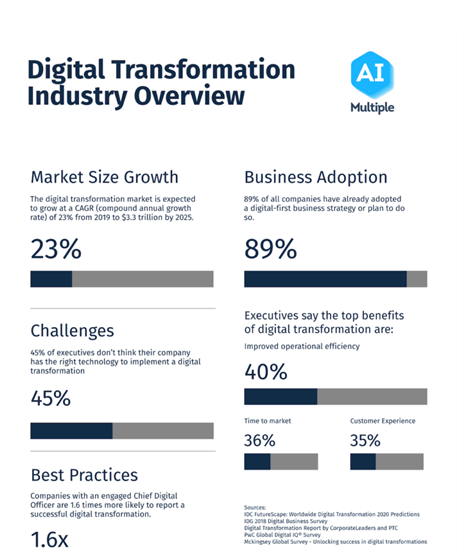
Digital transformations
can be challenging as well as transitional for businesses.
Considering
that digital transformation failures can range from 66% to 84%, businesses
have to be prepared to face challenges and overcome them effectively. Digital
transformation of your business is not a decision that you take overnight. More
importantly, you should not do it just because your competitors are doing it.
There are successful case studies of companies that have driven value through
digital transformation such as Uber, Airbnb, and Yelp, but not all businesses
achieve the same success.
Even
before you set out to digitally transform your business, you should ask
yourself: what is digital transformation, and do I need
it? Once you have answers to these questions, you can proceed to ask more
pertinent questions that can potentially affect the outcome of the digital
transformation, such as follows:
1. Why is the transformation required for my business?
As is
true for any major project that your business embarks on, it is important to
set the end goals that you want to achieve through digital transformation.
Setting goals is a great way to narrow down your primary priorities and how a
digital transformation can play a role in achieving those priorities. digital
transformations can affect all aspects of your business making it even more
important to analyze if you are ready. Ask yourself what problems will you be
able to solve through the digital transformation.
As a
business owner, you should also assess why digital transformation seems to be
the next step for your business. Are you looking to reduce costs? Or transform
processes? Make workforce more efficient? If you are unable to find any reason,
it is probably not the right time to go ahead with it.
2. How is it going to affect my processes and overall business?
What
business owners often forget is that digital transformation is just as much of
a business transformation as any other major business decision that you take. A
comprehensive digital transformation can affect all your stakeholders including
employees, as well as customers. Thus, it is important to list down the
different kinds of impacts that digital transformations can have on your
business – especially on your daily processes and operations.
Value
creation is an important part of any digital transformation and as a business
owner, you need to assess the value that will be generated through the digital
transformation efforts that you are embarking on.
Digital
transformations will inevitably affect all aspects of your business, which is
why it is important for your to see if the changes brought on by the digital
transformation will be worth it in the end.
3. What can I do to empower the digital transformation?
Digital
transformation is a largely technological process and undoubtedly requires IT
expertise. But even as the owner of a non-IT business, you have a major role to
play in the digital transformation of your business. Such transformations
require an adept leader who can guide and motivate the digital transformation
process and drive it to fruition. Business leaders can enable the teams that
are driving the transformation to do better, and also keep a check on the
budget and the timelines.
Digital
transformation can be a challenging processing spanning months or in some
cases, even years. The onus of being patient and channeling motivation across
the workforce falls on the fierce leader that heads the organization. Your
experience and acumen as a business leader can be a great asset to the success
of the digital transformation of your business.
4. Do I need additional tools or partners to accomplish this?
The
sign of a true leader is not his ability to accomplish everything on his own.
It lies in his ability to acknowledge and ask wherever they think they lack the
expertise. As mentioned before, digital transformation is a largely IT-driven
process and can involve several crucial and important decisions that require
technological expertise. If you are the owner of a non-IT business and want to
implement a digital transformation, it is a good idea to leverage digital
transformation tools and partners.
You
can hire a project manager who has vast experience in implementing digital
transformations, have an IT team that monitors and moderates the technological
decisions within the digital transformation, or purchase tools that can make it
easier for you to implement digital transformation in your organization.
5. How are my teams going to collaborate and communicate?
Collaboration
and communication are two processes that boost your business processes in every
possible way. One of the major ways to accomplish this is through the
implementation of processes and tools that can bolster communication and
collaboration among your employees. Communication between teams can be vital in
driving inter-departmental collaboration.
Furthermore, team collaboration could be a great way to drive your digital transformation and make sure that it is effective. Employees can help each other overcome challenges that can arise as a result of the transformation.
6. What are the main challenges that I should expect from transformation?
The challenges associated with digital transformation can affect all levels and departments of an organization. Digital transformation can also affect the customers of an organization making it even more important for organizations to assess possible challenges in advance. It is also important for organizations to consider the resources and processes that would be required to successfully mitigate challenges that arise from a company-wide digital transformation.
You
should ask yourself questions such as – do we have enough resources to face the
challenges? Do we have enough capacity to handle any possible negative impacts
of the transformation? Seeking answers to these questions can ensure that
organizations are able to cope with some of the major issues that arise from
digital transformations.
Digitally transform your business
Digital
transformations can make or break your business. If implemented properly,
digital transformation can help you reduce costs and improve your
organizational processes. However, if done incorrectly, it can result in losses
for your business, as well as lower productivity among your team members.
Asking yourself the aforementioned key questions can be crucial in setting
goals and expectations for the transformation, and can thus provide you with
metrics with which you can measure the success of your digital transformation.
With a brick-and-mortar store, your business
can reach a locality or a town or a city to the maximum. The marketing
strategies therein too have a limited reach. But, if you wish to go global;
digital presence and digital marketing are your best options.
Opening up the online world has made it easier
to become an entrepreneur. As the digital world offers an opportunity to
businesses to flourish without the requirement of any physical store, leasing,
maintenance staff, sales staff, etc. the overall business development costs
have lowered significantly. Moreover, the technology-based on-demand business
setups require websites or mobile apps with low development and app maintenance costs for their functioning;
which makes them an easier option for occupation, especially for
business-minded individuals. But, to stay viable in this ever-expanding space,
businesses need to find ways and digital marketing strategies that help them to
stay afloat and in viewers’ focus.
Importance of Digital Marketing
We live in a digital world where businesses
mushroom and evolve by communicating and connecting with a world audience daily
through posts, blogs, articles, content, etc. Digital marketing is a broad term
that includes all this and more.
Digital Marketing is the advertising of businesses, brands goods, products, services, etc. through digital channels such as search engines, websites, social media, email, and mobile apps.
According to global reports, the content
marketing revenue worldwide reached 42.15 billion U.S. dollars in 2019. With an
year-on-year growth of 14.4 percent, the growth of the marketing budget for
companies is ample proof that businesses have been vying for ways to reach
their target audiences.
Let us understand the reasons for this growth
in greater detail:
1. Customizable costs:
With television and radio advertising,
businesses are required to shell out a bomb. Also, they tend to reach only a
small section of society that views or listens to those channels. There is no
such limit with digital marketing. A business can spend as much or as little as
they may want, on a per day or even a per hour basis. Famous digital media
platforms like Google, Facebook, etc. in fact provide businesses with their
dashboard to control their ad-spends.
2. A much larger Audience
More than half the world owns a smartphone and
spends more than 4 hours a day on its apps(apart from the work requirements).
Digital Marketing helps businesses to reach this audience. It thus makes the
online world the perfect platform for marketers to showcase their products and
services to the targeted audience, and multiply viewership and sales.
3. Customer Connect
Digital Marketing is the most effective way
for businesses to connect with their viewers. Social media posts, blogs,
articles, etc. provide an open option for customers to respond and comment;
they open up a communication channel for customers and businesses to
communicate and understand each other.
4. Varied Options
As digital media includes text in the form of
content, blogs, articles, press releases, etc. as well as images, infographics,
and videos; it provides marketers a plethora of choices to marketers to develop
and evolve their brand names as per their target audience and overall costs
involved.
5. Evolved Customer Understanding
With the development of Artificial
Intelligence, Big Data and Machine Learning solutions, businesses can easily
track user’s online movements, collect data about the same and utilize it to
analyze their expectations and requirements. Thus, digital marketing ensures
that businesses know their intended viewers and customers well.
6. Higher Customer Engagement
Digital Marketing includes several types of
content including infographics, images, and videos that tend to inculcate a
higher degree of interactive content for the users. It is far easier to incorporate all these
content types into digital marketing than any other type of publicity campaign.
7. Better handling of Competition
As a business leader, you need to understand
that though you may or may not want to spend on digital marketing; your
competitors will. As the scope of digital marketing grows on a global scale, it
is necessary to leverage the same for your business to stay viable amongst the
growing competition.
8. Window to the world
Digital marketing with its various social media handles and writeups; enables businesses to put across their vision and mission to their viewers. Also, it helps to put forth your mindset and make things clear to your audience, when you get stuck in an unavoidable or difficult situation.
9. Better market research
With digital marketing tools and strategies
like surveys, etc.; businesses can get a clearer vision of the industry they tend
to step into.
Final Words
Digital Marketing has the prowess of opening
up Pandora’s box of opportunities for any business. With its ease and
effectiveness of reaching a global audience and the varied options of marketing
like Influencer Marketing, Content Marketing, App Store Optimization, Big Data
Personalization, In-store Marketing, Social Media Marketing, Live Video
Streaming, Site Optimization, etc. that it provides; the strategy is
unavoidable for all business fabrics.
How does mobile marketing fit into a digital marketing strategy?
Conclusion
Knowing how accessible the Internet is now, would you believe me if I said that the number of people joining the World Wide Web is growing daily? In fact, in the last three years alone, the number of “regular” users among the adult audience has increased by 5%.
The
Internet has significantly changed and continues to change the way people live
and how they make decisions. Shopping methods are no exception. Life smoothly
flows online. This means that offline
marketing is already less effective. Marketing today is taking on a
different form with the use of digital technology.
Marketing
has always been to meet with the target audience at the right time and in the
right place. Therefore, today you need to meet her where she lives – on the
Internet. Therefore, if you are not yet using
digital marketing tools in your business, now are the time to rethink your
approach to promoting your business and adopt the tools that help you do
business online.
What is digital marketing?
Digital marketing is a set of marketing activities using various digital tactics, tools, and communication channels to communicate with the target audience. Potential customers spend most of their time – online.
Some
several tactics and tools are relevant to the concept of digital marketing. This
is the company’s website itself and digital marketing channels – online
promotion and customer acquisition
channels: SEO, online advertising, and email marketing, sales funnel, content marketing, and teaser
advertising, SMM, etc.
A
business that uses different digital marketing course in Lahore and channels can interact with the target
audience much more efficiently and
promptly, thereby continually increasing the number of new customers and
audience loyalty.
Digital Marketing Tactics and Examples
The best digital marketers have a
clear understanding of how each digital marketing campaign supports the
company’s overall goals as part of brand promotion. And depending on their marketing strategy goals, marketers can
scale up their campaigns with both paid and free channels.
For
example, a content marketer might write a series of blog posts to generate
leads based on a new eBook recently released by a company. A social media marketer (SMM manager)
will promote these blog posts through paid and organic posts on company
profiles.
The
email marketer will compose emails detailing the company and send them to those
who downloaded that e-book. I’ll talk about all the specializations of digital marketers a little later. Here’s a quick
rundown of the most common digital marketing tactics and the channels that each
uses.
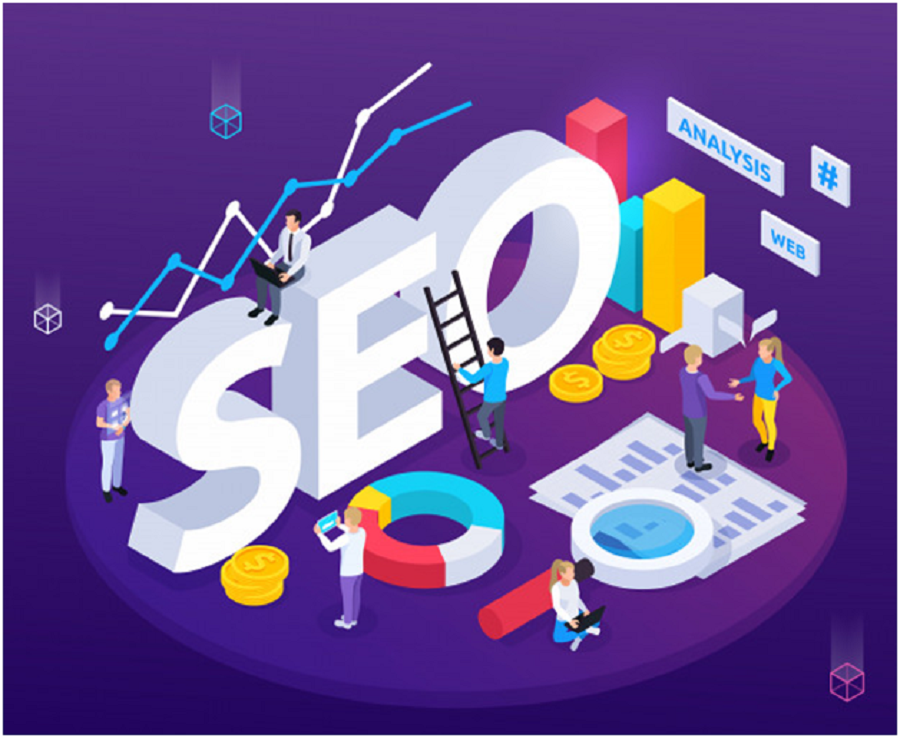
Search Engine Optimization (SEO)
Search engine optimization of your site (aka SEO optimization) will help it occupy higher search results. This increases the volume of organic (free) traffic.
SEO tools:
Web sites;
blogs;
Infographics.
Content Marketing
This term implies creating and promoting content to increase brand awareness, traffic growth, and communication with the target audience, generate leads, and attract new customers. Content marketing is considered one of the most effective yet underrated tools for promoting an online business.
Channels
for implementing your content marketing
strategy:
blog posts;
e-books and
articles;
podcasts;
vlogs;
lead magnets ;
infographics;
Online brochures
and catalogs.
Social Media Marketing (SMM)
This
type of marketing aims to promote your brand and your content on social media. It can be used to increase your brand
awareness, increase traffic, and generate leads.
Channels
used by social media marketing (SMM):
Facebook;
Twitter;
LinkedIn;
Instagram;
Snapchat;
Pinterest.
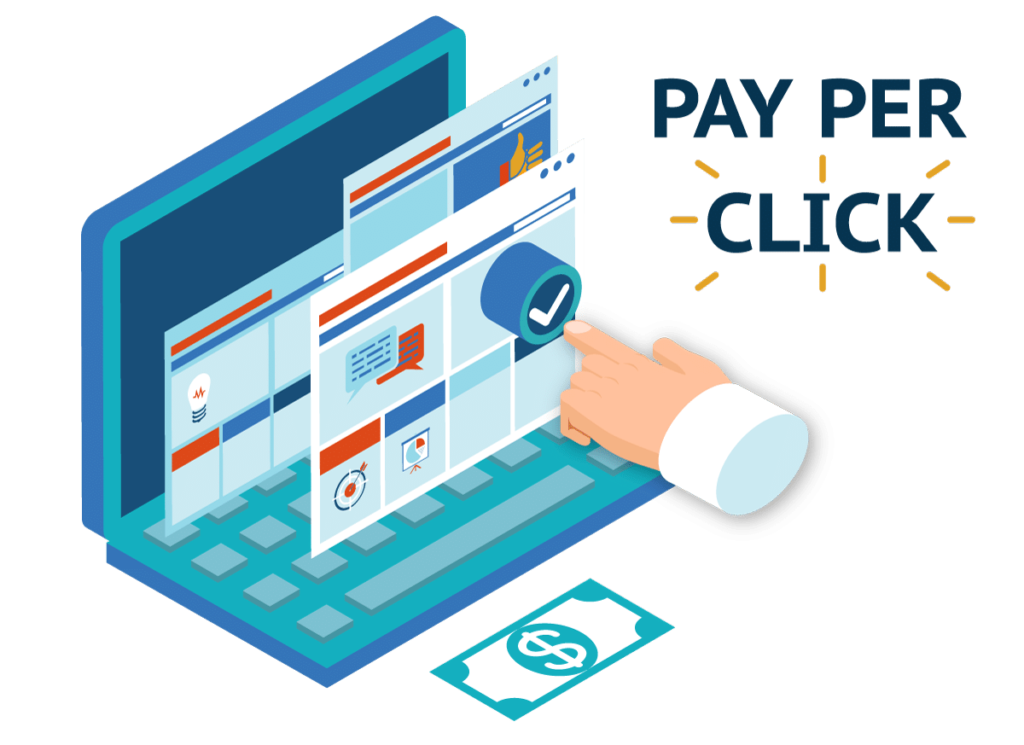
Pay per Click (PPC) Advertising
PPC is an excellent method of driving traffic to your website. Its essence is that you pay a commission to the site owner or service provider for each click on your ad. One of the most common types of PPC is Google AdWords. It allows you to place banner and search ads (contextual advertising). Payment is made using the same system – per click.
Paid
advertising channels:
contextual and
search advertising in Google AdWords
paid ads on
Facebook;
Twitter
advertising tweets;
LinkedIn
advertising messages.
Native Advertising
The essence of natural advertising is reflected in its name – it fits perfectly into the context of the platform it is hosted on. Native ads do not contrast with the site content and look like “native” content. An excellent example of native advertising is BuzzFeed. There is also a widespread belief that advertising on social networks (Facebook or Instagram) is also native.
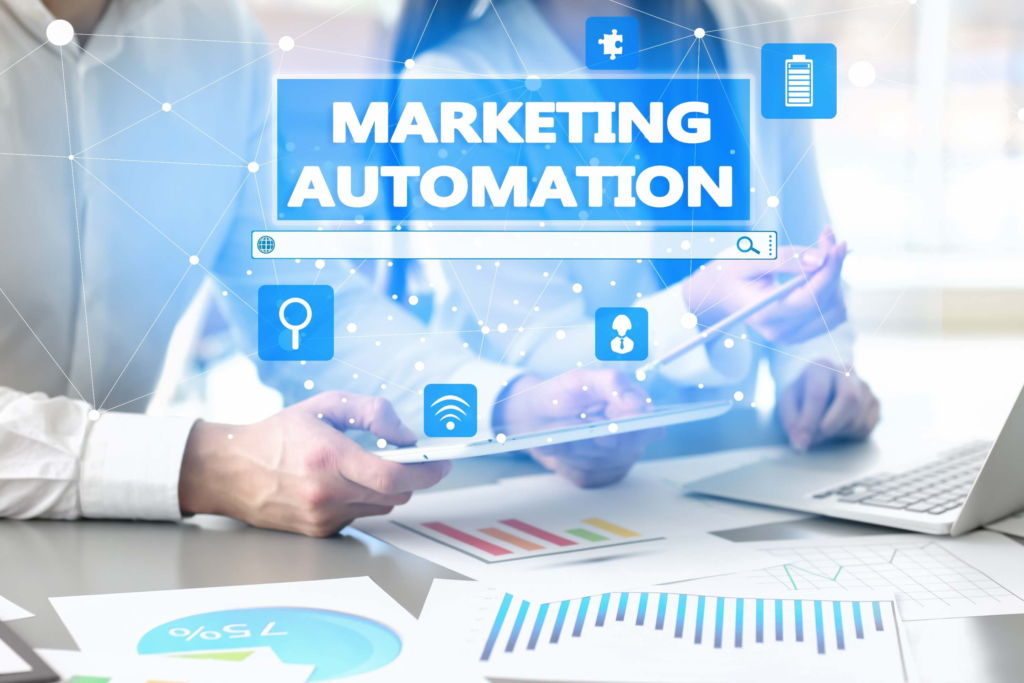
Marketing Automation
Marketing automation involves the use of special software that automates your basic marketing operations. You can save time and labor by automating recurring tasks:
mailing lists;
posting schedule
on social networks;
updating the
contact list;
professional
development of leads;
lead scoring ;
Control over the
results of the advertising campaign
and reporting.
Email marketing
Companies are using email marketing as a way to communicate with their audience. Email is often used to promote content, communicate about discounts and events, and direct people to a company website.
What Types of Messages Can You Send?
subscription to
news portals;
regular mailing
of letters to site visitors who have already downloaded something;
welcome letters
to new customers;
holiday
promotions for members of the loyalty program;
Tips or a similar
series of letters to strengthen customer contact.
Despite
this tool’s relatively long age, email marketing remains one of the most
effective channels for promoting a business and increasing sales.
Online-PR
Online PR provides extensive audience reach through digital publications, blogs, and other content sites. It is very similar to traditional PR but in the online space.
To
make your PR strategy more effective, digital marketers use:
PR outreach;
online reviews of
goods and services;
Comments and
reviews on websites or blogs.
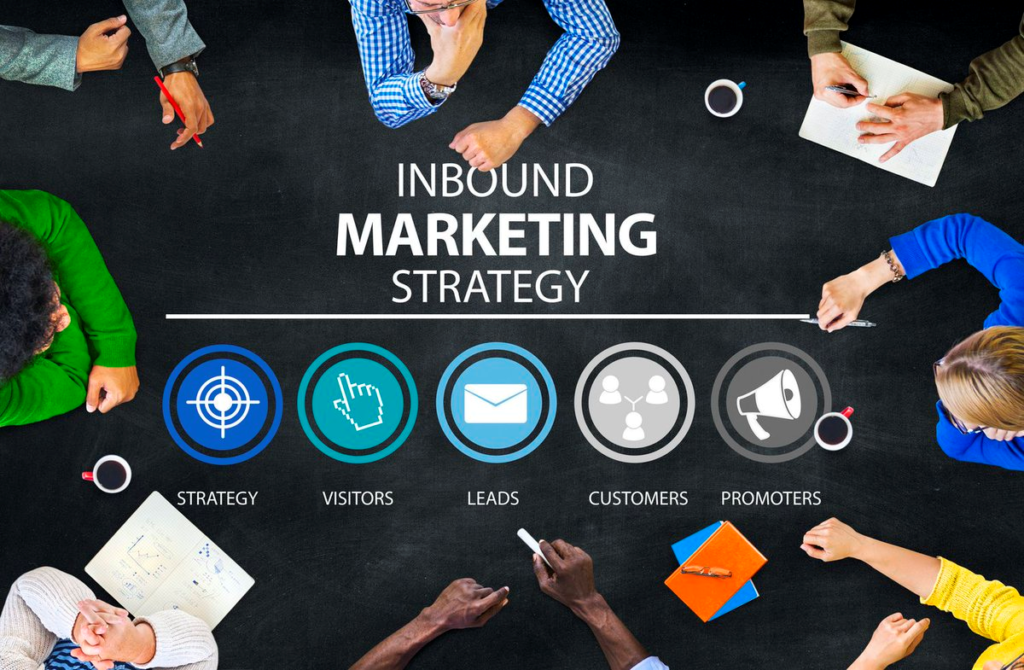
Inbound Marketing
Inbound marketing brings together all of the above marketing tactics. It aims to attract, engage and satisfy customers through content.
Unlike the old method of attracting customers, when companies tried to reach out to potential customers and tell about their products, inbound marketing involves an integrated approach to grab the target audience’s attention by creating and distributing useful content online. Thus, marketing turns out to be inbound because thanks to content in different formats and on other platforms, people find your company themselves and want to become your customers themselves.
The process goes
something like this:
The person has a
problem that he wants to solve.
He begins his
search for a solution by searching for relevant information on Google.
He uses Google to
find useful articles, research, tips on your blog.
In interacting
with your content, a person understands that your company is an expert in their
field and provides a product that could help him solve the problem and help him
achieve his goal.
The person
decides to become your client and places an order.
In
this way, you can attract hundreds and thousands of customers every day
because, unlike offline marketing, digital inbound
marketing is not limited by location or time of day. Inbound marketing is
based on a high-quality content strategy, which directly creates the basis for
attracting the target audience’s attention in this way.
This
is all made possible by the correct use of digital technology.
What Does a Digital Marketer Do?
Digital marketers are responsible for building brand awareness and generating leads across all of the digital channels a company owns (both paid and free).
These
channels include:
social networks;
the company’s
website;
search engine
ranking (SEO);
email marketing;
display (banner)
advertising;
Company blog.
The
digital marketer tracks Key Performance Indicators (KPIs) for each of the
listed channels. This allows you to adequately assess the performance of the
company for each of the marketing tactics. In
modern companies, digital marketing can be done by a variety of people. One
professional (a kind of universal
digital marketing courseand specialist in Lahore who knows all areas) can
simultaneously master several digital marketing tactics in small ones. The
larger ones have several specialists, each of whom deals with one or two
digital brand channels.
What Business Will Digital Marketing Be Good For?
Digital marketing works for companies at different development stages: for a startup or an established company. Also, these tools are applicable for businesses in any area. Regardless of what your company is selling (products or services), digital marketing helps shape a customer profile, which determines the needs of your target audience and allows you to create valuable online content. But that doesn’t mean that all companies should implement their digital marketing strategy in the same way.
B2B Digital Marketing
If your company is a B2B business (business to business), all your digital marketing efforts will generate leads online. And, ultimately, to establish is direct contact with a potential buyer. Therefore, the role of your marketing strategy is to generate high-quality leads for your sales force. This is what you will do with your website and existing digital channels. In addition to your website, it’s also wise to use a business-oriented channel like LinkedIn because that’s where your target audience resides.
B2C Digital Marketing
If your company operates on the B2C (business to consumer) principle, your digital marketing strategy will be different. All your efforts should be aimed at attracting people to your site and so that they subsequently become your customers, bypassing direct contact with the seller. However, don’t forget to consider the price point of your product. It largely determines the digital marketing strategy.
B2C
marketing doesn’t require you to throw all your energy into traditional lead
generation. A more logical tactic is to
create an accelerated customer journey. This means optimizing the process
itself as much as possible from when the client enters the site until he makes
a purchase. For B2C companies, channels such as email marketing, Facebook, Instagram, and Pinterest prove to be
more valuable than LinkedIn’s business-focused platforms.
What are the Benefits of Digital Marketing?
The main advantage is the ability to build communication with the target audience where they spend more time. Today it is online. The Internet is replacing television. Suppose 30 years ago, and a TV was the primary source of information and a channel for interacting with the world. In that case, today, users like to communicate online – through applications, websites, and social networks.
Plus,
unlike most offline marketing
activities, digital marketing allows marketers to see concrete, measurable
results in real-time. If you have placed an advertisement in a newspaper at
least once, you understand how difficult it is to track the actual number of
people interested in your advertising. And there is no reliable way to know if
the ad generated a sale. With digital marketing, you can realistically estimate the ROI (return on investment)
for literally every marketing area.
Website Traffic Analysis
Digital analytics software allows you to see the exact number of people who have viewed your site’s homepage in real-time. Among other analytics data, you can also see how many pages they visited, what device they used, and where they came from (from which resource).
This
data will help you prioritize correctly. You will understand which marketing channels you should spend
more money on and which ones should spend less. This will optimize your budget
and processes to improve the effectiveness of your brand promotion.
Effective Content and Lead Generation
Imagine you’ve created a brochure about your product and mailed it to people you consider potential customers. So this brochure is also a form of content, but offline. The only problem is that you never know how many people opened your brochure and how many immediately threw it into the bin.
Now
imagine that you have posted this brochure on your website and sent it out by
email. And you can see how many people viewed it, how many people followed the
link, and how many people were interested
in your offer. Besides, you can know how many people have done this or that
action and who these people are. You can track the gender, age, location, and
interests of these people. All of this data will improve your understanding of
your target audience and enhance other marketing campaigns.
Types of Digital Content You Should Create
The type of content you create directly depends on your audience’s needs at different stages of the customer journey. Therefore, start by creating a client portrait to define your audience’s goals and objectives and how your company can help your audience reach them. Your online content should help people achieve these very goals and solve their problems.
Now
you need to consider what stage of the customer journey people will be ready to
perceive your content in the best way. This is called content mapping. With mapping, your goal is to get the content
right. He must consider the following factors: Characteristics of the person to
whom it is intended (and here the portrait of the client will be very useful to
you); how close the person is to make a purchase.
In
terms of the format of your content, there are many different channels you can
use. I’ll show you some of them so you can apply them every step of the way.
Here are some options that I recommend using at each stage of the customer
journey:
How Does Mobile Marketing Fit into a Digital Marketing Strategy?
Mobile marketing is one of the critical components of digital marketing. Smartphones account for 69% of all time spent consuming digital content. These are global statistics. This means that it is vital for you to optimize your digital ads, web pages, social media images, and other digital assets for mobile devices. People who interact with your company online via mobile devices should have the same positive experience as they would when using the desktop version.
There
are many ways to optimize your digital
marketing assets for mobile users. Whichever digital marketing strategy you
implement, you must consider how it will look on mobile devices. Only by
achieving high-quality display on both desktop and mobile will your digital
technology be able to deliver the results you expect.
Conclusion:
Outdoor
advertising and digital television are losing ground faster every day. The
Internet provides endless opportunities for the growth and development of any business. And even one that seemed 100% offline.
Detailed analytics and the ability to reach a broad audience without borders
speak of digital marketing’s absolute advantage.
And
this is increasingly being proven in practice by companies from different industries.
Therefore, if you are not yet using these tools in your business, you should
revise your approaches and start right now. There are many advertising and marketing agencies that you can turn to for help.
They are ready to share their experience and help you implement your marketing
strategy. These agencies provide different services and help you avoid mistakes
that you can make due to a lack of knowledge.
But this does not mean that all aspects of digital marketing cannot be mastered on your own. It only takes time and desire. Understanding the basics of digital marketing and knowing what digital marketing is, aka digital marketing, or just digital, and knowing how the leading digital marketing channels work, you can develop a strategy that will help you effectively promote your business on the Internet.
Digital
marketing has taken the world by the storm and every business is utilizing
digital marketing to put their business on a world map. Also, as digital
marketing enlarges the digital footprint of the organization, the business
feels digital marketing is inevitably, a part of the business.
Recently, there
have been many upcoming trends in digital marketing that are changing the way
you endorse your brand digitally. Each day, new trends are being introduced in
digital marketing which offer various options to market your business
digitally.
In this blog,
we are going to discuss the digital marketing trends you should not ignore in
2021. Let us take a look at those:
1. Artificial Intelligence (AI) and Natural Language Processing (NLP):
2021 woke up to the dominance of Artificial Intelligence or
AI. With the way it is growing, it is sure to enter the core of businesses
around the world. Also, it would replace simple jobs in the future with some
already replaced.
AI analyzes the customer’s search behaviour and uses the data
from social media platforms and blogs. This enables the businesses to
understand the way customers look for the products and services they need.
There are dedicated offshore developers available for hire who can understand your requirements
and help you integrate AI and NLP in your business.
Chatbots are the best example of the implementation of AI. We
will discuss chatbots further in this article.
2. Programmatic Advertising:
Programmatic advertising uses AI for automation ad purchase,
which lets you target a specific section of your target audience. For instance,
real time bidding is a great example of programmatic advertising.
Since this type of automated service is efficient and fast,
it significantly increases the customer conversion and cuts down on the
customer acquisition costs.
When someone clicks on the webpage, the publisher of the
webpage or the website places the ad impression for the bidding. The auction is
held in the ad marketplace among the advertisers in the competition. In this
auction, the advertiser who bids the most for the concerned ad impression, wins
the auction.
The advertisement gets delivered to the customer. As the
customer clicks the advertisement, the advertiser converts it into a sale and
starts earning the profit.
3. Chatbots:
As we already discussed the importance and increasing use of
AI, let us take a look at chatbots. Chatbots are a form of implementation of
AI. An individual can have a conversation with the chatbot in a real-time
environment.
These chatbots are generally used in websites when a customer
wants to talk or inquire about a specific product or service. Since the
chatbots are available 24/7, the customers prefer chatbots instead of talking
to a human during work hours.
Initially, chatbots were used only in the tech industry. But,
recently, there have been websites that employ chats in the mental healthcare
industry. The individuals who are suffering from depression or anxiety, can
also chat with these chatbots.
The chatbots are not considered as a replacement for a mental
healthcare practitioner. But, chatbots can gather basic information about the
patient and offer answers based on the concept of Cognitive Behavioral Therapy
(CBT). The CBT works on the concept of replacing the negative thoughts
experienced by an individual into positive ones.
Chatbots provide basic set of services listed as below:
Basic form of communication
Product or service recommendations
Content generation and creation
Personalized email
E-Commerce transactions
4. Conversational Marketing:
As the concepts behind the chatbots are clarified, we know
that the marketing strategies should be conversational. Brands are behaving
this way because the consumer wants it in the same way – conversational. The
consumer wants an answer immediately as soon as he posts his question.
With conversational marketing, a one-to-one connection is
facilitated in a real time environment between the marketer and the customer.
This form of marketing strategy is available for use through various channels.
With this, the brands are enabled to reach the customers on their terms – using
various devices, platforms and time zones that suit the customers the best.
The basic goal of conversational marketing aims to enhance
the user experience using a feedback-based model. Such a model is said to offer
high engagement and increased loyalty.
5. Personalization:
Personalized marketing strategy is one of the most important digital marketing trends of 2021. Personalized marketing includes personalized content, products, services, emails and more.
Various brands offer personalized content to their customers
who have purchased their products or services before. Also, this makes the
customer think that the brand is working hard to meet their requirements. This
makes the customer bound to the brand and buy their products or services.
Conclusion:
Digital
marketing trends have evolved over the last few years and have dramatically
changed the way businesses market their services and brands. Also, with
changing trends, it makes the businesses easier to reach their target audience
and offer their products that suit their requirements.
Many people in the marketing industry consider SEO (search
engine optimization) and digital marketing to be similar. Yet, they have two
unique definitions and are different. There are various ways in which SEO and
digital marketing perform likewise and today they work in tandem. An SEO
agency is outsourced to optimize a website so that its place in
search engine results is increased. They will practice a wide category of
techniques and SEO best practices to achieve higher rankings in the SERPs. SEO
is a subset of digital marketing and many would define an SEO specialist as one
who combines digital marketing and SEO best techniques to reach their aims.
SEO Manager and a Digital Marketing expert
It has already been stated that there are several connections in these two places and many circumstances they share some of the same abilities. An SEO expert has the expertise, experience, and knowledge to optimize a website to grow traffic and earnings. A digital marketing specialist may work with an SEO specialist in a marketing campaign to improve a company’s whole exposure using digitally based media. SEO is a tool that is in the digital marketer’s toolkit. The plans shared by SEO experts and digital marketing specialists include various marketing best practices such as email marketing, content marketing, social media marketing, and more recently mobile marketing. However, the digital marketing specialist will have a few other options at their control such as advertisements, SMS, Television, or radio sources. Since the two overlap pretty drastically, it can be hard to separate the two. Still, the SEO specialist is concerned about improving visits to a website and the digital marketing expert is concerned with expanding a company’s overall online appearance and visibility to customers.
Upcoming Trends in Digital Marketing
Trends are favoring nearer including digital marketing
techniques with SEO tactics. The trends show that 2 are mixing frequently. In
history, it was thought that SEO was acceptable for business promotion but as
social media extended, and mobile phone and tablet use collapsed on the view it
takes more than just SEO tactics to reach the customer market. To build an
efficient online appearance and achieve your potential buyers before any other
opponents, you will have to include digital marketing with SEO techniques. SEO
is not wasted, and it will not disappear anywhere anytime quickly. The variety
in the climate of today’s industry is that you are going to have to go past SEO
and include many digital marketing strategies. SEO is all about generating
high-quality websites that are organized for the user.
Connecting Digital Marketing and SEO
There is no doubt that the SEO world is in a situation of constant
change. Search engines are continually upgrading their techniques of ranking
websites and the SEO specialist is forced to keep up with the trends. One of
the more recent changes in SEO tactics is the establishment of digital
marketing. The new term that appears from this development is SMI (Search
Marketing Integration). As search engines proceed to broaden their gaze and
complete the specifics and methods they use to look at a site and measure an
agency’s sentiment, content-quality, and overall relevance, it is obvious that
search is growingly flapping with other marketing approaches. This is likely to
completely transform an organization’s plan for approaching sales, PR,
marketing, branding, and everything else for that matter. Success will need a mixture
of SEO best methods and marketing strategies.
New Business Service Measurement
There have been numerous portions that moved over the last few
years for both SEO and digital marketing which have obscured the line that
separated the two. Even though they are still two solo entities with singular
aims, they are growing more integrated into a single, appealing strategy. The
most influential question now is how the combination of these two powerful and
multi-faceted tools can be applied together for the advantage of a business or
company. Since no two firms are equal, it can be a hard plan. Success comes
from contracting a single campaign constructed from plans from both digital
marketing and SEO best methods.
Conclusion
SEO and Digital Marketing are not totally the same. While similar, they are not the same. SEO specialists have a goal to optimizing a website to get higher rankings in search engine results (SERP) and thereby improve free organic traffic. Digital marketing specialists focus on improving whole online appearance and visibility for customers using their corporate budgets, using numerous digital tools plus paid promotion to reach their marketing goals. So now you know the distinction between SEO vs Digital Marketing.
Are you confused about whether to use display ads
or native ads to promote your e-commerce website?
You have come to the right place.
Online advertising can be especially beneficial
for creating brand awareness. And with the number of mobile users increasing
day by day, if you optimize your ads for mobile, your advertising efforts will
be more effective.
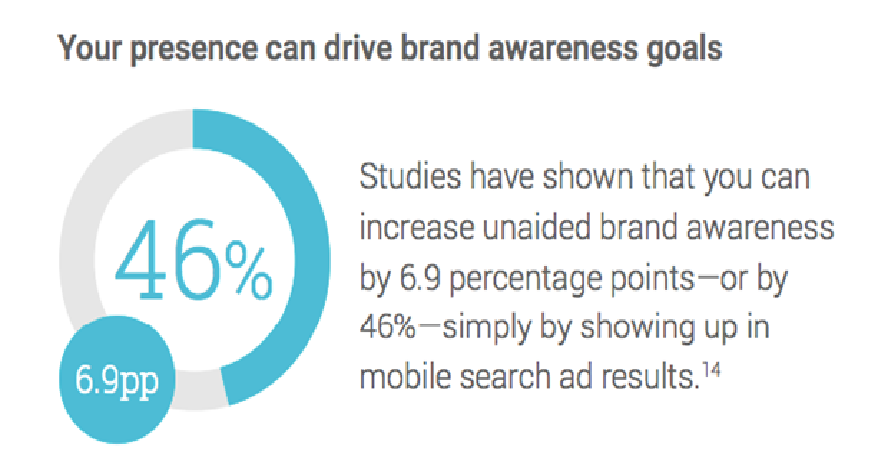
Statistics have it that by appearing in mobile
search ads results, a company’s brand awareness can be increased by 46%.
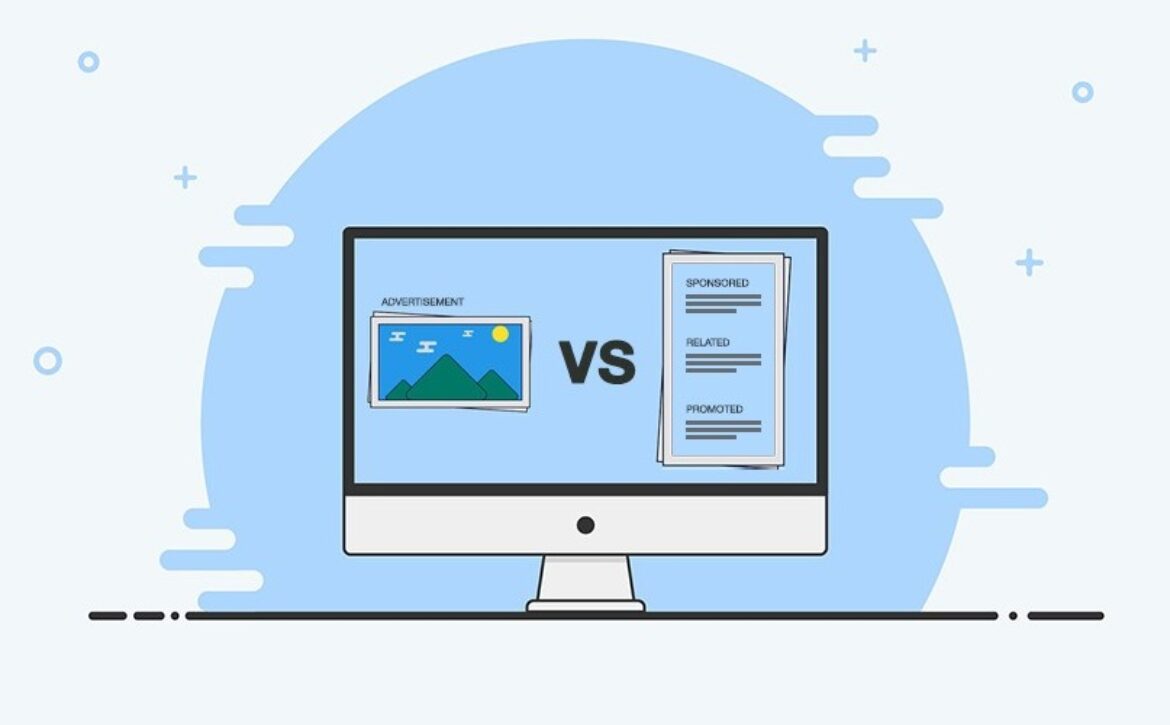
In this article, we will be discussing native ads
and display ads, their pros and cons, and when to use them. It will give you a
clearer understanding of the two ads and help you decide which one to use to
promote your e-commerce website.
What are Display Ads?
Display ads,
also known as banner ads are ads that attract and compel the audience of a
website, social media platform, or other digital mediums to click-through to a
landing page and take a specific action.
Display ads
can be text-based, images, or even videos. Most display ads are charged on a cost per click
(CPC) basis. It means, every time the user clicks on your ad, you’ll have to
pay a certain amount based on how you have made your bid.
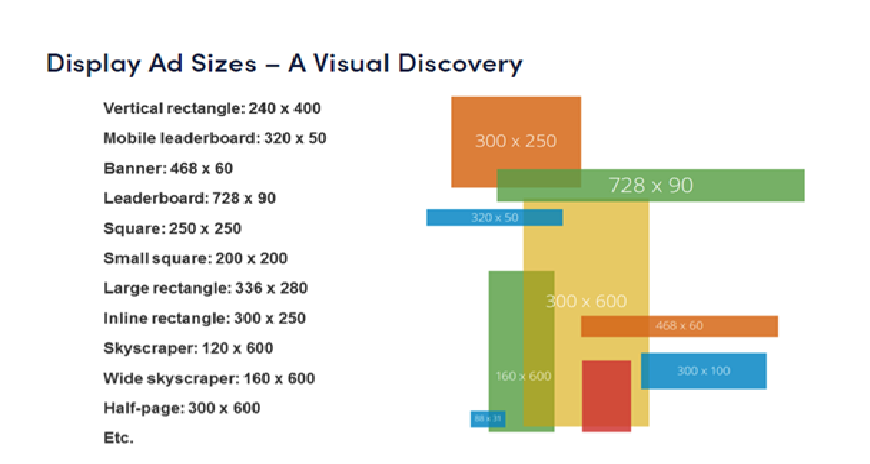
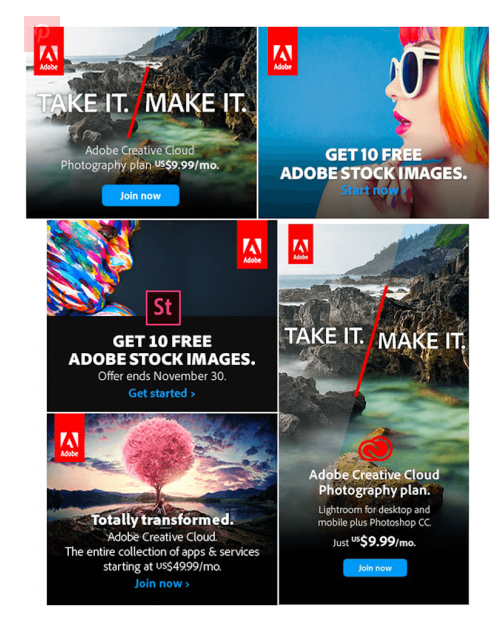
What’s more, display ads come in all sizes.
Here’s a display ad from Adobe:
Note that display ads are more effective on the
desktop.
What are Native Ads?
Native ads are like paid content that appears in
a media and match the look, feels and function of its format. You will find
native ads mostly in social media feeds, or on a website page as recommended
content.
“Unlike display ads, native ads don’t look like
ads. Instead, they blend into the editorial flow of the page. Hence, native ads
are non-disruptive,” explains Devesh Sharma of Design Bombs.
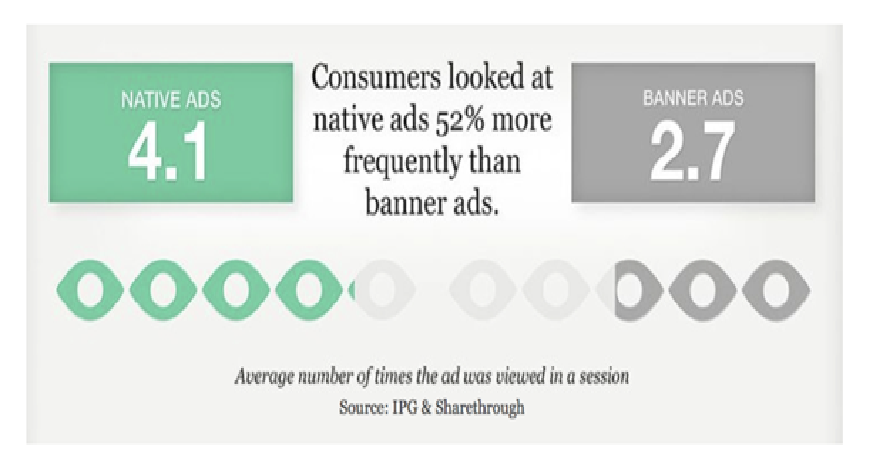
No wonder consumers look at native ads more
frequently than display ads.
Take this native ad, for instance:
Naturally, the look and feel of Native ads make
them more effective on mobile.
Pros of display ads
It is
visually appealing – Since display ads are graphic
content, you can design and style them. You can use graphics, audio,
video, etc., to stand out and attract their attention.
It
can create brand awareness – Its
visual element can benefit your business by facilitating brand awareness. Very
often, display ads are branded and styled with an offer. Thus, users can gather
your brand’s information by merely
seeing your display ad. They don’t even have to click on the ad to get
the ad’s overall look and feel.
It
makes targeting and retargeting possible – You can target people most relevant
to your business by creating
specific parameters for your ads. You can also use it for retargeting by
putting your ad in front of customers who have visited your site before.
It
provides data – With the data provided by display
ads, you can measure your marketing activities right away.
Diversity – Display ads come in varied
shapes and sizes and can be presented in different formats. You can pick a
style and format depending on your goals.
Measurable – You can measure clicks,
impressions, and conversions using Google Ads and Analytics.
Reach – You can access countless
sites from your Google Ads account.
Cons of display ads
Lower click-through rate.
Lower conversions.
People usually avoid or block display ads.
Pros of native ads
You
can create branded content – As
per a study, 2 in 3 GenZ, Millennials and GenX customers trust custom
or branded content more than traditional ads.
It
can engage the customers –
Since the content is created by understanding the audience, they can engage
with it more. Plus, when you know how, when, where, and why the content should
be placed, it can create an emotional connection with the readers.
It
receives higher click-through rates – As per a study, the CTR of native ads is 8.8 times higher.
It is
less disruptive – As they are included
within the content, they are less disruptive.
Cons of native ads
It is challenging to measure metrics, such as ROI
and effectiveness.
It is costly and time-consuming.
It has the potential to be too discrete.
When to use display ads and native ads?
As you can see, both display ads and native ads
have their own advantages and disadvantages. To use them should depend on your
business goals.
Use display ads for:
Creating brand awareness.
Targeting and retargeting campaigns.
Attracting users to click-through to a landing page and take a specific
action.
Use native ads for:
Increasing click-through rates.
Creating brand awareness.
Engaging the audience.
Providing information about your business or services to
users.
Driving traffic to your site.
Split test your ads
You can also conduct A/B testing/split testing to
see which version of your ad is performing better. Here are some key features
you can test and optimize to increase your click-through rates.
Headline: Check the length, tone of voice, and play around
with color, font size, contrast, etc.
Image: Consider the background image color, number of
images used, and whether you are using products or people.
Call to Action: Test the color of the button, language,
contrast, style of the button, etc.
Copy: Are you using long-form or short-form? Does it
resonate with the audience?
Landing pages forms: Test the form length, design, and the
number of fields.
Wrapping-Up
Many e-commerce businesses use marketing ads to
create brand awareness, drive traffic to their website, engage users, target
customers, and also for retargeting.
Launching your business on mobile-optimized
platforms like Shopify
Plus will make your
marketing efforts easier. It can easily enable you to reach your audience and
promote your products from the platform. Plus, it has high-volume traffic
capacity.
Since you now know when to use display ads and
native ads, you can choose the right type of ad for your business, depending on
your business goals.
Display ads are mainly used for branding and
targeting and retargeting customers. Native ads, on the other hand, can be used
for shelling out information about your business, increasing click-through
rates, and also driving users to your site.
What comes
to your mind when you hear digital marketing? Search engines? Social media?
Mobile apps? Email? Or websites? These are the high-level digital channels out
there via which marketers endorse their brands, goods, and services.
If you take
a look at the stats, in 2019, mobile
devices, excluding tablets, created about half of all website traffic
worldwide.
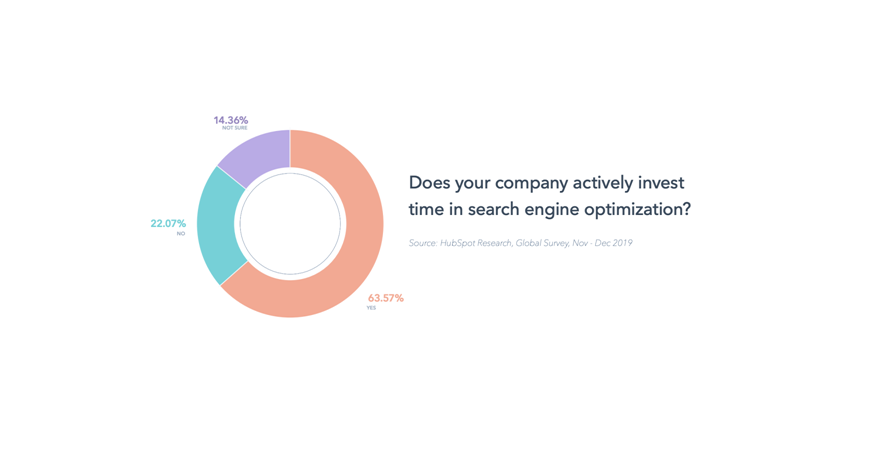
It is also said that 63.57% of the companies are
actively investing their time in SEO.
There are
more than 80
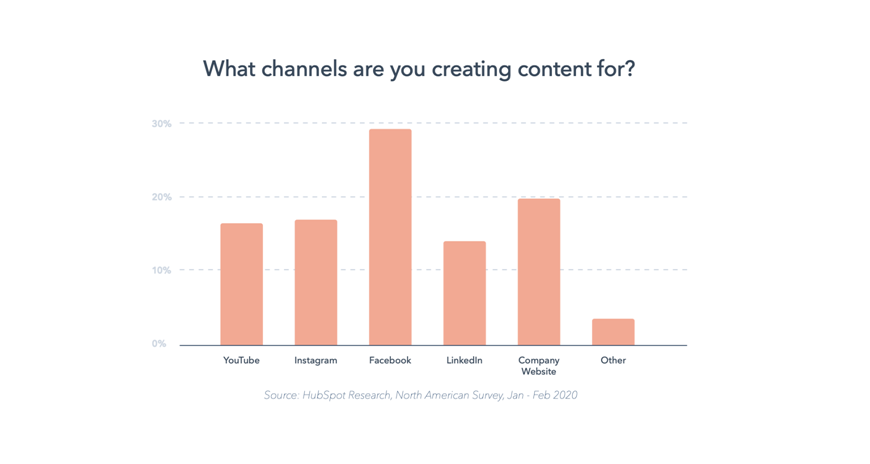
million small businesses that use Facebook’s free business tools. And most of the content that marketers create is
for different social media channels and company websites.
It is well
understood that a company needs to take the digital marketing path to remain in
the competition and to succeed in this day and age.
But since a
lot of questions are still asked about digital marketing – this article will
answer who, why, and how of digital marketing.
Who is a digital marketer?
A digital marketer is someone who implements
marketing strategies using an electronic device or the internet. Digital marketers use
digital channels, including search engines, email, social media, and other
websites to connect with existing and prospective customers.
Who can use digital marketing?
Any
business, big or small, should adopt some aspects of digital marketing in order
to stay competitive. In fact, so many businesses out there are using digital
marketing.
The
worldwide digital marketing spend was estimated to be $290–310 billion in 2019,
and it is anticipated to reach around $330–340 billion in 2020.
Since there
are so many options out there, you can experiment with different
marketing strategies on a budget and implement those that best suit your
business.
For instance, a business-to-business (B2B) needs
to attract and convert quality leads through your business site and digital
channels. Thus, B2B digital marketing will mainly focus on online lead
generation for the salespeople. Business-focused social channels such as
LinkedIn are best suited for B2Bs.
Business-to-consumer (B2C) companies, on the
other hand, will need to attract people via their digital marketing efforts to
their website and convert them into customers without having to speak to a
salesperson.
Thus, their focus will be on making
the customer’s journey as fast and great as possible, from the moment a buyer lands on
their site to the moment that they buy a product or service. B2C companies have
to use stronger calls-to-action (CTAs).
Social channels like Instagram
and Pinterest are more suitable for B2C companies.
Why should you implement digital marketing?
If your
business doesn’t have an online presence in this digital world, it will be hard
for you to compete and grow your business.
Here are some crucial reasons why you should implement
digital marketing:
Global
reach: If you have a website, you will be able to find new markets and
trade internationally without having to invest much.
Lower
cost:
Digital marketing will incur lower costs than traditional marketing, provided
you have proper planning and have a well-targeted campaign to reach the right
audience.
Track
and measure results: By using web analytics and other online metric tools,
businesses can analyze their marketing efforts. Having detailed information
about how customers engage with your site or responding to
your ads will help you breach any loopholes in your strategies.
Personalization:
People feel frustrated when they receive irrelevant emails or read irrelevant
website content. They engage better with personalized content. 91% of
customers say they are more likely to buy from brands that deliver offers
and recommendations relevant to them. Linking your customer database to your
site can help you to offer targeted offers.
Improved
conversion rates: Since digital marketing can be seamless and
instantaneous, unlike traditional marketing, you will see enhanced conversion rates.
How to create a digital marketing strategy?
From
personas to selecting the right tools, there are several things that can
determine your digital marketing strategy’s success. Here’s the initial work
you need to do to ensure your digital marketing strategy is successful:
Create
customer personas: Buyer personas can be created by surveying and contacting
your pre-defined target group. Online tools such as MakeMyPersona can help
you with it.
Define
your goals: Without defined
goals, your digital marketing strategy won’t work. Also, make sure that those goals are suitable and
measurable.
Focus
on blogging: Creating
high-quality content is crucial for any digital marketing strategy. And
blogging is an excellent way to create high-quality content. It will help you bring
more traffic to your website, reinforce social media presence, give a
competitive edge, and rank you high on search engines. Outsource your work to
an SEO agency for the best results.
Automate
marketing: The leading marketing
automation platforms can take your digital marketing strategy to the next
level. They will make it easier to automate activities such as email marketing,
content marketing, lead generation, and so on.
Focus
on building a mobile-optimized site: With the number of mobile phone users
increasing daily, there is no reason why you should not be building a
mobile-optimized site. Focus on page speed, site
design, and various other SEO practices to offer the best experience to
your site visitors. Also, ensure to review your mobile responsive design
and email templates. You have to implement only the latest methods and deliver
only relevant and latest data.
Make
yourself easily accessible to customers: If you connect the right way with your audience, your
business will automatically grow. To ensure that your customers are not making an effort to communicate with you,
avoid asking for irrelevant data on your landing pages and making call-to-actions clearly visible on the website.
Wrapping-Up
Digital marketing is something your business
cannot avoid in this digital era. Thus, you need to be aware of the latest
trends and strategies of digital marketing and how to implement them.
You can always refer to this article to eliminate
any doubt about who, why, and how of digital marketing. Also, make sure that
you are incorporating some digital marketing strategies so that you can gain a
competitive edge and grow your business.