
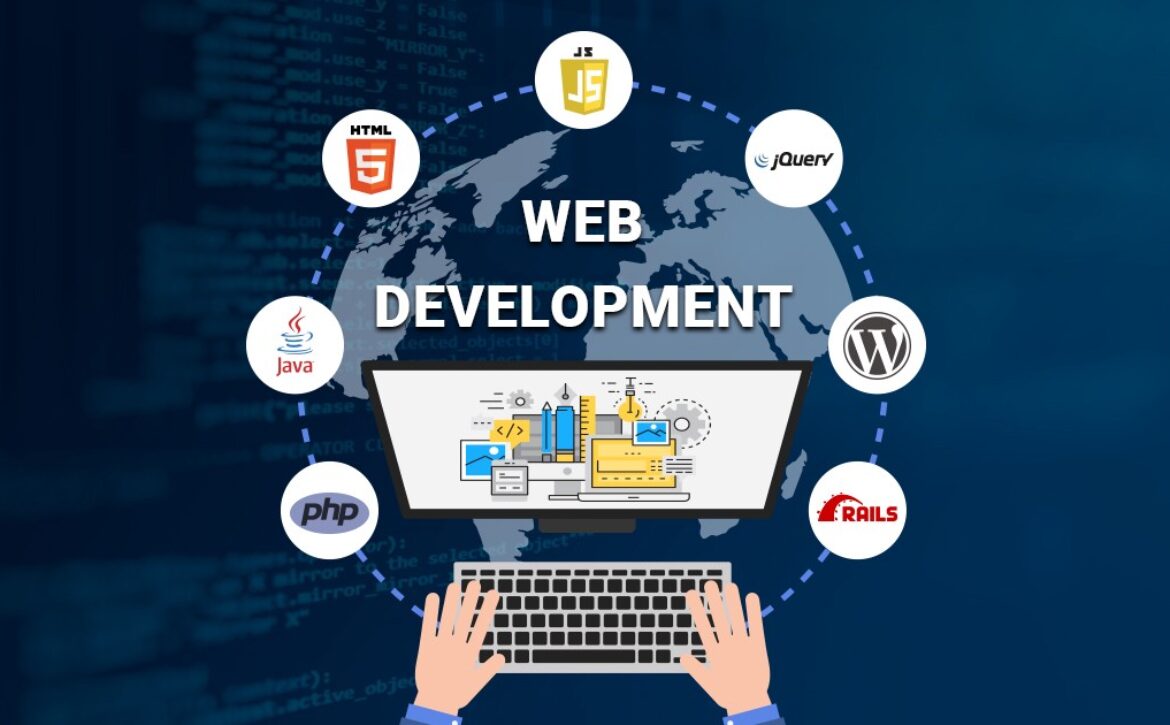
The Beginner’s Guide to Website Development
A website is built, made, and maintained through a process called web development. It can be used for anything from a straightforward plain-text website to a sophisticated web or social network application.
What varieties of web development?
————————————
Different sorts of development are the focus of developers. Some website developers focus on the user interface, some developers work on the functionality-related underpinning code, and some developers work on every aspect of a website. Web developers of all stripes focus on various facets of development, but they all share one thing in common: code. Various forms of web development include the following:
1. Front-end programming:
For users to view and interact with the website, front-end development entails designing the user interface using HTML, CSS, and JavaScript.
2. Back-end development
The creation of server-side software, which focuses on everything you cannot see on a website, is a component of back-end development. By focusing on databases, back-end logic, application programming interfaces (APIs), architecture, and servers, back-end developers make sure the website functions properly.
3. Complete stack development
The front-end and back-end components of the web application are both built during full-stack development.
4. Creating a website
Web developers can be front-end, back-end, or full-stack programmers. These experts focus on creating websites rather than desktop programs, video games, or mobile apps.
5. Desktop Development
Building, constructing, and managing a website for computer use is known as desktop development. It focuses on creating software for the three most widely used operating systems: Windows, Linux, and macOS.
6. Mobile Development
Applications are made by mobile developers for portable devices like smartphones and tablets. Mobile applications operate quite differently from conventional websites and software products, necessitating a distinct set of development skills and experience with specialized programming languages.
7. Developing Embedded Software
Developing programs for drones, flight controls, medical devices, and other embedded systems typically entails using programming languages like C and C++.
All non-computer hardware is supported by embedded developers. This covers electronic interfaces, IoT devices, consumer electronics, real-time systems, and more.
As seen by smart appliances, Bluetooth technologies, and virtual assistants, there has been a recent increase in networked gadgets, and embedded development is now a sought-after skill.
Who Are Web Developers?
————————————
A web developer writes code for websites and web apps. They are in charge of the design, functioning, and features of the website. Numerous programming languages are familiar to web developers.
The Five Stages of Developing a Website
————————————
Step 1: Design a layout
The most fun is had throughout the creation process. A preliminary conversation with the client may cover the color schemes, functionality, unique features (like eCommerce), graphics, videos, and general appearance of the website. It’s often a good idea for the customer to bring a few examples of websites they like to the meeting, advises the creative team. Immediately after the discussion, the creative team spends some time creating a 2D depiction of the vision.
Step 2: Review
After the team has given the design some thought, it’s time to show the client the website. Usually, a live demonstration takes place. The arrangement, colors, and other specifics are still discussed at this point. Because client feedback almost surely necessitates changes, additional meetings are likely to be scheduled.
Step 3: Development
Now that the design has been accepted, it’s time to send the website to the developer. On a production server, the developer starts constructing the website so the client can view it online without making it public. The creative team typically utilizes this time to collaborate with a copywriter and other business teams to polish the website’s voice, content, and images. Although this phase typically takes the longest to complete, it is also the most important.
Step 4: Testing
It’s time to test the new site on the test server after the developer has done coding and the client has chosen all of the content. The website’s URL is delivered to the client, who may then share it with other decision-makers and coworkers. The client may alter the site a little bit before it is finished.
Step 5: Launch
The new website is finally ready to go online! Following the client’s approval, the developer will start the launch process. In this step, the domain is bought and the website’s hosting is set up. It will take time for propagation as well.
What Should Learn to Become a Web Developer?
————————————
If you’re interested in becoming a web developer, you should be familiar with HTML, CSS, and JavaScript. It’s a good idea to brush up on your knowledge of CSS and CSS frameworks. You gain the foundation and logic required to communicate with computer languages thanks to these fundamental skills in web development. How to become a web developer may be learned in just six steps:
- Discover the basics of web programming.
- Create a specialization.
- Learn a couple of pertinent programming languages.
- Working on projects will help you hone your talents.
- Organize your work in a portfolio.
- Study the fundamentals of UI and UX design.
What types of web development languages are there?
————————————
It’s not just about designing what the user sees while developing a website. A lot is going on behind the scenes of a modern website. With these abilities, savvy web developers can navigate any environment:
Coding on the client side: The term “client-side scripting” refers to the use of scripting languages such as HTML, CSS, and JavaScript to design the look, feel, and organization of a website. The creation of web applications that run in a web browser is also included. Languages used for client-side scripting include:
- HTML
- CSS
- JavaScript
- jQuery
Client-side scripting is a specialty of front-end developers.
Server-Side Scripting: The back end of a website is created by web developers using server-side scripting. It involves creating the architecture that enables the website’s database to communicate with the web browser. By including scripts on your website, the interface connection is made possible. In response to user input, these scripts will show visuals or information. The following languages are significant for server-side scripting:
- ASP
- C
- Java
- PHP
- Python
- Ruby
The term “back-end developers” refers to experts in this area.
The database industry: For any website to store its code, images, files, and other data, a database is necessary. Web developers with broad experience are familiar with relational database management systems (RDBMS). Popular RDBMS for web-based applications include:
- Oracle
- MySQL
- Microsoft SQL Server
- Apache
Several web developers may be allocated to large-scale web development projects in front-end and back-end roles. On the other hand, smaller web development projects demand a comprehensive knowledge of all three elements. The capacity to work in all facets of web development is possessed by full-stack developers, who are knowledgeable in both front-end and back-end development.
Some of the top web development tutorials are included in the list below:
- CareerFoundry
- Coursera
- FreeCodeCamp
- Codecademy
- Web Dev Simplified
The following are the advantages of learning web development:
- There are many openings for web development positions.
- Great pay
- You can work remotely, or from any location.
- You may work for an innovative technology firm like Google, Microsoft, Meta, etc.
- For freelancers, there are numerous opportunities.
- It’s a creative and enjoyable job.
Tools for Web Development
————————————
If you have the right tools, you can learn web development more quickly. A browser, a text editor, and a version control system are the three tools you need to get started with web programming.
- Website Browser: Your code will be put to the test in browsers. Working with a variety of browsers is required for web developers. Mozilla Firefox, Google Chrome, Edge, Brave, Safari, and Opera are the most popular browsers among web developers. Use one type of browser at first as a beginner, and then add more as you gain experience.
- Text editors: You’ll use a text editor to write your code. Different sizes and shapes are available for text editors. Although your computer likely comes with a built-in text editor, upgrading to a more capable one is advantageous. Atom, Sublime Text, VS Code, and Brackets are the text editors that web developers use the most frequently.
- Content Management System (CMS): CMS is a piece of software that makes it simple to write, edit, and publish your content. By merging all of your website’s features into a single, simple platform, allows you total control over your material. A content management system (CMS) offers the building blocks (such as plugins and add-ons) and allows you to write the code for the structure. Numerous CMSs offer distribution, marketing, and content management support. They often employ a database to store a selection of programs and tools. WordPress, Drupal, and Joomla are a few examples of CMSs.
Secure Your Website
————————————
The requirement to focus on cybersecurity is a crucial element of web development.
Your website may be targeted by cybercriminals for a variety of reasons, therefore you must protect your data and network from such attacks.
You must acquire a fundamental knowledge of the best cybersecurity practices, even if you are unsure about some elements of coding and would like to leave those to the experts.
If you want to keep your web development job safe, cybersecurity is essential. For Example: You can check the websites designed by Nirmal Web Studio, all their Websites are modern, Responsive, Search Engine Friendly and fully secure.
Your queries or doubts may not be fully answered by the information provided above. But this will undoubtedly give you some understanding of web programming for novices. Make sure to enroll in training that is job-oriented in addition to taking a web development course.
Conclusion
The building of a website can be as detailed or as brief as you like. To put it simply, developing a website is a fluid process that is dependent on your needs.
It’s generally a good idea to research your website idea online before beginning construction. Even the best web development businesses in many nations choose the lengthy development process, which includes ideation, launch, and testing phases. A strong and prosperous website can benefit from thorough research.








 3. Add Keywords Strategically in Your Content
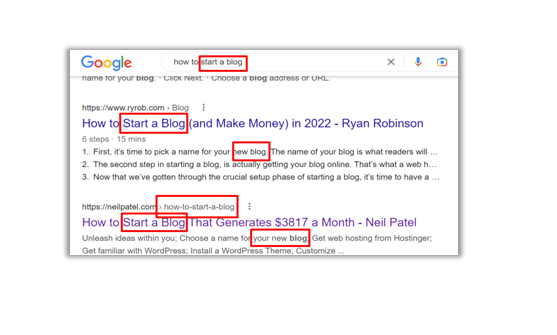 You should also include your keywords within your actual content. Add the keyword in your introduction, conclusion, and at least in subheadings like H2, H3, and H4.
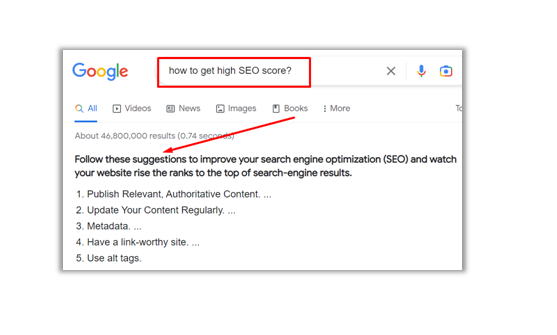 Feature snippets can also come in the form of a list, bullet points, and step-by-step instructions. Make sure you format your list and instructional steps with subheadings like H2 to get a better spot in the search engine.

 Key Benefits of Hybrid App Development