
7 Most Effective Ecommerce Conversion Rate Strategies for 2022

Finding ways to boost conversion rates should be every marketer’s objective. After implementing various business strategies, such as e-commerce content marketing, search engine optimization (SEO), paid marketing efforts, and social media, the majority of owners of e-commerce businesses predict a significant spike in their conversion rate.

However, if you are still receiving visitors that do not convert after using these strategies, you may lose out on further useful methods of e-commerce conversion optimization. Whether the goal of your website is to boost the number of orders, link clicks, or sign-ups, most businesses and flutter app development company in India might stand to gain from a few common but sometimes ignored e-commerce conversion strategies. Continue reading if you are curious about gaining more information on them.


What is Conversion Rate Optimization (CRO)?

The term “raising the conversion rate” refers to persuading a visitor to carry out an action that advances them further down the conversion funnel. The conversion rate will be different for a retailer that wants a consumer to purchase as opposed to a corporation that wants a visitor to download a white paper from their website. Nevertheless, what constitutes an acceptable conversion rate might vary substantially based on the nature of the target, the industry in which the organization operates, and several other factors.

Optimizing your website to boost its conversion rate improves the likelihood that site users will engage in the behaviours you want them to. The great majority of businesses cited personalization, suitable product recommendations, and enhanced product search and discovery as essential to providing effective e-commerce experiences. Because of this, it is important for online retailers and flutter app development company in India to close check on the following metrics if they want to increase their total conversion rate.


1. Showcase your products in a manner that is eye-catching and factually correct.

Customers often fear that they won’t be able to accurately assess an item’s quality if they haven’t had the opportunity to handle it first. As a result, it is essential to present buyers with all the information they want to comprehend your providing and make purchases with self-assurance. This will ensure the buyer has a wonderful experience while purchasing your goods. It is a great first step in the right way to include high-definition photographs and videos of your products on your website.

In addition, you can include interactive elements into the individual product pages that allow customers to virtually try on different things, such as shoes, cosmetics, glasses, and so on. Several companies, looking out for the interests of their customers, have begun to use such aids to help purchasers make knowledgeable decisions. You can get an advantage over the competitors if you carry out this step.


2. Determine who you want to reach and educate yourself on the preferences of that audience.

To improve your conversion rates, you must first identify your target audience. Nobody can be your target market, but you probably have a good idea of the demographic and psychographic details of the typical customer who purchases from you. What ages do most of your customers tend to be, and what kinds of people are they? What is a ballpark figure for their yearly income, and where do they make their home? Do you have any idea what other types of items they purchase? Where exactly do they congregate in the vast expanse of cyberspace?

A flutter app development company in India will be able to cater more effectively to the requirements of your ideal customer at your retail establishment if you have a better understanding of the demographics of that customer. You should codify this information into one or more buyer personas and marketing segments to optimize your efforts more effectively.


3. Put exact keywords for better optimization in search engines.

There’s a good reason why they’re referred to as keywords; using them effectively is essential to drawing people to your website. Utilizing keyword tools might prove to be of great aid to you in carrying out research on potential keywords for your website. It provides information on the number of searches conducted, the average cost per click (CPC), the number of paid and organic clicks, related phrases, and top-ranking websites for each specific phrase.


4. Reduce shopping cart abandonment rate.

On average, between 70 and 80 percent of all purchases made on an e-commerce website are never completed and are left in the shopping cart. An increase of even a few percentage points in this conversion rate might increase thousands of dollars in extra sales revenue.

Even though there are some unique techniques to minimizing abandonment, companies shouldn’t forget the key post-abandonment phase in their marketing. This is because the post-abandonment period is when customers are most likely to return. Particularly important for companies in the retail industry and flutter app development company in India is ensuring that they have an email recovery system in place since this will allow them to win back disgruntled customers.


5. The process of checking out should be fast and uncomplicated.

When faced with a drawn-out checkout process, a customer’s patience may eventually run thin and opt to walk away without completing their purchase. The pace at which customers leave their shopping carts may have a catastrophic impact on your conversion rates.

It is possible to wow your consumers and encourages them to make further purchases from your e-commerce platform by ensuring that the checkout process is fast, simple, and enjoyable. You may throw in things like discounts for purchases that exceed a certain amount, coupons, and other things in addition to simplifying the checkout process, which will make it go more quickly.


6. Invest in a real-time chat software

The capacity to engage in face-to-face customer conversation has long been recognized as a key differentiator between traditional retail establishments and online marketplaces. Asking your flutter app development company in India to put a live chat option on your website will put you back in the driver’s seat and offer you an advantage.

Customers contemplating leaving your website because of an issue may be convinced to remain if you provide them with the option of a live chat to communicate with a representative in real time. Live chat operators may use direct selling methods to seal the transaction. These strategies may include offering a limited-time promotional price cut or giving a discount code good for ten percent off the total purchase price.


7. Maintain communication with your target demographic by sending emails and text messages.

Your conversion marketing techniques should consider that the decision to acquire something, even if it is something we tell ourselves we “need,” is still an emotional one. Because developing a relationship with clients is so important, it is in everyone’s best interest to get in touch with them as soon as possible and to maintain that contact regularly.

A two-way text messaging platform can have an even greater impact on conversion rates because it enables you to respond to questions, generate a sense of urgency by offering discounts or promotions that are only available for a limited time, and guide customers to the products that are most relevant to their interests. Email marketing is a great technique for keeping in contact, but text marketing reaches customers where they are.


Conclusion

To reach your 2022 goal, incorporate some or all of the conversion optimization strategies mentioned above. We wrap off with a last pro tip that every retail marketer should remember. Tech behemoths like Google, Facebook, and Amazon have succeeded by actively engaging with their users and learning from their feedback through extensive data collection and testing. However, businesses in the retail sector would be wise to undertake A/B testing on a regular basis, exposing prospective consumers to many variations of a website’s landing page. Knowing this is essential for any flutter app development company in India to increase conversion rates and figure out what else needs to be changed to get the desired result.


Read More
Sanju September 19, 2022 0 Comments

8 Effective Strategies To Boost eCommerce Profitability in 2022

Online shoppers are increasing day by day. Smartphones, tablets and other devices have given birth to apps. These apps play an integral part in the digital economy. Business owners understand the importance of the online store and eCommerce business; hence, they want to deliver the best business service to the customers.


After the pandemic, there was a surging rise in the online shopping experience. People are buying items online and love to just in the comfort of the home and find incredible items online. It is also a place for small business owners to grow their businesses. Therefore, if you want to boost the profitability of eCommerce, then you must follow these strategies.


Design a good website- for an online business; a good website is everything. With the help of a good website, you can attract the customers to visit the store, look into the products and buy the products of their choice. It should be good in design, functionality, and content. A good website must give the correct information in the right place and format to meet the marketing goals.


Email marketing should look good- if you have a good website, but the email design is not good, then the website’s overall design will be wrong. Therefore, you must have a template of good email marketing which will attract customers and increase profits. Email marketing is the best and most popular marketing strategy for any business. Consumers are directly linked with email. Therefore, if the email template is not attractive, then it is of no use. It has many purposes like increasing sales, giving new leads and increasing brand awareness which will build customer loyalty.

Push strategy- it is a type of strategy where you will send specific messages and draw the customers’ attention. Push marketing is just a popular way which will create brand awareness. The push strategy will be beneficial if the email list is extensive. It is effectively a good opportunity for the customers to buy the products if the push marketing offers and discounts are lucrative. If you witness your eCommerce business growing, you will find out the next step to take the business forward. Hire an eCommerce developer from a reputed ECommerce website development company so you can design the best website.


Multiple perks for the consumers- if you have or want to design an eCommerce website, you must consider how to attract consumers and even increase the profit margin. One can use multiple perks as a strategy which will attract consumers. It would help if you thought of the different ways, you can leverage numerous perks and take advantage of the eCommerce website. These perks will help your business grow, and you will see good results and growth in your business. These perks are an added advantage to the customers so they can use the eCommerce website to buy the best items.


Innovative payment system- today’s generation prefers to make payments online and loves to travel cash free. Hence, the eCommerce website has to introduce an intelligent payment system so that customers can make any payments anywhere in the world. It will make the business profitable. There are many 3rd party vendors from whom you can get the service and collaborate in your business to grow big.


Better security- a good eCommerce website must offer top-notch security and a better strategy for improving security. Protecting the customers from malicious and malware attacks is essential. You have to improve the website’s security with the eCommerce developers’ help. It is a great strategy to make your business grow for the better. Security must be tight so that no hackers can hack the customers’ personal details, information and bank details.


Omnichannel experience- the customers love the trend to buy products online and offline. It is a good approach and will help your business grow for the better good. If there is a good deal, you can easily use the eCommerce website to get the best deal and buy the products online for the better good. It is a powerful strategy through which you can make the website profitable. It turns out to be the best and will give you an excellent approach to making the eCommerce website effective.


Leverage mobile marketing- mobile marketing is a popular marketing strategy that both small and established businesses must follow. For the eCommerce business, this strategy is effective. Leveraging mobile marketing will help you gain success in life. Mobile marketing is always beneficial for your business; people will share the business through mobile, and the business will surely get visibility.


The growth of ecommerce industry

The ECommerce industry flourishes with vertical markets and even with better geographies as the businesses flock through the online channel. Setting up this eCommerce business in the digital age is practical and valuable. The online relatives are in large numbers to offer abundance, and consumers are pickier than ever.

Customers love shopping, and you must make their shopping experience incredible. It will give tremendous growth in the business, and there is no looking back. It makes you feel happy, and your business will grow fast. There are many trends available in the business, so it is essential to know the eCommerce trends so that you can rise and shine in your business. It will help you with prominence and give you excellent results.


Conclusion

The above strategies are incredible for any type and size of business. In the future, you can use these strategies to make the eCommerce website successful. Hence, you can hire the best expert and implement these strategies in your business to have good growth. Hence, you should look into the strategies to understand that the ecommerce websites and businesses will have a good amount of profit if they follow the strategies and implement them in the business. Indeed, your business will see immense growth, and you will get the best result in your business, and you can get business success and credibility.

Read More
Sanju August 4, 2022 0 Comments

Why Do You Need an e-Commerce Website?

Why you need an e-commerce website is the first question that comes into your brain before you start an online store. Several e-commerce platforms will help you get started with a turn-key solution that requires little to no work. However, as your company expands, you may need to make more significant changes to keep your customers coming back for more.

If you are looking for an e-commerce web guide, you are at the right place, in this article, we’ll discuss what e-commerce web development is, how to find a developer or team of developers to help you realise your idea, as well as the actions to take before going live. Let’s get this party started.


About E-commerce website development

If you are one among them looking for an Indian e-Commerce web developer, you need to first know about e-commerce website development and what it is. The process of creating an e-commerce website store that responds to user actions, assists customers in purchasing and returning goods, accepts online payments, provides a seamless online shopping experience, addresses technical aspects of the online store such as page load speed and SEO, and has optimised schema is known as e-commerce website development. Buyers can find, compare, and buy desired products or services online in minutes with a few clicks using their smartphones, tablets, and PCs, making the investment of time, effort, and money. It is a reasonable option in terms of enhancing your business growth with more sales and more income during the e-commerce website construction process.


What is the difference between an e-commerce website and another form of a website?

The ease of operation and design of both of the websites vary in size and style. Some are little, with simply a single long page, while others are enormous, with complex backends and features. HTML and CSS aren’t enough for e-commerce sites. E-commerce websites are more difficult than other types of websites because you must accept payments online and ensure that your website is simple to search and navigate.

There are a number of informative sites, where CPC or PPC ads would be complimenting that information about any product, service, or brand. And later, the user visits the shop or company physically. E-commerce websites frequently provide the same information as ordinary websites but go a step further by selling a product or offering a service online, regardless of the customer’s location.


Common types or forms of e-commerce website

Let us suppose you are all set to get an e-commerce website and also aware of the importance of an e-Commerce website though you are not aware of the types of e-commerce websites. It can be disturbing and hazardous for your business, so before you get started with your e-commerce website, you need to know about some of the common types of e-commerce websites so that you can demonstrate your expertise prior to approaching a developer.


– B2C (Business-to-Customer) Online Stores

If your product is tailored to meet the needs of certain end-users, you should have an e-commerce website built specifically for presenting, marketing, and selling your goods.


– C2C (Customer-to-Customer) Online Stores

Websites, where one client sells goods or services to another consumer exclusively online, are referred to as C2C e-commerce. In most cases, the sale is facilitated by a third-party website, often known as a marketplace or selling point, which assists in the management of the transaction data that you supply with the website.


– B2B (Business-to-Business) e-commerce websites

The business-to-business e-commerce model’s framework is precisely what it sounds like. It’s a marketplace where companies may sell their wares to other companies.


– C2B (Consumer-to-Business)

This is a technique in which a single shopper provides a business with goods or services. Independent specialists, essayists, architects, and programming engineers, as well as attorneys and bookkeepers who handle commercial needs, are genuine models. In a C2B transaction, bloggers who sell advertising space on their sites are also tempting.


Features for e-commerce websites

– The website should be user-friendly

Your e-commerce website should strive for simplicity, but this does not have to come at the expense of elegance. The goal is to make it easier for customers to receive what they want faster, more smoothly, and without being slowed down by unnecessary complexities.


– Safety of e-commerce website

Security is critical in the e-commerce sector that you must look for if you are getting an e-commerce website or across the globe to ensure that the website is bug-free and secure. Consumer information, product information, price information, and financial information such as banking and credit card information are all targeted by various hackers and fraudsters in the e-commerce business. As a result, data security should be given top attention, and multiple procedures should be implemented on the site to maintain comprehensive security.


– 24*7 access

An e-commerce website allows you to grow your business because you can provide 24×7 service, which gradually improves your business. All of this is impossible with your actual store because operating it 24 hours a day, seven days a week is simply impossible. You’ll be able to do so just through your online store!


– More earning at low maintenance costs

When compared to the maintenance costs of a physical and mortar store, your e-commerce store’s operating costs are relatively minimal. You only need to spend money on website hosting and maintenance.


– Build trust & reputation

The trust is a major factor that every etailer wants to build. But, no overnight miracle can happen for it. You have to consistently provide excellent services and support. The eCommerce website comes with many alternatives to reach out to customers for supporting and then, converting this opportunity into building trust. Chatbot integration, emailing, and contact us are a few options that can help you to make it true.


– Discover customer intention

However, it’s not directly possible to discover what your customers intend. Explore the web journey of your customers via web analytics. Their moves, spent time on various pages, keywords to search, and payment methods can help you prep up for a marketing plan to specifically convert them in no time. Offering bespoke products at a reasonable price or discounted rate can attract them to convert into a sale. This is how you can win leads, customers, and money also.


– Marketplace exposure

The marketplace is where you can set up your own store like Shopify, woo commerce, and more. They have millions of visitors, which you may draw benefits from. Just acquire your own space in it through a website on any of them. Thereafter, the struggle will be the least to onboard customers and run marketing campaigns from scratch. Besides, people trust these eCommerce sites, so they easily get ready to invest money. Furthermore, the new product promotion is like a walkover. It is simply because of the consistent flow of shoppers that come there more often. Your product searchability increases in no time. What more you need!  


Summary

The complexity and the need of an e-commerce website varies before starting an e-commerce business varies, as do the platforms available to you. Whether you start with a complicated platform or a turn-key solution, you may need additional e-commerce development assistance at some point during the lifecycle of your firm.

Read More
Sanju June 27, 2022 0 Comments

Why Do You Need a Good E-Commerce Platform?

After you have completed your preliminary study, you have to select an e-commerce platform, establish your shop, and introduce your new project. And yes, this includes businesses that provide goods or services to other companies.


Due to the following:

  • There’s a small probability to access here.
  • There will be no development costs or technical complications.
  • An extensible framework that enables your business to expand.
  • Search for a platform with a sizable community of users and administrators who can attest to its success.
  • Visit their forum, read their blog, and peruse their documentation.


First, let’s look at what e-commerce platforms can do for your online business.


What Is an Ecommerce Platform?

An e-commerce platform enables small and large online businesses to easily manage their marketing, websites, sales, and operations. Consider it the organization’s hub or headquarters. E-commerce platforms combine potent features with integrations to standard tools, allowing businesses to integrate operations and operate uniquely in forward-thinking E-commerce.

On-premise solutions lag with open SaaS e-commerce platforms as e-commerce technology grows. As businesses want more native user experience (UX) features in their products or backend improvements, a massive migration to SaaS and online commerce has emerged.

On average, SaaS allows businesses to enter the market in just over a month. SaaS e-commerce platforms take care of all aspects of software management, such as management tasks. Finally, headless commerce is an e-commerce solution that provides increased control over an online retailer’s front. Headless eCommerce, in which the cart is separated from the content management system, is the future of e-commerce.


What does this mean?

Rather than operating your website on an e-commerce platform, you can employ a CMS (content management system), such as WordPress, to create the user experience. Using Visual Studio Pro 2017 enables you to customize further and personalize your store while retaining the benefits of the industry’s best e-commerce platform.


Hosting a website

Ecommerce websites can host in one of two ways: self-hosted or cloud-hosted.

The bad news is that performing these updates may require you to shut down your website for an extended time.

The reality is that using this solution to manage an eCommerce website can be price, as programmers frequently use it to maintain and restore the site. If you can’t update your online shop without the help of a third party, you’ve effectively given that third-party control.

While this step entails a steep learning curve, it offers numerous benefits, including increased regulation of your online retail platform, increased data visibility, and better knowledge about data security.

When your business is very complicated, take this option. If not, you should consider migrating your eCommerce store to a cloud-hosted solution.


Cloud-based eCommerce platforms

Simply put, cloud-hosted e-commerce platforms monitor and manage your store’s uptime — the amount of time that service (or, in this case, a website) is accessible online.

Remember that not every cloud-hosted e-commerce platforms automatically install and updates. This capability is unique to SaaS commerce solutions.


Consider the Following When Choosing an Ecommerce Platform

You should choose an e-commerce platform that meets the needs of your online store.

However, your platform should have some native, excellent features.


Here are the following features you can use for your eCommerce platform:

  • The hosting environment, domain name, uptime year-over-year, and bandwidth available must all be considered.
  • A drag-and-drop e-commerce website builder comes with free, easy-to-use site themes that you can customize to your specifications.
  • Broad app store featuring industry-leading service providers and integrations.
  • When it comes to mobile apps and responsive websites, you’ve come to the right place.
  • PCI compliance is required.
  • Your inventory system is accessible to every sales channel.
  • As are analytics, catalog management, and other essential eCommerce features, discounted prices and promotions are included.
  • Outstanding customer service.
  • Recovering abandoned shopping carts.
  • Selling unlimited items such as physical or digital products is possible.

To remain competitive in the market, look for eCommerce software that incorporates advanced features into the platform and makes them available for free.


5 Things to Consider When Choosing an Ecommerce Platform


1. Initiate a free trial period by posing pertinent questions.

As with any other step in starting an online business, you should have a list of questions prepared to assist you in making the best decision for your store. Requesting assistance from sales or customer service is an option, as is signing up for a free trial to test the product’s features.

In any case, go over the following eCommerce planning checklist for each platform you’re considering. Verify the following when evaluating options for your company:

  • All required components, such as drop-down menus and an editor, are included.
  • Is it simple to operate — and, perhaps more importantly, do you feel at ease with it?
  • It provides a reputable web hosting service. It eliminates the risk of your store going dark during peak hours!
  • It is free to improve customer service.
  • Provides support for the products you wish to sell (e.g., physical or digital products).
  • How does the platform display all possible configurations if a product has variants? How do you handle that?
  • You can sell directly to customers on Facebook, eBay, Amazon, and Pinterest without managing multiple inventories.
  • It is mobile-friendly and easy to customize.
  • Thanks to its excellent SEO optimization, a high ranking on Google and increased traffic to your store are possible.
  • It is built using open APIs and is compatible with other applications.
  • It is free to improve customer service.
  • Provides resources (such as a blog) to assist you in acquiring the skills necessary to sell online and gradually expand your business.


Even after receiving responses to these questions, you should test the eCommerce solution before making a strategic decision.

Regarding eCommerce platform selection, the remaining steps are critical for new store owners to consider.


2. Create a pricing structure for the platform.

Ecommerce platforms do not come cheap.

They offer services that combine the requirements for multiple technologies into a single package:

  • Hosting.
  • Checkout.
  • Payments.
  • Compliance with the PCI Data Security Norms (PCI DSS) is required.
  • Safeguards against fraud.
  • DDoS attacks are categorized as cybercrime.
  • Among them is analytics.
  • Everything is organized for easy access on the backend of each eCommerce platform.

However, as pricing models for eCommerce platforms vary, you should conduct extensive research before deciding. Take note of the inclusions at each price point to ensure you’re getting the most for your money.


Are you wary?

Here are some eCommerce websites you should look for

When creating your website, Is it intended for whom?


Best Ecommerce Website for Businesses

The following table compares the best eCommerce website builders for small businesses:

  • BigCommerce – Entrepreneurs and those who are expanding their businesses
  • Shopify – Applications are encouraged from small businesses, hobbyists, and brands with less than 100 SKUs.
  • Squarespace – Individuals who are bloggers, artists, or portfolio creators
  • WooCommerce – Bloggers, small businesses, and hobbyists diversify their revenue streams through eCommerce.
  • Wix – Anyone with little or no previous website-building knowledge may use Wix.
  • Weebly – Smaller businesses, hobbyists, and newly opened retail establishments
  • Volusion – Individuals and startup businesses
  • Big Cartel – Explicitly designed for small businesses that do not require a sophisticated platform.
  • GoDaddy – Hobbyists, self-employed individuals, and proprietors of small businesses
  • Shift4Shop – Manufacturers on a smaller scale and new retailers.
  • Opencart – Participation is encouraged for small companies and the general public.
  • Prestashop – Customers looking for cloud-based platforms that are available for free.

As you can see, the costs associated with these well-known eCommerce platforms vary considerably (and total value). Conduct extensive research to determine the platform that will benefit your business the most.


3. Choose the right platform for your store’s design.

Your website’s design is vital to your business. It’s your first point of contact with your clients. Modern consumers demand superior web design and user experience. Theme or template selection is critical when setting up an online store. This task requires no CSS or HTML coding expertise.

Make your theme or template for instant differentiation and long-term growth. Most platforms mix free and paid themes. Begin with trials, choose your top eCommerce platforms, upload filler content to the backend, and then preview your site on multiple articles to find the best fit.

Keep in mind device size, usability, customization, and scalability. Want design ideas? Some of our favorite web design examples.


4. Evaluate the store’s functionality and usability.

One job shouldn’t require you to learn a lot of coding or have the extensive technical knowledge to be usable. It requires the platform to be simple to use, configure, and maintain over time.


The following are some things to watch out for:


The Configuration Process

Is a simple setup flow describing everything you need to know before launching, including loading products, configuring taxes, registering a domain name, and processing payments?


Management of products and SKUs

Once you’ve configured the basics, bulk uploading products from CSV files is a much faster way to add products to your catalog. Additionally, you should maintain an unlimited number of products, or SKUs. Furthermore, your platform certainly supports it, mainly if your catalog is large or growing. Since you can be at the App Store with just one click, you’ll want many one-click applications or pre-built system integration to increase traffic without having to hire programmers. Utilize your platform’s app store to locate and install tools that you desire or require. These tools must communicate with one another and maintain a real-time state of readiness.


Multiple Channels Managed from a Single Location

Omnichannel strategies are thriving in today’s eCommerce environment. Today’s customers shop on Instagram, Etsy, Facebook, and Amazon are just a few platforms where today’s customers shop. Once your business has launched and begun generating revenue, you’ll almost certainly want to expand into new channels rapidly. Many eCommerce platforms require you to manage your eCommerce site and other channels’ platforms.

It can be confusing, and breaking the rules may result in a ban from specific marketplaces. Consider a centralized channel management platform that enables  you to push your product directly to those channels, manage price points and product descriptions, and more — from a single dashboard.


5.  Determine the platform’s scalability and customizability.

Your business will grow over time as a result of your meticulous planning. Additionally, as your business grows, you’ll require additional support from your eCommerce platform.

Which type of assistance are you seeking? It is a tricky forecast to make. Each business is distinct. As a result, many brands rely on APIs to tailor and automate their stores to their specific requirements. While startups aren’t quite there yet, it’s something to consider if you want to expand. Prepare for this stepping stone by searching for platforms that provide dependable and responsive APIs.


Conclusion

Finally, keep the long term in mind when weighing your options. In addition, concentrating your efforts on marketing and business objectives allows you to save time and add more value. Do not be limited by a lack of rapid technology. After selecting an eCommerce platform, the next step is creating and launching your online store.

Read More
Sanju June 17, 2022 0 Comments

How To Build an eCommerce Website in 12 Steps

E-commerce websites are no less important than traditional brick-and-mortar stores. Early ’90s retail stores had to be decent looking. Nowadays, an eCommerce store is essential for standing out from the competition, just like it was in the early 90s.

There are millions of online eCommerce stores you can shop from in today’s world, so you might think it will be hard for you to stand out, but if you don’t open your store, nobody will know you exist. Businesses have to adapt to changing times by upgrading their business modules as people adopt new shopping methods. eCommerce website development services can help you.

Building an eCommerce store may seem expensive and time-consuming, but it doesn’t have to be. The results of your investment are worth the cost of hiring eCommerce developers. You can still build your eCommerce store, but it will require time and energy to conduct research and go through trial and error.

Here we have talked about ten simple steps to develop an eCommerce store. Here’s a quick overview of what it takes to create an eCommerce website.


1. Determine the products that you are interested in selling (Research)

It is possible to sell many things online, but you must first figure out what you wish to trade. Products you are currently selling in your store or products you want to experiment with that you are already selling.

Conducting research is essential when choosing your products. Determine your main selling point, margin rates, and how you will outrank your competitors by choosing a product with high demand in the online marketplace.

An eCommerce store starts with selecting the right products based on in-depth research. The alternative is to find yourself caught between low margin rates and cutthroat competition.


2. Determine Your E-Commerce Business Model –

A business model for an eCommerce store is the same as for an offline business. Business to business (B2B) and business to consumer (B2C) are the two most common e-commerce business models.

B2C online stores deal with small yet frequent customers regularly, while B2B online stores handle bulk sales and large orders in one transaction. You can determine the structure of your website based on your eCommerce business model. ecommerce website development services can guide you.


3. Identify Your Target Audience –

You can better structure your eCommerce store by defining your target audience. It is very easy to figure out and leverage your competitors’ marketing strategies by analysing their website and online presence.

Knowing your target audience’s behaviour patterns, preferences, and choices, in addition to analysing competitors, will help you to design an effective marketing strategy. A little extra online research will help you discover new aspects of your target audience if you already own an offline store and know them well.

The design and visuals of your website should match the tastes and preferences of your target audience. This will help your business build a strong and trustworthy relationship with your target audience.


4. How To Decide And Purchase A Domain Name –

Are you nostalgic for the days when your business name was emblazoned on a large board outside the store? Isn’t it great to feel as if your business belongs to you? A domain name is just as important as that huge board for an eCommerce store.

You want your potential customers to recognize you quickly online, so choose a domain name that is similar to your business name. Purchase your domain before you start creating your eCommerce website because it is likely that many others will be searching for the same field, and you may lose it if you do not purchase it soon enough.


5. Choosing Your Branding Elements –

Make sure you add something unique to your online store that makes your business and company stand out. With an eye-catching logo, colour palette, design packaging, and storytelling power with unique content, you can ensure that your customers have a seamless experience.

People will begin to trust you when they hear about your business story. In the absence of your story, you are just another online seller. Personalise your website and brand and ecommerce website development services can guide you.


6. How To Pick The Right E-Commerce Platform –

After halfway through, you should now look for an eCommerce platform. Build your eCommerce store on Magento, Shopify, and WooCommerce. They offer flexibility and unique features.

If you decide to build your own website with an ecommerce platform, it should include the following key features:

Responsive design: It is important that the ecommerce platform offers a consistent experience across desktop, mobile app, and other mobile devices.‍

Product management: Adding new products, editing them, and maintaining the inventory should all be easy to accomplish. Additionally, you should be able to offer promotional or sale pricing for each product.‍

Content management system (CMS): In a design, recurring blocks of content are a special kind of content that needs a CMS to be updated and edited. Maintaining your website with new content can be accomplished with the help of a content management system.‍

Shopping cart: A shopping cart should be able to be customized and styled to blend seamlessly into the shopping experience.‍

Checkout page: The checkout page shouldn’t be fixed and can’t be customized, just like the shopping cart.‍

Payment processing: Payments can be accepted via credit cards as well as electronic payments such as PayPal, Stripe, Apple Pay, and Google Pay.


7. Having A Content Strategy

When developing an eCommerce website, you also need compelling content that interests your target audience and pursues them to purchase your product. Also, great content will support your site to rank better with the help of SEO.

Developing a content strategy should be done at the beginning of the process. Essentially, you need to know what content your brand needs to tell its story and illustrate what your products do. The types of media you’ll need to best serve your customers may include writing, photos, videos, infographics, and other forms of media.

Knowing your audience is crucial to content strategy. Could you please let me know what they ask most frequently about the products you carry? It’s important to include answers to basic questions that they might have, as well as information that your competitors may not provide. A content strategy determines what content is required on an ecommerce site and how it should be presented.

The content strategy of your website influences its information architecture. You can imagine content as freight on a train, and information architecture as the railroad tracks. To reach your customers, you must know what they need.


8. Optimize Your Site for Search Engines

Search engine optimization (SEO) is key to the success of your eCommerce website. An eCommerce website’s success depends on search engine optimization (SEO).

SEO helps your eCommerce website in many ways. Here are two basic SEO practises –

 # identify search terms that people use to find the products and services you offer;

# Ensure the website contains relevant words and phrases in its headers and descriptions.


9. Category Relevance 

You need easy-to-navigate categories on your eCommerce store as well. Categories provide your audience with a clear understanding of what you have to offer. If you don’t categorise your store, you’ll look messy, and customers will leave even before they’ve explored enough. A well-structured product page increases your store’s value.


10. Take detailed product photos

Most people with a decent camera and some experience can take good pictures with a tripod, a few lights, and a background of paper. For better-quality images, you might consider hiring a professional if you have the budget. In addition to making sure the photos are focused correctly, white balanced, and represent the products accurately, the person taking the photos is also accountable for making sure the colors accurately reflect the products. By having the ability to edit the photos further, you will be able to showcase your products to their fullest potential.

Customers cannot physically see and feel the product when shopping online, which is one of the disadvantages of online shopping. This needs to be addressed with the product photos you use. Your customers will be able to better understand your products if you use images that show your products from multiple angles and closeups.


11. Write a product description that is effective

Your product description tells a customer everything they need to know. Your product description outlines how an item works and the benefits of using it. Adding it to their cart is made easier because it provides all of the guidance they need.

Specifications and features are necessary in product descriptions, but they should not be a dry recitation of details. Empathy should be their guide and they must establish personal connections with potential customers.

 Customers should be kept in mind when writing product descriptions, and the descriptions should emphasize how a product will solve their problems and improve their lives.


12. How To Choose The Best Shipping Software –

You must deliver the products ordered by your customers in addition to their orders. Your eCommerce website will be more successful if you add the right shipping software. ecommerce website development services can guide you.

Read More
Sanju May 17, 2022 0 Comments

Enter the eCommerce Industry Using a Buy and Sell App Like Letgo

We’ve already jumped into 2022 with new hopes! What a great start it would be if you started by “letting go” of old things and “giving up” to those who truly need them. Let me ask you a question: do you think it’s better to sell outdated items for free or for money? You, of course, choose the second choice. And you can accomplish that by creating an awesome buy and sell marketplace where Letgo and OfferUp are more than just names. They are a chance for entrepreneurs to sell and buy thousands of items locally in return for money.

Building a buy-sell marketplace has considerably expedited the process for both local buyers and sellers because it is the ideal way to get things done in minutes. In this blog article, we will examine several factors relating to “Let Go” and “Offer Up,” such as apps, business strategies, and more.


Letgo and the OfferUp App

Letgo and OfferUp are the plainest and most simple-to-use platforms for users to purchase and sell in a virtual world. These apps are extremely popular, with over 100 million downloads and 400 million listings globally. They are also known as large reseller markets, where thousands of used products, gadgets, cars, collectibles, furniture and other items are sold.

Local buy-and-sell marketplaces like OfferUp and LetGo are wonderful company ideas since they allow both sellers and buyers to buy and sell locally. According to the most recent figures, more than 1.8 billion people prefer to shop for used items online rather than visiting specialized locations. In addition, e-commerce sales are expected to reach 4.0 trillion dollars in 2021, with revenue more than tripling in 2022.

With the merger of “offer up” and “Letgo,” there is now a chance to combine the capabilities of both marketplaces to provide a better experience for both consumers and sellers. All of this implies that vendors will be able to reach more customers by selling more quickly on this merged marketplace, while consumers will have access to more bargains.


The End-to-End Operation of OfferUp and Letgo Apps

Letgo and OfferUp are local integrated buy and sell marketplaces that are simple to use. It’s similar to Facebook in that it allows you to buy and sell used products in your neighborhood. You must first join up before you can do anything to post or buy anything. How would you go about doing so? To create an account, launch the app, fill out the required fields, and click the signup button. Once you’ve signed in, the app’s home screen will appear. On the main screen, a search bar will display, allowing customers to restrict their search by category and identify specific items to purchase.

Once the results are displayed, you can easily scroll through the app’s listings and select the one that looks to be the greatest fit for you. When you view a specific ad after that, you’ll see images of the item, some basic information about it, and the price. You can either ask questions about the goods or make a purchase offer.


Marketplace business models such as Letgo and OfferUp

Similar Apps like OfferUp and Letgo are mostly used for selling and buying old products. All of these buy-and-sell apps adhere to the same business model, which is predicated on collecting revenue through adverts. There are no fees to create a profile, register, or even conduct a transaction. Letgo, a reseller eCommerce application development platform, is one of the top platforms for selling and purchasing used things such as home-garden, fashion, accessories, and vehicles. LetGo’s business model is built on charging sellers a fee for each sale made as well as the transportation of the product via its platform.

If you want to discover How To Build A Buy and Sell Marketplace App Like LetGo, consider some of these monetization possibilities.


How Do You Begin An E-Commerce Business In Turkey?

If you want to launch an eCommerce business in Turkey, you must go through a number of preparatory and legal stages.

Begin by conducting competitive research in Turkey to determine the space in which to create your eCommerce brand.

Next, choose a business name and formally register it, as well as secure all essential permits and licenses.

Create a robust marketplace for the selling of used hotels in Turkey, used home and garden things in Turkey, used electronics in Turkey, and used children’s items in Turkey.


Letgo Earns Money – App Ideas For Earning Money

So, let’s go right to the point: how can an app like Letgo make money? Letgo is clearly a free marketplace platform where users can easily advertise their stuff. There are still a few revenue models to go over:

Ad-based Model: One of the income strategies that has propelled Letgo to success in a very short period of time and has assisted the marketplace in increasing the number of users. This strategy has various advantages for marketers, ranging from showing a large number of banner advertising to making a good income. The more users who click on banner adverts, the more cash is earned.

Freemium Model: The Letgo platform’s freemium model is designed specifically for product owners who want to list their products at the top. This model includes the “featured listing” function, which allows product owners to attract a large audience with sales.

In-app purchases: The ability to purchase special offers in-app or for sellers to pay to have their advertisements appear at the top of the app. Your service can also serve as a middleman, allowing merchants to broaden their trading area.


The Best Features of Letgo and Offerup Have Been Listed!

Registration using social media: This is a feature that all of the best local selling apps have. It increases user trust in your service and simplifies the identity verification process. They will also not have to submit their information manually because everything will be pulled from a social network.

Profile creation: Personal information for sellers and buyers, as well as all things for sale, a list of addresses, and cards, will be displayed. Users should also be able to alter their own profiles.

Search engine: Keep in mind that the search should be dependent on the clients’ location. As a result, it allows users to widen or narrow the search range. It’ll be simple because almost all modern cellphones have GPS built-in.

Advanced filters are required to make the search process as simple and quick as possible. To save shoppers time, organize everything into categories, groups, price, size, location, and other factors. If the seller sells similar items in several variations, choose one from the list (based on color, smell, and other factors) or enter your own. A sizing chart would also be beneficial.

Built-in camera: This feature allows you to capture photos in the app and upload them right away. The option to edit photographs, trim them, and adjust brightness and contrast would be a pleasant addition that merchants would value.

Built-in chat: Built-in chat is one of the most popular and useful features of such apps. It makes it easy for users to communicate and discuss transaction data.

Support for several languages and currencies: If you want your program to work in multiple countries, it must support the relevant currencies and languages.

Push notifications: This is a low-cost solution that will keep your users informed of all new features, updates, and changes, as well as receive notifications of new chat messages.


Some Additional Benefits

Price comparison: This is an excellent opportunity for users to quickly and easily select the best items.

Provide hot bargains: The capacity of a vendor to provide hot deals, discounts, or coupons is incredibly valuable. You’ll be able to earn more money if you charge for this feature.

Include the following subcategories: Including categories such as best bargains and recent offers is an excellent way to encourage suppliers to be more honest and raise their ratings.

Scan photo feature: This function allows your Letgo Clone App to provide ideas on how to fill out product descriptions and categorizations based on the photos you can. You can also look at the images you’ve submitted to see if they’re of good quality. On various sites, customers complain about the quality of the images or that they are phony. Some platforms solve this by canceling the transaction and asking the seller to supply at least one live photo of the item.

Built-in payment solution: When customers use your service for the first time, they are asked for their credit card information as well as their phone number. Following that, the users provide their email address, and a unique code is issued to that address to confirm all of their information. As a result, you do not need to enter it every time you use the service.

Agreement with third-party delivery services to improve user quality of life and reduce transaction time.

Commentary and rating: The function protects customers from dishonest merchants.

Read also: Guest Post Sites List


How to Create a Buy and Sell Marketplace App Similar to LetGo Best Websites to Sell Stuff Locally

Consider the following for the name of your marketplace: To begin with, the name of your app should be intriguing. Because the title is the first thing users see, it should be brief and pertinent. There are numerous brand name generators available to help you choose the perfect name for your next app. Other key factors to consider are the app’s title size and the expectations of the target audience.

Have an appealing UI/UX: The importance of a visually appealing UI/UX cannot be emphasized. Beautiful graphics and an easy-to-use user interface are essential, and your potential consumers will notice. Users prefer to see a familiar model of an app like this. Thus your buy-and-sell app should have a simple and user-friendly UI and UX.

Create a virtual shopping cart: People can purchase a variety of items through your app, and they should be able to put those items into a virtual shopping cart. Buyers can go to this basket and go to the payment page, or they can choose payment on delivery, depending on their preferences, after generating a list of what they need. You can appropriately sort all of your purchases using a shopping cart.

Choose the finest payment gateway for your buy-and-sell software, whether it’s PayPal, Stripe, or another payment method. If you’re having problems deciding, look into the market and your competitors, as well as effective solutions. Pay close attention to local government restrictions, and don’t forget about payment processing security.


Some Vital Factors to Consider

Select a niche: Do you want to create a local selling app for selling products in your region, or do you want to create an app that allows you to buy and sell across cities and borders? The first step in this process is to determine which market you wish to target. You must also select the commodities with which you will be working. You can create an app to sell used things in a specific category or a broad-spectrum app.

The user’s experience: Depending on whether the user is a buyer or a seller, a single online marketplace app is viewed as either a purchasing or selling app. In both cases, the user experience should be taken into consideration. Apps for purchasing and selling should be feature-rich and performance-driven.

Fraud prevention: Fraud prevention is essential for a stable economy. As a business owner, you should invest in client security and fraud detection algorithms. Before buyers and sellers can register with your buying and selling software, they must be vetted.


An Estimated Cost to Create a Marketplace App Similar to Letgo and OfferUp

A variety of factors influence the cost of Letgo & Offer Up reseller mobile app development. The following are some of the most important:

The characteristics and their complexities
  • Time
  • A company that creates apps
  • Location
  • Budget

To maintain the essential characteristics in place, the overall cost to create a buy-sell application using an offerup clone script would be between $20K and $40K. The price may vary depending on the features and location.


Final Thoughts

This essay sought to clarify the essential business elements, fundamental characteristics, recommended features, and estimated cost of creating the best Reseller eCommerce application development with Letgo Clone. It’s time to set your doubts aside and begin planning how to build a buy and sell marketplace app.

When launching any business, there will be unexpected challenges, roadblocks, and defects. The most important thing is to get rid of them and move on. Our innovative and performance-driven products have earned us a reputation as a leading software development company.

Read More
Sanju March 25, 2022 0 Comments

Top Free and Paid Ecommerce Platforms

Starting an eCommerce business can be exciting. You get to choose your brand name, design the logo, market the brand, and so on. While you might be aware of your business requirements in the present, it’s still important to choose the right eCommerce platform that will cater to your long-term growth. Hence, to help you streamline the best eCommerce platform that will meet your present and future needs, we have covered a few paid and free eCommerce platforms in this blog. But first, let’s get an overview of the basics.


What is An eCommerce platform?

An eCommerce platform is used to create and build online experiences that allow buyers to purchase online, while sellers and business owners can make sales and fulfill orders (irrespective of the customer’s location). eCommerce platforms also allow online businesses to manage their sales, marketing, operations, and website. Furthermore, these platforms are powerful tools to list products, accept online payments, control inventory, and so on.


What to Look For in An eCommerce Platform?

Many eCommerce platforms are available in the market. So if you are looking to pick one – to take your existing business online or are planning to launch an eCommerce platform, here are the key features to look for:


Ease of Use

The greatest thing about an eCommerce platform (especially readymade) is that it requires very little capital and expertise to start. But if you choose software that is complex and not easy to use, then you have consciously chosen to put effort into learning how to use it. On the contrary, if you lack technical skills, an eCommerce software that is easy to use allows you to create a beautiful eCommerce site without taxing your patience.


Payment Processing

An eCommerce platform that allows you to accept payments from multiple channels helps minimize friction during the checkout process. There is also an increase in the likelihood of shoppers completing their order purchases while the ratio of abandoned carts will decrease. So an eCommerce platform should accept popular options like PayPal, Apple Pay, Stripe, and so on.


Analytics

Analytics help businesses in making more informed decisions to achieve a variety of goals. By leveraging data, an eCommerce business can better understand consumer behavior, track average order value, sales conversion rates, churn rates, gain insights into their competitors, and more. If there is an eCommerce platform that perfectly meets your requirements in all ways except analytics, make sure it integrates seamlessly with a third-party eCommerce analytics tool.


SEO-friendly

An eCommerce platform should come in the search results not only for your brand name but for the product and services being offered. This means that the platform should be SEO-friendly. By having a platform that lets you use your domain, collect and publish customer reviews, and content so that organic traffic is pulled.


Integrations and Apps

Another important point to consider when you’re searching for an eCommerce platform is – the integrations and apps it offers. Integrations for email marketing, inventory management, or accounting can extend the functionality of your eCommerce platform. They can further fill the gaps by offering features that a chosen eCommerce provider might not have. While mobile apps can be used for the ease of shopping and delivery.


Mobile Friendly

According to eMarketer, the number of mobile buyers in the United States by June 2021 was 173.3 Million which by 2024 is projected to increase to 187.5 Million. The increase in the purchase of mobile devices showcases that it is important to have a mobile-friendly eCommerce store. An eCommerce site that is not responsive can disrupt the user experience and can lead to customers moving to the eCommerce site of competitors.


Support

Even the most simple and easy-to-use eCommerce platforms should offer support. So that when the time comes, the troubleshooting service offered is accessible and swift. For example, if your eCommerce site is down, then the assistance to be provided should be available. The eCommerce platform should offer multiple support options like email, phone, live chat, or self-help options like a community forum or a knowledge base.


List of Free and Paid eCommerce Platforms

In recent times, technological advancements have given rise to both free and paid eCommerce platforms. As the demand for both is increasing, thus, we have listed free eCommerce software along with the top paid platforms. 


Free eCommerce Platforms

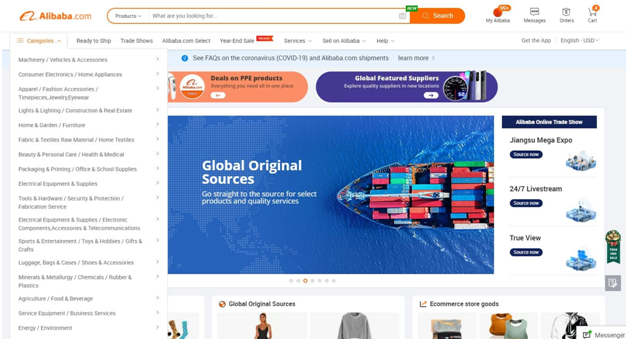
1.   Tribe

TribeTribe is an efficient eCommerce platform that allows small and medium businesses to start their eCommerce store for FREE. It is built on Laravel and unlike other free eCommerce platforms, Tribe enables entrepreneurs to create a customizable, seamless, and secure online store with a lifetime license. It also comes equipped with an intuitive drag-and-drop CMS editor that helps in personalizing the storefront with minimal hassle and less coding.
 

PROS

  • From set up to installation, Tribe is available for FREE with zero monthly and yearly fees
  • Is built on a powerful open-source web framework, Laravel
  • Has pre-integrated APIs to maximize eCommerce possibilities
  • Offers free installation with three months of technical support
  • Unlimited products can be added and sold via Tribe; there is no capping
  • Offers source code ownership
  • Supports multiple payment gateways
  • Encapsulates multiple marketing features
  • Is backed by Agile Team for customizations
  • Readymade mobile apps (coming soon)

CONS

  • Limited support for premium themes
  • Hosting is not included
  • Removal of Tribe’s signature from the footer is paid

2.  WooCommerce

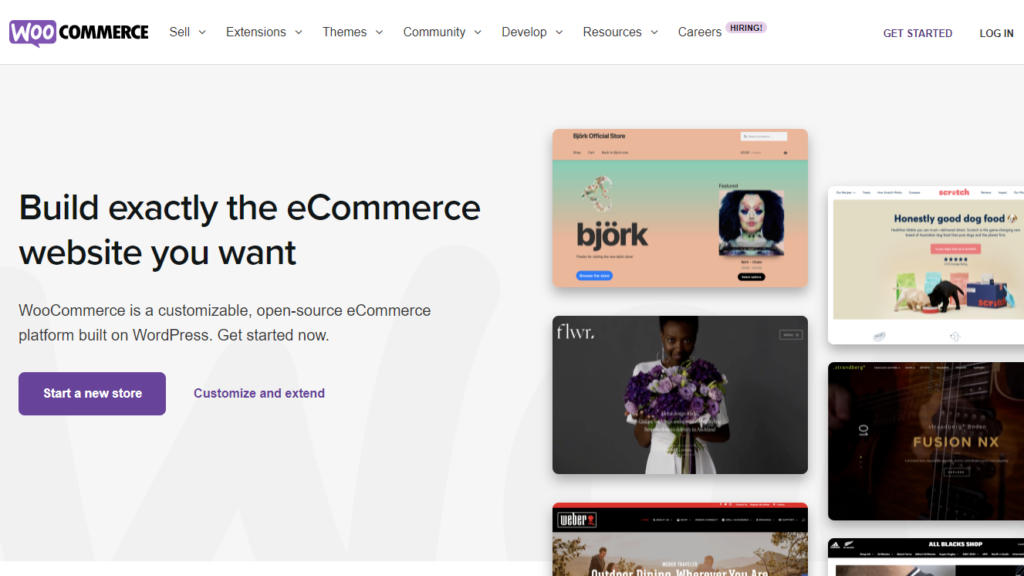
WooCommerceWooCommerce is a self-hosted, open-source eCommerce solution that is built on WordPress. It helps users design product pages, optimize search results, manage multiple customer accounts, orders, inventory, payment, and more. The learning curve for WooCommerce can be stiff as users need to be acquainted with WordPress to be able to use it.
 

PROS

  • Supports multiple payment gateways
  • Offers inventory and promotion management
  • Multiple plug-ins are available
  • Support via live chat and email are available

CONS

  • A few plug-ins and themes are paid
  • Technical skills are needed
  • Installation, store setup, and management requires time to get adjusted to
  • There is no free trial


3.  BigCommerce

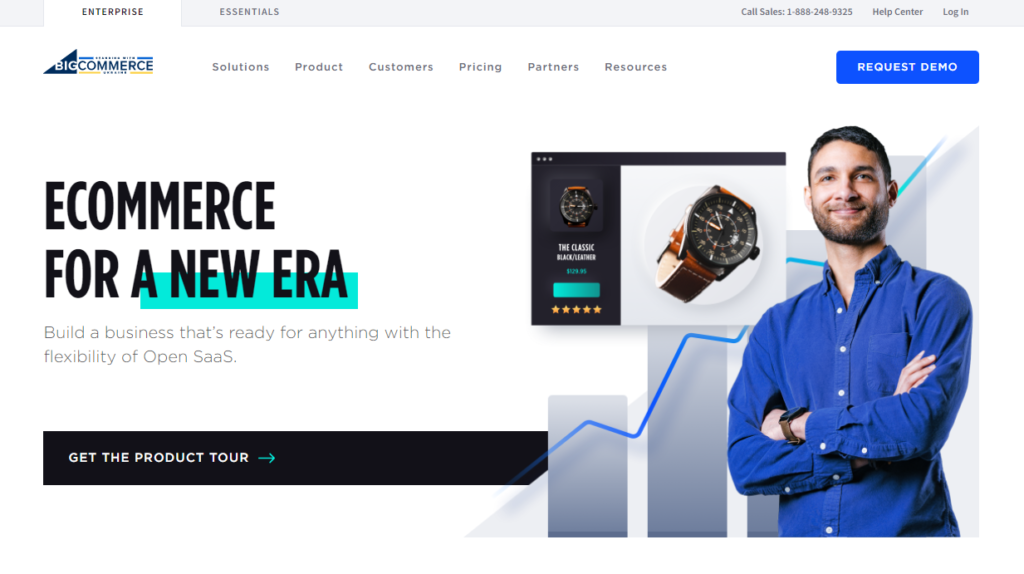
BigCommerce is an eCommerce solution that explicitly focuses on catering to enterprise-level software companies. Being a SaaS-based solution, BigCommerce provides merchants with several hosting and customization options. It is a robust platform that encapsulates advanced in-built features and offers 15 days of a free trial.
PROS

  • 24×7 customer support is available via phone, chat, or email
  • Offers multiple templates for store personalization
  • Supports multiple payment gateways
  • Offers express routing and priority support for customers with premium subscriptions

CONS

  • BigCommerce is complex
  • Plugins and themes are expensive
  • There is a limit to maximum sales – as per the registered plan
  • Only BigCommerce team can do the customization
  • The domain name cannot be registered through BigCommerce, you will have to purchase and register the domain elsewhere and then port it


4.   Big Cartel

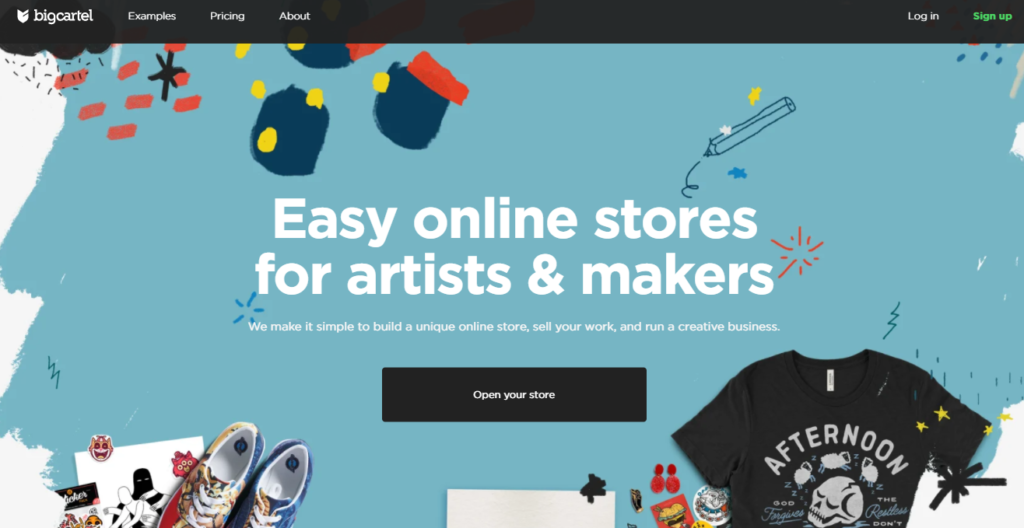
bigcartelBig Cartel is a hosted eCommerce platform that focuses on serving the needs of creative and artistic individuals. It can be used to create a store that sells handmade products. Promotions and services can also be added. Although Big Cartel started as a platform for creative merchants, it can now be used to sell anything as its user base has expanded.
 

PROS

  • Free eCommerce software for small businesses
  • Encapsulates marketing tools
  • Offers time-sensitive discounts
  • Easy to use
  • Setting up a store is quick


CONS

  • Limited customization options
  • Free plan has limited features; needs to be upgraded to a paid plan if features like inventory tracking or discount codes are to be used
  • Theme designs can get better and for customization, one should know coding


Paid eCommerce Platforms

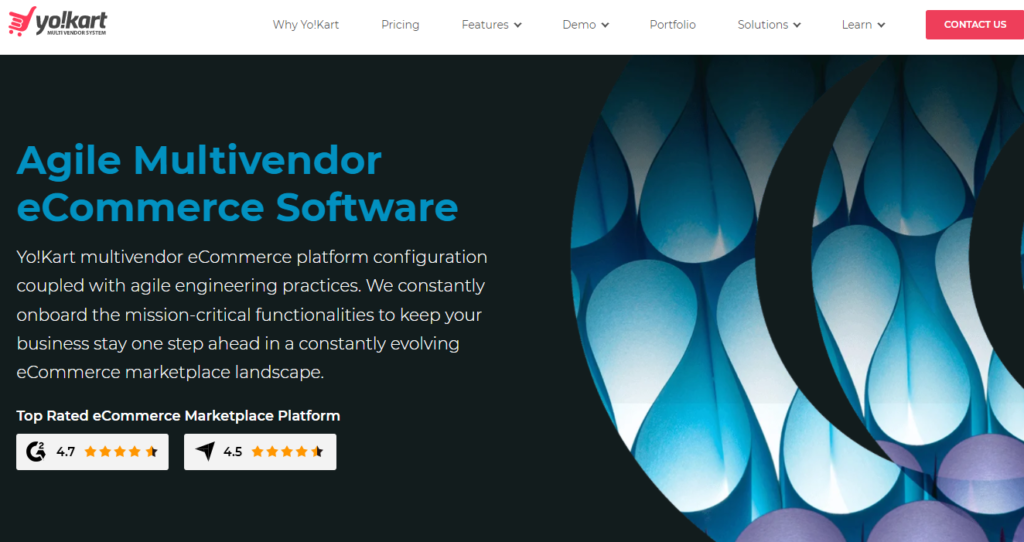
1.   Yo!Kart

YokartYo!Kart is one of the best eCommerce platforms that is designed to deliver a ready-to-launch multi-vendor marketplace for businesses of all sizes. It is highly customizable and scalable with all the essential features like tax management, catalog management, streamlined shipping management, and so on. Moreover, Yo!Kart comes equipped with a multi-vendor eCommerce platform for iOS and Android platforms. It also has separate dashboards for admin and seller to streamline the entire eCommerce operations. Further, the admin can control and manage the entire marketplace from the dashboard.
PROS

  • Yo!Kart offers multicart checkout
  • It is multilingual and offers multicurrency
  • Offers abandoned cart management
  • Is equipped with mobile apps for Android and iOS both
  • Is fully customizable and is backed by an agile team with proven eCommerce expertise
  • Yo!Kart offers 1 year of free technical support
  • Has pre-Integrated APIs like QuickBooks, ShipStation, and Stripe Connect
  • Yo!Kart is a License based solution that provides users lifetime ownership with a one-time payment
  • There are no transaction charges, commissions, or any other recurring charges

CONS

  • Updates are paid
  • There is limited support for free themes


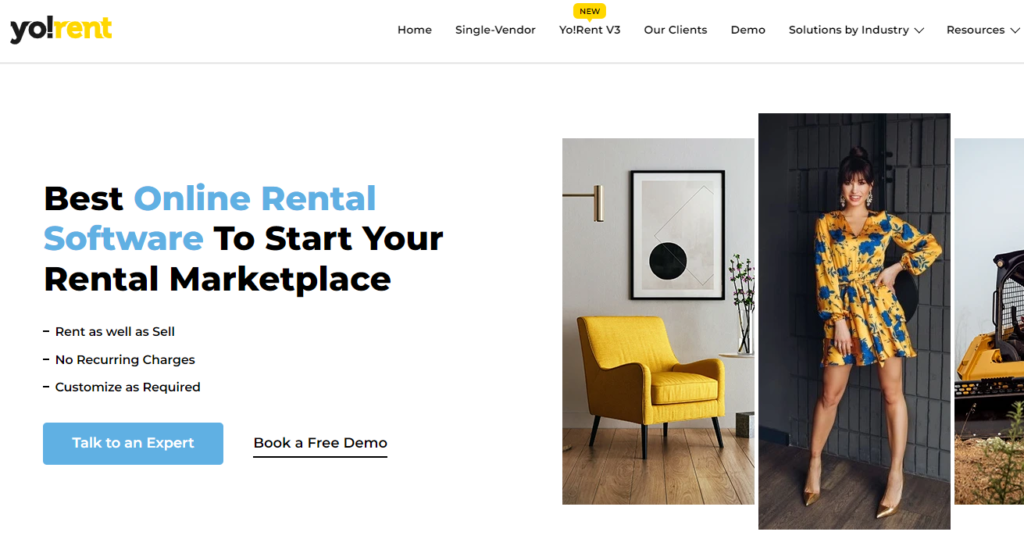
2.   Yo!Rent

Yorent

Yo!Rent is an online rental marketplace solution that helps entrepreneurs support both renting and selling operations with an option to disable or enable each mode. It also provides a plethora of multi/single vendor functionalities, comprising key modules such as catalog management, content management, order management, map view for shops/products, advanced search functionality, and so on. Moreover, it is a fully customizable eCommerce marketplace platform that can cater to diverse niches like car rental, heavy construction, equipment, dress, adventure, furniture, RVs, trucks, and more. Yo!Rent also comes with an advanced booking calendar that assists the renters in delivery timeline management.


PROS

  • Document Verification
  • RFQ Management
  • Industry Specific Design
  • Agreement Management & e-sign
  • Rental Add-Ons
  • Offers late fee calculation
  • Advanced inbuilt reports and analytics
  • Price surge module
  • Referral module is available (On/Off by Admin)
  • Supports real-time inventory management
  • Tiered Pricing
  • Tax Management


CONS

  • Auto-upgrade is not available
  • Readymade templates are not available

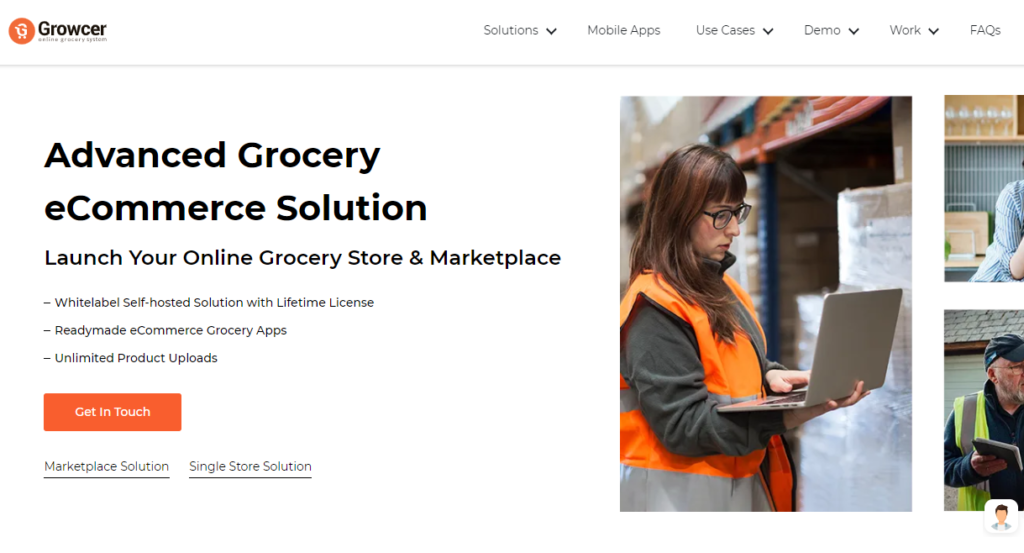
3.   Growcer

GrowcerGrowcer is a hyperlocal marketplace solution that is built to help grocery store owners to sell their products online. Several other hyperlocal business models for marketplaces like online liquor delivery, epharmacy, pet food, farm products, and so on, can be catered by it. Besides, Growcer is fully customizable and is equipped with robust mobile apps for both buyers and sellers (iOS and Android). There is also a dedicated admin panel that offers a product catalogue system, advanced reports, delivery staff management, and more, providing full control for platform management.
 

PROS

  • Offers two modes – Single/Multi-Vendor
  • Growcer is extremely advanced with user-friendly and conversion-optimized features
  • Multiple payment gateways are available
  • Pre-included mobile apps for buyers and delivery staff (Android and iOS both)
  • Offers multiple support channels
  • Is completely customizable and scalable
  • Zero cost installation with one year of free technical support


CONS

  • Comprehensive addition in each update is paid
  • Does not offer readymade seller apps; same can be created under the customization package


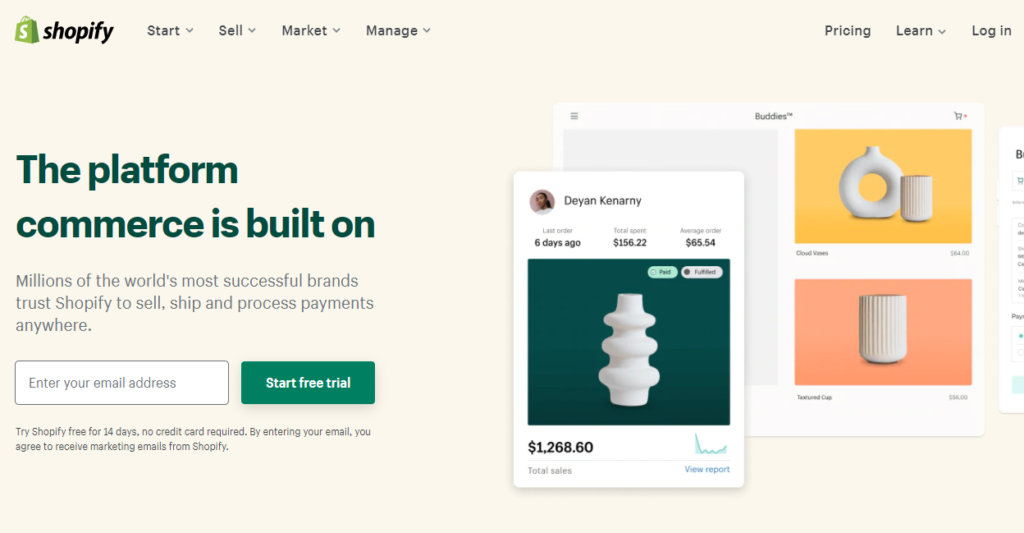
4.   Shopify

shopifyShopify is a SaaS-based eCommerce platform that helps entrepreneurs and SMBs launch their eCommerce platform with ease. It not only provides themes to customize the design but also helps in increasing sales via several marketing tools. Customer support is provided round the clock and 14 days of free trial is also offered. As an eCommerce solution, Shopify has several features and functionality that can help individuals set up their eCommerce platform with little to no programming experience. Additionally, you can get free and paid apps to customize the online store.
 

PROS

  • Offers several storefront themes
  • Is easy to use
  • Offers 24×7 support
  • Is customizable
  • Is a fully hosted platform

CONS

  • Shopify is not a free platform, there is a monthly subscription cost and to add, the transaction fee is also levied
  • Limited customizations that can only be availed from the Shopify team
  • Only available via a subscription model
  • There is no lifetime ownership


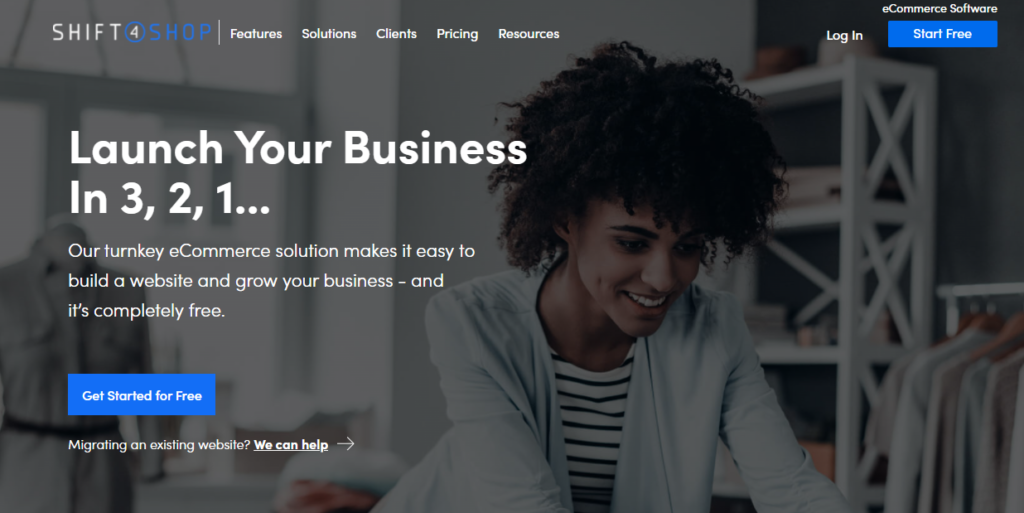
5. Shift4shop

Shift4shopShift4shop is an all-inclusive cloud-based eCommerce platform that integrates advanced features to create a complete eCommerce website. Moreover, merchants can use 3dcart to create and launch an online store to sell their products, support payments, and fulfill consumer orders. Various fulfillment methods including regular shipping, drop shipping, and downloads are supported by 3dcart. Besides, every 3dcart user can access built-in social media integration, order management, email marketing, SEO tools, and so on.
 

PROS

  • It is secure and fully PCI compliant
  • 3dcart is a completely customizable grocery eCommerce solution
  • Social media integration is available with online grocery eCommerce platform
  • Offers free domain registration and secured web hosting
  • Mobile friendly eCommerce solution
  • 24×7 customer support is available
  • Secure payment gateway


CONS

  • 3dcart provides several themes that are customizable but the free themes are limited
  • Additionally, HTML or CSS knowledge is needed for editing the themes
  • 3dcart customers find it hard to navigate the platform as it offers way too many features
  • It is time-consuming to learn about features


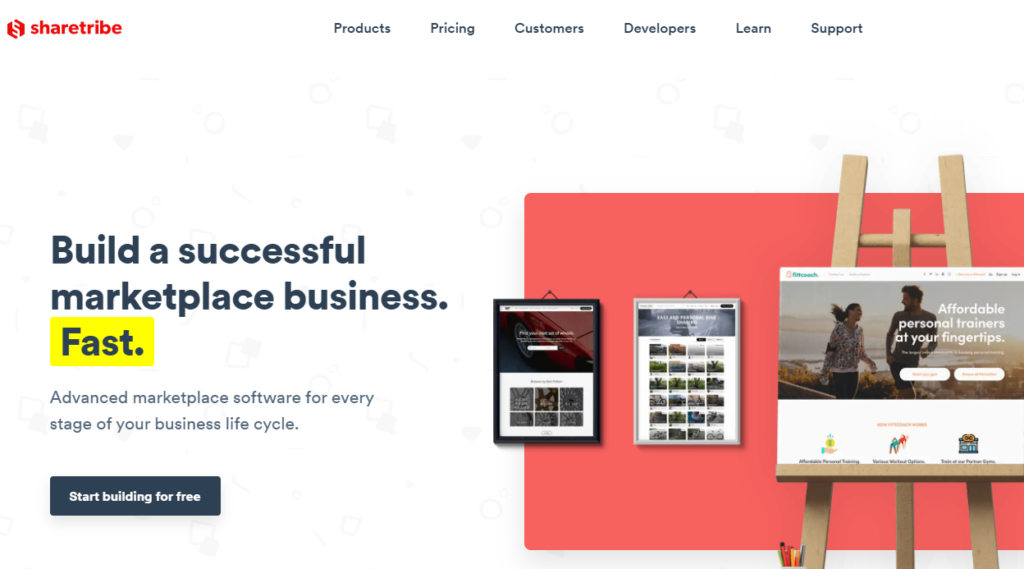
6.   Sharetribe

Sharetribe offers an easy way to start your online business marketplace with ease. And, unlike other eCommerce solutions, ShareTribe is designed to support your marketplace through its various life cycles. The platform is available in two different variants as Sharetribe Go and Sharetribe flex. While Sharetribe Go is suitable for entrepreneurs wanting to launch an online marketplace quickly, Sharetribe flex is preferred for those who are looking for customization.

PROS

  • Supports multiple payment gateways
  • 24×7 Support is offered
  • Offers 30 days free trial
  • For convenient setup and use, extensive documentation is available


CONS

  • Demo is not available
  • For individual vendors, there is a lack of personal shipping
  • Emailing customers can be complicated

Conclusion

The growing market of eCommerce is on an upward trajectory and as a result, several eCommerce platforms are available. This makes selecting one platform a difficult task. Additionally, every eCommerce platform has something to offer, so it’s better to consider their offerings in terms of features, functionality, hosting, and price. Going forward, we hope that the information provided in this blog will be useful while you choose your best eCommerce platform that will efficiently and effectively meet your business requirements.


Read also: Free Guest Post Sites List 2022

Read More
Sanju March 18, 2022 0 Comments

5 Benefits of Leveraging Customization in Your eCommerce Business

We live in an age of individualism. Everybody wants the freedom to express themselves, and celebrate their uniqueness.

The philosophy of individualism has also made its way to eCommerce. Customers appreciate brands that support their creativity. They want products that match their unique personality.

Therefore, it is important for brands to let go of the cult ideology and encourage individuality. Various brands do a great job at it.

For instance, Ikea is not just a furniture store. It sells the idea of how customers can use their imagination and create a space they love.

MAC Cosmetics carried out a user-generated campaign to celebrate your style, heart, and soul. The brand received submissions from 70,000 customers.

If you are either an eCommerce or a printing business, product customization can help you cater to the unique needs of each customer.

Continue reading this post to know more about leveraging customization and the benefits of it.


Few Words About Product Customization

Product customization is the latest trend in the eCommerce industry, and it is likely to remain in vogue in the future.

Statistics support this claim. Do you know 80% of customers are more likely to purchase a product or service from a brand who provides personalized experiences?

Customers believe that brands should provide tailored experiences, and they get frustrated if they do not do so.

It is all about delivering customized goods as per your customers’ specific requirements. Earlier, customers would get in touch with a store owner via email or phone call to make certain customizations.

However, Web to Print Technology has helped streamline this extensive process by putting the power to design in the hands of a customer.

Once you integrate the Web to Print Tool to your eCommerce platform, you can enable shoppers to use it to customize your offerings.

The tool equips you with all the features and functionalities you need to make sure the customization process is clutter-free, quick, and successful.


Benefits of Leveraging Customization in Your eCommerce Business

Explore all the advantages your business enjoys by leveraging product customization.

Easy Way to Make Your Store Stand Out

The eCommerce industry is speedily growing. We have seen hundreds of businesses making a shift online in the pandemic. And with that comes more competition.

If you are wondering how you can overcome this challenge, then customization is your answer. With customization as your unique selling point, you can make your store different from the rest.

On one hand, there’s a competitor who sells off-the-shelf products, and on the other hand, there’s your store thatgives shoppers the freedom to add a personal touch to their products; there’s hardly a doubt who shoppers will choose!


Meet the Unique Needs of Each Customer

Despite putting extensive efforts into creating the best designs for your products, chances are a customer might not like any of them.

Shoppers expect brands to provide items that exactly match their expectations. What to do in such a situation?

If you have a customization tool, it can save you from such situations. Using the tool, customers can buy something that exactly matches their imagination.

They can either choose from preloaded design templates or create something from scratch. This way, with a single tool, you can offer unique products to every customer that comes to your store.


Enhance Customer Engagement

Attracting customers to your website is not a massive challenge. With the right marketing strategy, you can get thousands of visitors to your store.

But your ultimate goal is to ensure they stay on your website and make a purchase. Product customization will help you attract more customers and boost customer engagement.

While customizing products, they will spend more time on your website. They will try different features of the customization tool and ultimately create a dynamic and unique product that they would surely want to purchase.


Cash in More Conversions

Continuing the above point, the more shoppers engage with your website, the higher are the chances of conversion.

Customization creates a sense of psychological ownership and attachment, leading to an eventual purchase. Shoppers think that I have built it, and therefore I will own it.

Additionally, customers are also willing to pay more for a product that is tailored to their needs. A study by Deloitte suggests that one out of five customers are okay paying more for an exclusive product.

Customization also reduces the chances of product return. Since customers design a product themselves, they know exactly what it will look like in real-life.


Create a Loyal Customer Base

Customers may forget about a product they once bought from your store, but they will never forget how you made them feel.

An excellent shopping experience is key to ensuring that a customer is satisfied and likely to come back.

When you offer customization, you encourage them to show their individuality. They feel as if you value their opinions and strive to offer products tailored to them.

This helps in improving customer satisfaction and helps you establish a lasting relationship with your customers.

Time and again, they will come back to your store because of the amazing experience you have provided. Also, they will recommend your brand to their friends and family.


How You Can Enable Customization on Your Store

To implement product customization, you need to integrate a Web to print Tool with your eCommerce platform. For example, if your store is on Magento, you need a Web to Print Magento Tool.
Once you install it and make all the configurations, your customers can use it from the front end. There are certain things to keep in mind when choosing the tool.

One is to look for a tool that allows you to enable or disable features as per your business and industry needs. If you want, you can just get started with basic features that you want. And as your business grows, you can enable other features.

A tool with a great UI/UX is important in delivering a seamless experience to your customers. Ensure that the tool is user-friendly and clutter-free.


Concluding Remarks

With eCommerce expanding, and increased competition, this is the right time to leverage customization in your eCommerce business.

We hope this post has thrown enough light on some of the major advantages of customization. By choosing the right Web to Print Tool, you can, in no time, start selling customizable products.

That is the first step in delivering a great buying experience, building a loyal customer base, and finally turning an ordinary estore into a unique and memorable brand.

Read More
Sanju February 16, 2022 0 Comments

Top B2B eCommerce Platforms in 2022

Online business has taken over the world since the improvements in advanced technology in the past few years. One such example is of B2b platforms that have brought all the buyers, sellers, wholesalers, and traders on one big platform.Many businesses are seeking B2B platforms that provide opportunities to showcase their businesses which will be beneficial for them and will add to their growth.

B2B business refers to transactions between eCommerce businesses. Many small and large business companies try to sell their services through these B2B platforms. It helps them attain huge revenue in a very effective manner.

Let us look at some of the best B2B platforms for 2022 that will help businesses grow.


Amazon

Amazon is also the most famous B2B exchange that has an excellent user interface. It allows filters to minimize the time in searching for the products required by the users. The products are placed in alphabetical form. It started as a bookselling store but now it has every product available. The reach of the platform is huge which can be understood by the fact that it has 100 million subscribers. The products include those from skincare, clothes, fitness, health, books, etc. It offers multiple payment methods, easy checkout, and a wide range of products that make it a prominent B2B platform.


Alibaba

Alibaba is a big name in the industry as it promotes authentic businesses through its platform. There is a big range of products and categories and it includes everything from clothes, crockery, furniture, edibles and even needles. The products are quite affordable and as it is a Chinese platform so the prices are quite cheap. The products have a description that provides ease to the customer and the navigation of the site is also very easy. Moreover, it has 35 million users and countries including Russia, Germany, UK, are the potential buyers of Alibaba. The range of buyers and sellers is also huge with up to 160 million buyers and 60 billion sellers.
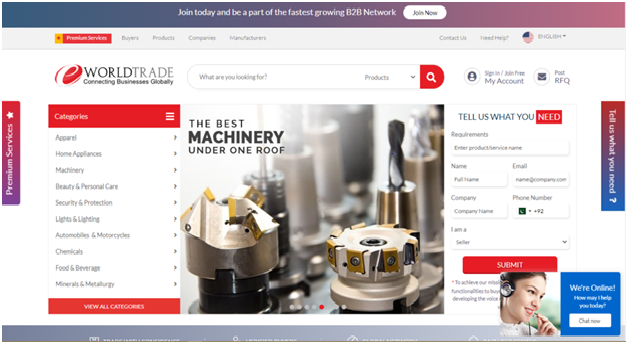
 

eWorldTrade

eworldtrade is referred as the fastest-growing B2B platform that brings all the reliable and authentic business in one place. The user interface and the navigation of the site is very easy with integrated chatbots that adds to its attractiveness. The product range is very wide with almost 40 categories. The size of the platform could be understood by the fact that it has 5 million users present online. It has created a benchmark in the world of b2b eCommerce business.
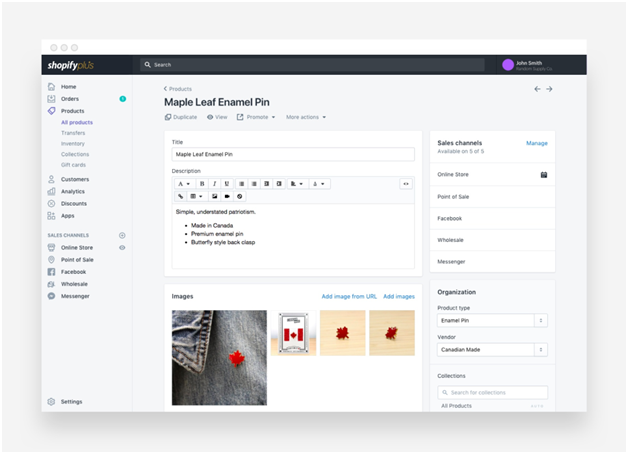
 

Shopify Plus

It is a 2B2B platform by Shopify that has 1 million websites. The most amazing thing about it is that it supports all international currencies and languages. Many famous brands use Shopify plus for growing their businesses even wider. It caters to 5300 stores and different businesses are run by merchants in 175 countries. Moreover, it has excellent features like CRM and ERP and It also provides a customized buying experience to its users. It makes pages that include FAQs, policies, and templates about a brand. It not only provides 24/7 customer support but also reviews automated account sign-ups. It provides the option of quick online checkout and also provides the option for reviewing orders before invoicing. All these exceptional services could be availed around the clock.
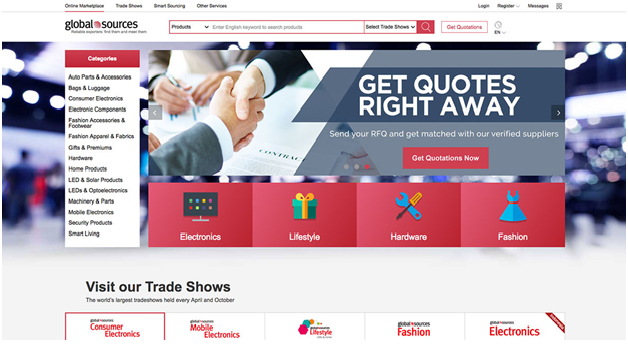
 

Global Sources

Global sources are another good B2B platform that provides a simple and attractive user interface that has reached 1.9 million international buyers. The quality of the products available on this platform is very good. The products are showcased in a very attractive manner and the gallery includes HD pictures. The ordering procedure is very simple and the navigation is also very easy. It has an advanced e-cart that provides an ease to the customers in finding a product. The international standard is followed when it comes to providing quality services that also help in gaining the satisfaction of the customer.
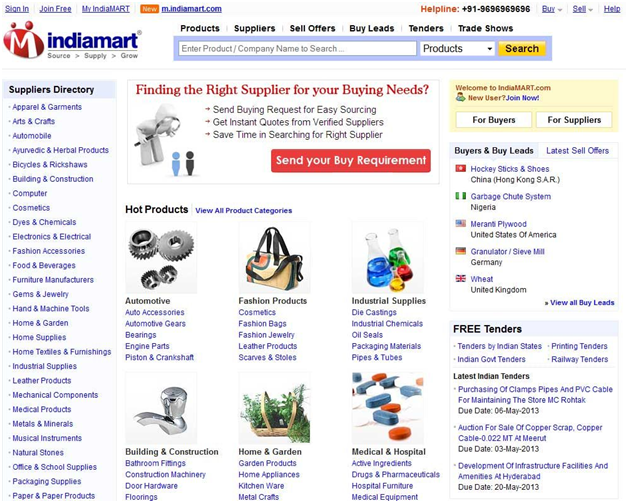
 

IndiaMART

This B2B platform has been successful in maintaining a reputable position in the B2B market. Many businesses prefer to work with IndiaMART as they offer flexible policies and trading services. It is an Indian company with almost 98 million buyers and 5.9 million suppliers. The headquarter of the company is located in Noida. The desired products could be found easily by using filters. The success of this platform could be understood by the fact that it has got 10 million downloads. Moreover, it enjoys a 4.7 rating on Android.
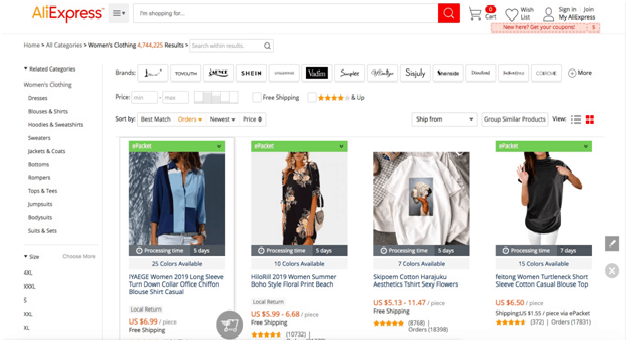
 

Ali Express

Ali Express extends its services online to many businesses and is owned by the Alibaba group. The popularity of the platform can be identified by the fact that it is the most used e-commerce platform in Russia. It is considered the 10 most frequently used site in Brazil. It extends services in many languages by breaking the language barriers. The language it offers includes Italian, Dutch, German, Portuguese, Indonesian, Polish, Spanish, Russian and Turkish.
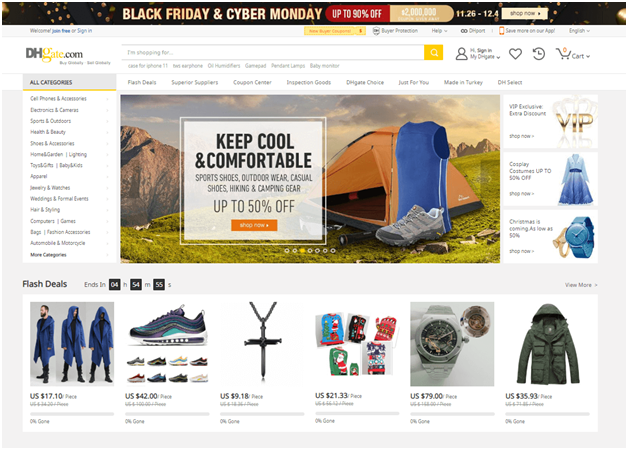
Many online platforms limit the customers to buyers the minimum range set by them but this platform can be used to even buy a single product and the checkout is also very easy. There are various shipping services offered by the platform, normal shipping takes 0-60 days and premium shipping will take 3-10 days and it depends on the preference of the customer. Authenticity is the main feature of this platform as it requires documents from its sellers for getting them verified.


DHgate

The most incredible thing about DHgate is that it offers 30 million products online. It is a Chinese platform and is very famous in Asia because of the demand for Chinese products there. To provide quality products to the client’s only certified products are up on the website. The services are available in many languages from Chinese, Spanish, Russian, German, Portuguese, Italian, and French. But the services are available in English to cater wide audience. It has 36.4 million registered users that belong to 223 different countries. There are a big number of suppliers that are 2.3 million in number.
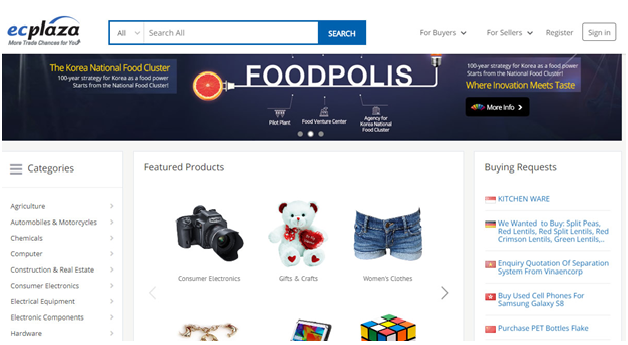
 

EC Plaza

This B2B platform has a wide range of products that are of Korean origin as it is a Korean company. But at the same time, EC plaza also offers international products. It started its services in 1996 and has been providing service for the last 25 years. The interesting and incredible thing to note about this platform is that it is the only platform to offer 4 million products on its site. The visibility of the site is great as it has 400000 members and high brand recognition. It provides services from well-known brands to keep the quality up to the mark.
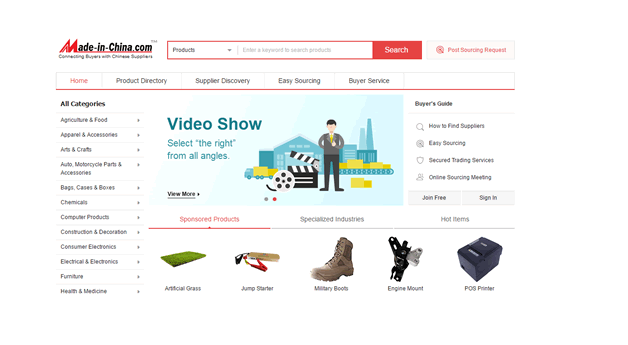
 

Made-in-China

Made-in-China offers products and services at a very cheap rate to provide ease to its customers. It offers transactions in three easy steps that attract users. It has a huge number of manufacturers, trade agents, retailers, wholesalers that are 6 million in number. Moreover, it holds many virtual exhibitions and video streaming sessions. It also enables live chat for its users. It caters to products related to technology. It is a good site that provides a seamless experience to its users.
 

eBay

eBay was founded in 1995 and has been providing services for 25 years. It is located in San Jose and California and extends its services to 24 countries including the USA, Australia, Belgium, Canada, Italy and Ireland. The site uses advanced features and provides expert navigation to its users. Moreover, the interface is user-friendly that keeps the customers on hold for a longer time. It is an authentic platform and tries to maintain its authenticity by only permitting authentic sellers on the site. It provides an auction section that makes it more prominent among the other platforms. It offers multiple payment methods and the checkout is also very easy.
 

ECVV

ECVV offers products related to home, construction, automobile, etc. It was made in 2003 and has a wide range of suppliers that are 1 million in number. It takes care of the authenticity and makes sure that all the suppliers go through a verification process so that only original companies can collaborate. It’s a reliable platform because it is recommended by the American International Business Council and Shenzhen Government. Services are provided in English and Chinese language. The annual trade of ECVV is 2$ billion. The user interface is quite friendly and the products are arranged in an organized manner with descriptions and details in the right place to provide ease to the customers. Custom clearance and logistics are also provided by this platform.

 

Conclusion

The platforms that are mentioned above are all credible and reliable for B2B e-commerce. All of them are using advanced features to provide quality services to their users and because of the advanced features, these platforms have millions of subscribers from all over the world. Moreover, many of them provide services in different languages to break the language barrier.

Read More
Sanju December 27, 2021 0 Comments

What is an eCommerce Website? And What Are Its Benefits?

A brief introduction to eCommerce:

Online business:

In this high-tech generation establishing an online business is not an easy task but it is not impossible. The competition in this field is increasing day by day. CMS Development and E commerce using proper skills and ideas one can stand out and establish a successful business. People are spending more time online than ever before, so online business is very suitable to invest your time and money. In an online business, the overall cost is low as compared to other businesses and the engagement of the audience is larger.


 Two kinds of businesses are found online.

  1. Service selling: – Such as freelancing or any other skill which you have learned, through which you earn money online.
  2. Product selling: – Such as eCommerce, which is product selling, including any kind of products such as shoes, cosmetics, electronics, etc. In which a website development company or any individual sells online on a website and earns money through it.

Ecommerce:
Ecommerce is a combination of two words “E” and “commerce”. In which E stands for electronic, so collectively it is called electronic commerce. Simply, eCommerce means selling things through an online platform.


Ecommerce website:

“E-commerce is a source of selling products and buying products through a site.”

Every running online business whether it is small or large must follow the common rule, they should introduce themselves through an online platform. The platform which is a source of their product selling is called an eCommerce website. such as Amazon, Daraz, eBay, etc. are famous all over the world for selling and buying products. Before the introduction of these sites, there were many more sites for this purpose, but they have given greater convenience to the customers as well as the sellers which attract them to choose these platforms instead of others.

E Commerce is more like physical retail, but the main difference is that it is operated electronically. It has some common rules: one group of people must pay money for the required products while the other group arranges products to be bought. Recently the eCommerce businesses are leading very rapidly. You can buy anything from an eCommerce website that you used to buy from physical stores. E.g., books, clothes, electronics, and even food can be ordered online, and you received it at your doorsteps.


Types of eCommerce websites:

  It is based on the exchange of products and the services provided digitally or electronically.

  1. B2C ( Business to consumer) B2B ( Business to business)
  2. C2B ( Consumer to Business)
  3. C2C ( Consumer to Consumer)
  4. C2A ( Consumer to Administration)
  5. B2A ( Business to Administration)


Benefits of an eCommerce website:

  1. Lower upfront costs:
    Whenever someone thinks of starting a new business the main hurdle faced by them are the costs. You must invest to start your new business, you must invest money in different categories like if you want to start your general store you must rent a store, stocked it with all the necessary items, the staff must also be hired for customers convenience and availability all the time. Keeping in view all this it needs a lot of investment to startup your business. In comparison with this, starting your business through an online platform is not completely free. You have to invest in software, domain name, Web Hosting, and a professional to manage your business marketing. But despite all these the cost is very low as compared to the physical store. So, eCommerce provides greater opportunities to small businesses at low costs.
  2. Business from home:
    If you are having an online business, operating it is a very easy task. You just need an internet connection, an internet device like a mobile phone or laptop and you are ready to go. You run your own business sitting comfortably in your cozy place and enjoying it. You are not bound by specific hours in a confined place sitting with other people. You are free to do your work at any time whenever you are free, comfortable along with other daily chores.
     
  3. Availability all the time:
    The most important benefit of having an eCommerce website is that you are available for your customers without being physically present. You provide your services at any time, this directly increases your sales and the chance of losing a customer is very low. If a customer finds your site trustworthy, he will visit again and again and recommend it to others. Your customers are free to buy products from your site at any hour of the day, night, or midnight, but your delivery services should be on time and properly supervised.
  4. Starting your business and making it successful in less time:
    Starting a business and then establishing it in the market is a very difficult task. If you follow all the basic steps of starting a new business online still you need hard work to accelerate its growth. Everyone in this digital era can start his/her own business just with an idea, a website to showcase your idea and a little bit of investment to advertise or spread your cause. You must put in a lot of effort in the beginning. If you are true to your purpose and persistent you can find your place in very high ranks in less time. An eCommerce website gives opportunities to the newbie who is very ambitious and has brilliant ideas.
  5. Online marketing can be affordable:
    Suppose a person has a brilliant business idea in his mind and he wants to start up his set up through an online platform. He will learn how to develop a website and its maintenance, or he can simply hire a professional for this purpose. You can hire a web developer at a very reasonable price as the competition is very high. But still, the traffic cannot automatically flow towards your site. You have to properly market your site and your products in different ways. Marketing online is a lot cheaper as compared to other ways. Only you should know the tactics and you should have the skill to implement them in your business strategies.
  6. Fast and easy service:
    Having an eCommerce website for your business is very important in many ways. The customer’s care is on top priority. Your website should be very flexible and easy to operate. Your customers are attracted to your site if you are providing them comfort and ease in purchasing products. The only thing they must do is to search for their desired items in your store, place their order, and receive them in time. Their order is just a click away from them rather than going to a shop to find the section to converse with the salesman and then waiting for the bill. Ecommerce developers have made this easy for the customers.


Conclusion to the whole discussion:

The above discussion gives you an idea about the various benefits of having an eCommerce website. Your business is very easy to get started and if you have the potential, you can gain great success in no time. Still managing an eCommerce website and CMS development is not easy; it requires hard work, dedication, planning, and consistency. You gain something at the cost of something. Here the cost is your hard work. In return, you gain greater rewards in the form of success.

Read More
Sanju December 18, 2021 0 Comments