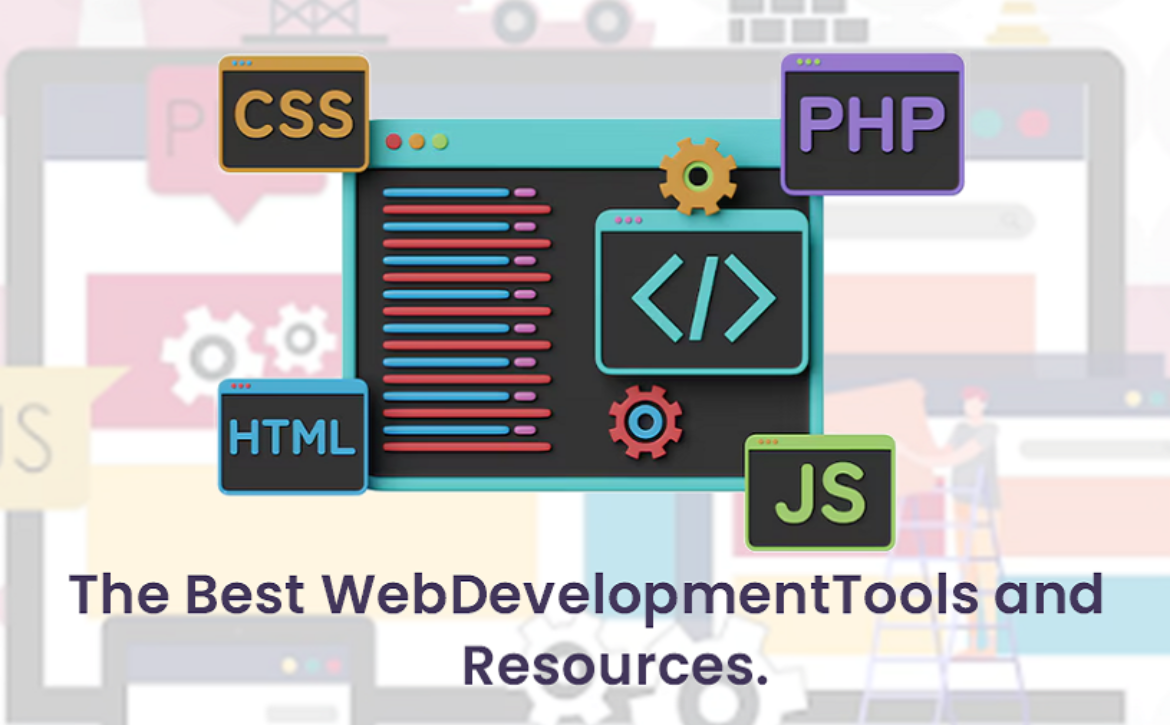
The Best Web Development Tools and Resources for 2025

The digital economy of 2025 isn’t just competitive, it is actually Darwinian. Businesses that fail to adapt to blistering technological advancements risk fading into obsolescence. Two decades ago, web development was a linear process: static pages, rigid frameworks, and manual deployments. Today, it’s a dynamic interplay of AI, real-time collaboration, and hyper-personalized user experiences.

The tools picked for custom website development determine whether they’ll lead markets or scramble to catch up. In the digital ecosystem and cutthroat competition where the user is not only foiled overnight but the newest technologies take weeks to decimate entire industries, a tech stack moves beyond a mere set of tools to the competitive edge. Development frameworks that allow users all the speed, scalability, and innovation they need can be substituted with bad ones that keep them weighed down and contract not only their area of reach, but also growth. From the front-end frameworks driving immersive interfaces and the backend technologies deftly handling immense flows of data through to everything else, everything that users think, plan, and execute will have an impact on overall performance, engagement, and bottom-line results.

This article unpacks the frameworks, platforms, and resources that will empower businesses to dominate in the market. Let’s explore the future, tool by tool.


Why 2025 Demands Cutting-Edge Tools for Custom Website Development?

——————————-

The pace at which web technologies, user needs, and industry standards change is unparalleled, effectively altering the business model and competitiveness on the web. Users today expect instantaneous page loads, elegantly immersive experiences, and smooth performance on all devices. Simultaneously, search engines impose strict demands on performance metrics, high-security features, and global accessibility as the price of doing business for visibility. To stay competitive, organizations need to have in their toolkit tools that automate sophisticated workflows, augment creative capabilities, and ensure the long-term sustainability of their platforms.

 Website flourishes through the conscious selection of frameworks, libraries, and platforms that align ideally with organizational objectives. Artificial intelligence-powered analytics, for instance, can predict user behavior with unprecedented precision, while serverless architectures eradicate infrastructure expenses without sacrificing scalability. In the future, such technologies will go beyond mere operational efficiency. They will redefine competitive advantage, thereby making custom website development a cost driver instead of a cost center.

Today, the right investments in technology will not only streamline processes but also make brands innovators, able to outwit competition and engage with audiences in an increasingly difficult digital environment.


Frontend Development: Frameworks and Libraries

——————————-

The frontend is the digital storefront. In 2025, these tools will dominate:

1. React 22:

React continues to reign with its virtual DOM and reusable components. The recent update integrates the innovative server components of React, so dynamic server-side rendering can be done without sacrificing interactivity. This is a major win for SEO and user retention, as for businesses, it means faster page loads and less client-side processing.


2. Vue.js 4:

Vue.js has often been termed flexible yet much more structured. Along with this latest combination birth of Vue 4, it has done its thing by improving not just TypeScript support but also within a sleeker CLI.

Startups love Vue for its gentle learning curve, while enterprises leverage it for custom website development that scales seamlessly.


3. SvelteKit 3:

SvelteKit removes the runtime overhead while compiling components into vanilla JavaScript. WebAssembly support is now natively offered in the new 2025 version, making it the next best thing for heavy-duty applications such as those used in the fintech dashboard.


Top Tools for Design and Prototyping

——————————-

In 2025, design goes beyond looks; it is a mechanism for creating intuitive but emotionally charged journey experiences. Tools that bridge the gap between designers and developers have now become the centerpiece for developing websites to ensure fluid movement from wireframe to code.


1) Figma 2025: Collaborative Design at High Speed

Figma remains the gold standard for real-time collaboration. The 2025 update introduces AI-Powered Design Assistants that suggest layout optimizations based on user behavior data. The teams are working on auto-generating responsive variants for different screen sizes, thus reducing prototyping time by 40%. This means for the businesses, iteration cycles will be faster, and alignment between brand and functionality will be a tighter one.


2) Adobe XD + Substance 3D: Immersive Experiences Made Simple

The integration of Substance 3D into XD by Adobe enables designers to easily use 3D assets in prototypes. After all, is there anything more groundbreaking than imagining a luxury e-commerce site where users can rotate products in realistic 3D-without plugins. This tool is a game-changer for industries like real estate and retail, where custom website development demands immersive storytelling.


3) Webflow 3.0: Code-Free, But Not Limited

Webflow’s new “Code Export” feature lets designers hand off pixel-perfect templates to developers, complete with clean HTML/CSS. Startups can launch MVPs in days, while agencies use it to streamline client approvals.


Tools for AI-Driven Development

——————————-

AI isn’t just a buzzword, rather it has become a coding partner. Repetitive development tasks can be automated, leaving more time for innovative work.

1) GitHub Copilot X

Trained on billions of lines of code, Copilot X now understands the project’s context. Need to build a secure payment gateway? Describe it in plain English, and Copilot drafts React components, Node.js APIs, and even unit tests. This means faster MVP launches and fewer human errors in boilerplate code.


2) AWS CodeWhisperer

Amazon’s answer to Copilot specializes in cloud infrastructure. CodeWhisperer generates Terraform scripts, Dockerfiles, and Lambda functions. It acts as a shortcut to cost optimization and AWS compliance.


3) AI-Powered Testing

Manual QA is obsolete. Tools like DeepCheck use machine learning to predict edge cases, while Cypress AI auto-generates test scripts by analyzing user flows. One can reduce the testing time by 70%, ensuring their custom website development meets strict ADA compliance before launch.


Tools for Speed and SEO Dominance

——————————-

Having a high speed website isn’t only a metric, it’s a business imperative. A one-second delay in load time can cost a significant percentage of conversions. Performance optimization tools are non-negotiable to ensure that the site ranks high and retains users.

1) Next.js 14

Next.js continues to dominate with hybrid rendering. Paired with edge caching, businesses like news portals can serve personalized content at lightning speed while maintaining SEO-friendly static pages.


2) Cloudflare Workers

Deploy serverless functions at the edge with Cloudflare Workers. Their 2025 stack adds AI-Powered Caching, which predicts user routes and preloads resources. A travel booking platform using this tool saw a 50% reduction in API latency, proving that custom website development thrives when infrastructure is as agile as the code.


3) Lighthouse CI

Integrate Lighthouse directly into the CI/CD pipeline. Lighthouse CI 2025 flags performance regressions before deployment, offering actionable fixes like lazy-loading suggestions or font optimizations. For businesses, this means no more post-launch fire drills—just consistently fast, SEO-optimized sites.


Security Essentials: Tools to Safeguard Digital Assets

——————————-

Cyberattacks cost businesses trillions annually. Security, therefore, isn’t an afterthought; it is the bedrock for creating websites.


1) Snyk: Dev-First Vulnerability Management

Snyk scans dependencies, containers, and IaC (Infrastructure as Code) in real time. Its 2025 AI model correlates vulnerabilities across microservices, prioritizing risks that could cascade.


2) Cloudflare Zero Trust: Beyond VPNs

Replace VPNs with granular access controls. Cloudflare’s 2025 Zero Trust suite uses behavioral biometrics to authenticate users, ensuring only authorized personnel touch sensitive codebases.


3) OWASP ZAP 4.0: Automated Penetration Testing

The OWASP Zed Attack Proxy (ZAP) auto-generates exploit scenarios for APIs and Web3 apps. It includes AI-generated threat Models, simulating attacks like quantum computing breaches.


Preparing Businesses for 2025 and Beyond

A business able to incorporate some degree of flexibility, technical accuracy, and long-term scalability into its tools and methodologies will thrive in the years to come. From AI-driven coding to edge-native architectures, the tools we’ve explored aren’t just upgrades, they’re in fact the revolutions. Custom website development is now a strategic lever, capable of differentiating brands in saturated markets.

Invest in frameworks that scale, security that protects, and teams that learn relentlessly. Start today, 2025 competitors already are.

Read More
Sanju May 16, 2025 0 Comments

How to Choose the Right Web Development Company for Your Business

In nowadays’s virtual-first international, your website is often the first affect your business makes on ability clients. A nicely-developed, intuitive, and responsive website can raise your logo image, enhance person enjoy, and in the long run power sales. But with thousands of web development companies out there, deciding on the proper possible feel overwhelming.

This guide will stroll you via the key factors to consider when selecting a web improvement corporation that aligns with your enterprise desires, budget, and vision.


1. Understand Your Business Needs First

—————————-

Before you even start attaining out to organizations, define what you need out of your website. Are you searching out:

  • A simple brochure-style internet site?
  • A custom eCommerce platform?
  • A web software with complex functionalities?
  • A web page redecorate to enhance UI/UX?
  • search engine optimization and performance optimization?

Clearly knowledge your task scope, capabilities, budget, and timeline will help you communicate higher and clear out businesses which can’t deliver what you want.


2. Assess the Company’s Portfolio

—————————-

A agency’s portfolio is one of the great signs of its skills. Reviewing past projects enables you compare:

  • Design Quality: Does their work appearance modern, visually appealing, and user-pleasant?
  • Industry Experience: Have they worked with businesses just like yours?
  • Technical Versatility: Do they display quite a number systems and functionalities?
  • Scalability: Can they take care of massive, complicated builds if your commercial enterprise grows?

Look for stay examples of their websites in place of just screenshots. Visit them, click thru the pages, check responsiveness on extraordinary gadgets, and word the overall performance.


3. Check Client Testimonials and Reviews

—————————-

Client comments gives precious insight right into a company’s reliability, communique style, trouble-solving ability, and after-income aid. Look for testimonials on the business enterprise’s internet site, however also browse third-celebration assessment platforms like:

  • Clutch.Co
  • GoodFirms
  • Trustpilot
  • Google Reviews
  • LinkedIn recommendations

Don’t be afraid to ask the company for references you may talk with directly. This step by myself can uncover red flags or affirm your self assurance in the agency.


4. Evaluate Technical Expertise and Services Offered

—————————-

Web improvement entails more than simply coding. A strong development associate must offer a aggregate of offerings, which includes:

  • Front-quit and Back-end Development
  • UI/UX Design
  • Mobile Optimization
  • CMS Development (WordPress, Drupal, etc.)
  • Custom Web Application Development
  • eCommerce Solutions (Shopify, Magento, WooCommerce, etc.)
  • SEO and Performance Optimization
  • Maintenance and Support

Also, examine their understanding of present day technology inclusive of React, Angular, Vue.Js, Node.Js, Python, Laravel, and greater. Ask about the systems and equipment they recommend, and why.


5. Ask About Their Development Process

—————————-

A suitable company need to comply with a well-defined, obvious process from planning to deployment. This would possibly consist of:

  1. Discovery Phase – Understanding your goals, target market, and competition.
  2. Wireframing/Prototyping – Creating blueprints and initial layouts.

Three.  Design and Development –  the website development structure, functions, and the front-quit/lower back-give up structures.

  1. Testing and QA – Checking for bugs, overall performance troubles, and usability.
  2. Launch and Deployment – Pushing the website live.
  3. Post-launch Support – Maintenance, updates, and possible characteristic expansions.

Agile or Scrum methodologies are famous among pinnacle-tier organizations as they permit for flexibility, comments integration, and incremental development.


6. Communication and Collaboration Are Key

—————————-

Clear, ordinary conversation is critical to a a success net venture. Look for organizations that:

  • Assign a dedicated mission manager or touch person
  • Use gear like Slack, Trello, Jira, or Asana to maintain you updated
  • Respond speedy and absolutely in your queries
  • Are open to comments and collaborative trouble-solving

Time quarter compatibility is another aspect—particularly if you’re hiring distant places. Make certain their operating hours align with yours or that they are bendy sufficient to house verbal exchange throughout time zones.


7. Understand the Cost and Pricing Structure

—————————-

Web development expenses can range broadly depending at the scope and complexity. Ask capability organizations:

  • How do they charge initiatives (hourly, fixed price, milestone-based)?
  • What is protected within the estimate (layout, improvement, revisions, web hosting)?
  • Are there any ongoing prices (renovation, updates, web hosting)?
  • What occurs if the scope changes midway?

Don’t automatically go with the cheapest alternative. Value for cash is greater critical. Sometimes, paying a bit extra method higher code fine, more potent aid, and long-time period financial savings.


8. Consider Post-release Support and Maintenance

—————————-

A internet site is in no way without a doubt completed. You’ll need updates, safety patches, backups, overall performance optimization, and probably new functions. Ask if the organisation affords:

  • Ongoing help or preservation programs
  • Bug fixes after release
  • Content updates
  • Security and performance monitoring
  • Website analytics and reporting

Having a crew that is aware your assignment and is to be had for lengthy-time period guide is useful.


9. Review Legal and Ownership Policies

—————————-

Before signing any settlement, ensure:

  • You personal the internet site code, design, and content
  • You’re no longer locked into proprietary CMS systems
  • Intellectual property rights are simply described
  • Confidentiality agreements or NDAs are in vicinity if wished
  • Payment phrases and timelines are virtually outlined

Clarity on criminal elements protects your business and prevents disputes within the future.


10. Start with a Small Test Project (Optional)

—————————-

If you are unsure about committing to an extended-time period settlement, take into account starting with a smaller challenge or an ordeal section—like a landing web page or prototype. This helps you to evaluate:

  • The agency’s workflow and communique
  • Quality of labor added
  • Timeliness and professionalism

A excellent enjoy with a small task builds agree with and sets the stage for a larger, more complex engagement.


11. Look for a Company That Understands Marketing and Branding

—————————-

Your internet site isn’t just a digital business card—it’s a advertising and marketing tool. A development enterprise that still understands branding, content method, and digital advertising can deliver a greater holistic product. Ask in the event that they recollect:

  • Conversion charge optimization (CRO)
  • User journey mapping
  • Calls-to-movement (CTAs) placement
  • Brand consistency in visuals and tone
  • Integration with advertising and marketing gear like CRMs, electronic mail structures, or analytics tools

A development team with advertising insights will design with each aesthetics and overall performance in thoughts.


12. Inquire About Customization vs. Template Usage

—————————-

Some corporations closely rely on pre-constructed templates or topics (especially on structures like WordPress or Shopify), even as others construct completely custom answers. There’s not anything wrong with templates for basic projects, however they could restrict flexibility and overall performance over the years.

Ask:

  • Will the layout be fully custom or primarily based on a theme?
  • If a template is used, how a great deal customization is possible?
  • Can they scale or modify it later?

For organizations that need to stand out, custom development regularly supplies a more potent return on funding in the end.


13. Check Their Approach to Website Performance

—————————-

Speed and performance are important for person experience and SEO rankings. A in a position internet improvement organisation need to prioritize overall performance optimization by using:

  • Compressing pics and documents
  • Minimizing HTTP requests
  • Implementing lazy loading
  • Using Content Delivery Networks (CDNs)
  • Writing clean, efficient code

Ask about their trying out gear (like Google PageSpeed Insights or GTmetrix) and what steps they take to ensure your web site is rapid and responsive.


14. Search engine optimization-Friendly Development Practices

—————————-

Your internet site’s technical structure can make or spoil your SEO strategy. A precise internet development enterprise will make certain:

  • Clean, semantic HTML code
  • Mobile-pleasant and responsive layout
  • Fast load times
  • Proper use of heading tags (H1, H2, and so on.)
  • Schema markup and established records
  • Canonical URLs and XML sitemaps
  • Easy integration with Google Analytics and Search Console

SEO shouldn’t be an afterthought—it should be built into the internet site from the ground up.


15. Security Protocols and Best Practices

—————————-

Cybersecurity threats are on the upward push. If your internet site stores consumer data, techniques payments, or handles sensitive facts, security is non-negotiable.

Ask your potential developer approximately:

  • SSL certification (HTTPS)
  • Secure login protocols
  • Data encryption practices
  • Regular backups and model control
  • Protection in opposition to common vulnerabilities (e.G., XSS, SQL injection)
  • GDPR or other statistics privacy compliance (depending on your location)

Web safety is a shared responsibility between you and your developer—make certain they take it critically.


Final Thoughts

Choosing the proper web improvement enterprise is a vital selection that can shape the destiny of your digital presence. It’s not just about code—it’s about locating a accomplice who is aware your enterprise, shares your imaginative and prescient, and can provide a seamless user enjoy that converts.

Read More
Sanju May 14, 2025 0 Comments

How AI Website Builders Create Websites in Minutes?

In modern-day speedy-paced virtual panorama, having a expert website is important for enterprise, freelancers, and even hobbyists. However, constructing a website from scratch may be time-eating, technically tough, and frequently pricey. That’s where AI website builders come into play. This present-day equipment leverages artificial intelligence to design, develop, and installation fully practical websites in a count number of minutes.


What is an AI Website Builder?

——————————

An AI website builder is a software tool that makes use of artificial intelligence and device learning algorithms to automatically create websites primarily based on user input. Unlike conventional website builders that require guide drag-and-drop design or even coding, AI-powered website creators ask users some easy questions after which generate a customized website almost instantly.

These tools are perfect for users with little to no net development experience, as well as professionals seeking to store time. Many structures offer an AI website builder free plan that lets in customers to explore the abilities without committing financially.


How Do AI Website Builders Work?

——————————

The magic at the back of an AI website creator lies in its set of rules. Here’s a simplified breakdown of the technique:

1. User Input and Preferences

The journey begins with a fixed of questions. The AI site builder can also ask approximately:

  • The kind of website you want (e.G., non-public blog, eCommerce store, portfolio, enterprise website online).
  • Your industry or area of interest.
  • Preferred colour schemes, fonts, and layout patterns.
  • Desired functionalities consisting of contact forms, picture galleries, or purchasing carts.

2. Data Processing

Once the person submits their alternatives, the AI engine tactics the facts and compares it with thousands of layout styles, person behavior models, and excellent practices to determine the maximum appropriate format and features.

3. Automated Design and Content Generation

The AI then generates the website structure, consisting of:

  • Homepage and subpages.
  • Text content material tailor-made to the selected enterprise.
  • Images and movies primarily based on person choice or AI recommendations.
  • Navigation menus and footer sections.

Some AI website generators even use natural language processing (NLP) to generate unique reproduction, taglines, and calls-to-motion.

4. Preview and Customization

Users can preview the generated website and make manual modifications if wished. While AI does the heavy lifting, the excellent platform allow easy customization for users who want greater manage.

5. Deployment

Once happy, the website can be published without delay from the platform. Hosting and domain registration are often incorporated into the carrier.

Key Features of AI Website Builders
1. Intuitive Interface

AI website builders provide user-pleasant dashboards wherein users can manage content material, song overall performance, and replace designs without having technical abilities.

2. Responsive Design

Modern AI site builders make certain that websites are mobile-responsive, routinely adjusting to diverse display sizes and devices.

3. Search engine optimization

Many AI website generators include integrated search engine optimization equipment, optimizing meta tags, headers, and URLs to enhance visibility in search engines.

4. Speed and Efficiency

Perhaps the most important benefit is velocity. A procedure that used to take days or weeks can now be executed in less than an hour, or even minutes.

5. Cost-Effectiveness

With options like AI website builder free plans, customers can begin building without financial hazard. Even premium plans are regularly more less costly than hiring a web developer.

6. Publishing and Maintenance

Once everything is in place, the website is ready to move stay. Most AI website developers offer incorporated website hosting solutions, area registration, and analytics dashboards. Maintenance is also simplified with vehicle-updates and AI-primarily based security functions.


Benefits of Using AI Website Builders

——————————

  • Time-Saving: Build and release web sites in mins.
  • No Coding Required: Ideal for non-tech-savvy clients.
  • Affordable: Significantly inexpensive than hiring professionals.
  • Smart Design Choices: AI chooses the fine layout and structure primarily based on enterprise standards.
  • Built-In Tools: From search engine optimization to analytics and eCommerce integrations, many gear come standard. 
  • Speed and Efficiency
    Traditional website improvement can take weeks or maybe months. An AI internet site builder can generate a complete web page in mins, substantially reducing time to marketplace.
  • Cost-Effective
    Hiring a web clothier or developer may be pricey. Many AI website builder free structures offer powerful tools for free of charge, making expert net presence handy to anyone.
  • Ease of Use
    You don’t need to recognise HTML, CSS, or JavaScript. The drag-and-drop interfaces and AI-driven pointers make it clean for anyone to build and manage a website.
  • Personalization
    Modern AI site developers can tailor designs and content material based totally on person enter, enterprise kind, and branding elements, ensuring each site is precise.


Popular AI Website Builders in the Market

——————————

Several structures are making waves in the AI-pushed web development area. Some tremendous mentions consist of:

  • Wix ADI (Artificial Design Intelligence): Automatically builds websites through asking users a few questions.
  • 777hosting: Enables users to create a free, mobile-responsive, SEO-friendly website in about 60 seconds.
  • Zyro AI Website Builder: Known for its velocity and AI-generated content material.
  • Bookmark with AIDA: Uses AIDA (Artificial Intelligence Design Assistant) to create unique websites in mins.
  • Hostinger Website Builder: Offers templates and AI tools for brief web page advent.
  • Co: Specifically aimed at commercial enterprise proprietors who need fast, professional websites.

Most of those structures provide a free AI website builder version or trial, making it easy to check before shopping.

Use Cases for AI Site Builders

  • Small Businesses: Build a reputable on-line presence speedy and cost effectively.
  • Freelancers: Showcase portfolios with minimal effort.
  • Bloggers: Launch a personal blog without learning internet improvement.
  • ECommerce: Set up on line stores with product pages, price gateways, and extra.
  • Events and Campaigns: Create landing pages for temporary promotions or occasions.


Limitations and Considerations

While AI website creators are extraordinarily efficient, they do come with limitations:

  • Limited Customization: Advanced layout customization can also require guide editing or switching to conventional builders.
  • Generic Content: AI-generated content may additionally need modifying to sound more personal or emblem-precise.
  • Functionality Limits: Some unique or complex features might not be supported.


Future of AI in Web Development

——————————

The destiny seems brilliant for AI website builders. With improvements in gadget gaining knowledge of, NLP, and person experience design, AI-pushed platforms will retain to enhance. We can expect:

  • More personalised website suggestions.
  • Enhanced voice and visible input abilties.
  • Deeper integrations with third-birthday celebration offerings.
  • Smarter analytics and real-time optimization.


Conclusion

AI website builders are revolutionizing the manner we consider web improvement. Whether you are a small business proprietor, a freelancer, or just a person looking to construct an internet presence, those gear provide a fast, fee-effective, and user-pleasant solution. With the growing availability of AI website builder free options, there is never been a higher time to discover what these wise systems can do. From instantaneous design to clever content generation, the AI site builder is your price tag to launching a professional website in minutes.

As generation maintains to conform, so will the talents of the AI website generator. Embracing these improvements today no longer simplest saves time and money however additionally sets the level for smarter, more adaptive websites the next day.

Read More
Sanju May 12, 2025 0 Comments

How to Develop an API from Scratch – A Complete Guide

What’s an API, and Why Does It Matter?

An API (Application Programming Interface) is a set of rules and protocols that lets different software programs communicate to each other. It spells out how to format and handle requests and responses.


Why APIs Are Important:

——————————-

Integration: APIs help in integrating apps and services, which helps in improving functionality and performance.

Automation: Businesses use APIs to automate their tasks, which reduces human efforts and eliminate mistakes.

Scalability: APIs let applications grow their expansion by adding third-party services.

Security & Control: APIs give safe limited access to data and services keeping communication between systems secure.

Innovation: Developers use APIs to build new apps make the most of platforms and services that already exist.


How Do You Secure an API?

——————————-

API security is critical to avoid unauthorized access, data exposure, and cyber-attacks. Below are important security practices:

Use Authentication & Authorization:

Use OAuth 2.0, JWT (JSON Web Token), or API keys to authenticate users.

Use role-based access control (RBAC) to limit API actions according to user roles.


Encrypt Data:

Use TLS/SSL encryption to encrypt data in transit. Encryption of sensitive data at rest and also in transmitting.


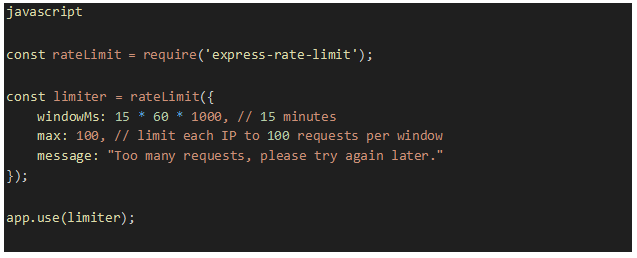
Implement Rate Limiting & Throttling:

Limit DDoS attacks by capping the number of API requests from a user/IP. Use tools such as API gateways to control traffic.


Validate and Sanitize Input:

Avoid SQL injection, XSS (Cross-Site Scripting), and other attacks by validating all user input.


Use API Gateway & Web Application Firewall (WAF):

API gateways offer centralized security controls, logging, and request filtering. WAFs assist in blocking malicious traffic before it arrives at the API.


Monitor API Usage & Logs:

Utilize logging and monitoring tools to identify abnormal activity and possible security risks.


Use Versioning and Deprecation Policies:

Phase out older API versions securely without leaving them vulnerable.


How to Create an API from Scratch

——————————-

Building API from scratch involves designing, building, and protecting an interface through which applications communicate. Here’s a guide on how to make a REST API using Node.js with examples:


1.  Define API Requirements

Before starting development, clarify:

  • Purpose: What will your API do?
  • Target Users: Internal team, third-party developers, or end-users?
  • Authentication Needs: Will users need API keys, JWT, or OAuth?
  • Data Flow: What requests will the API handle, and how will it respond?
  • Scalability & Security: Will the API need rate-limiting, caching, or encryption?


2. Choose the Technology Stack

Popular choices include:

  • Backend Framework: js (Express.js), Django (Python), Flask (Python), Spring Boot (Java), etc.
  • Database: MySQL, PostgreSQL, MongoDB, Firebase,
  • Authentication: JWT, OAuth, API

For this guide, we use Node.js + Express + MongoDB.


3.  Set Up the Development Environment

Step 1: Install Node.js & Initialize Project

Install Node.js and run the following in the terminal to create a project:

Install Node.js & Initialize Project

Step 2: Install Dependencies

Install Dependencies4.  Create the API

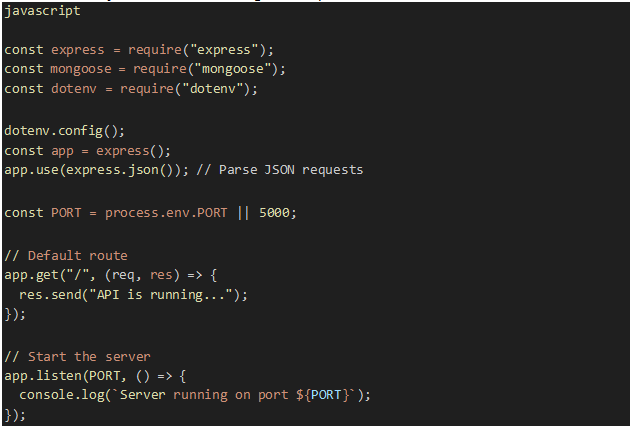
Step 3: Set Up Express Server

Create a server.js and add the following JavaScript:

Create a server.js and add the following JavaScriptRun the server:

Run the server

5.  Connect to Database

Step 4: Setup MongoDB Connection

Modify server.js to include MongoDB:

Modify server.js to include MongoDB

Create a .env file for configuration:

Create a .env file for configuration6.  Define API Endpoints

Step 5: Create a Model

Inside a new models folder, create User.js:

Inside a new models folder, create User.jsStep 6: Create Routes

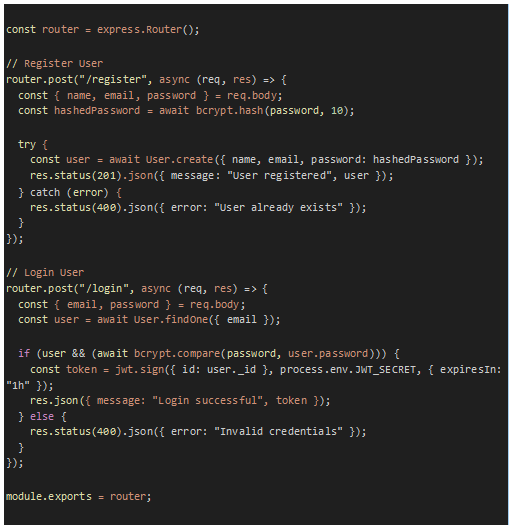
Inside a new routes folder, create userRoutes.js:

Inside a new routes folder, create userRoutes.js

Step 7: Integrate Routes with Server

Modify server.js:

Modify serverNow, the API has two endpoints:

  • POST /api/users/register → Register a
  • POST /api/users/login → Authenticate a user and return a


7.  Secure & Deploy API

Step 8: Security Enhancements

  • Use helmet for security headers:

Modify server.js

Add to server.js:

Add to server.js

  • Enable CORS for cross-origin access:

Enable CORS for cross-origin accessStep 9: Deploy API

  1. Use a cloud service like Heroku, AWS, or
  2. Push your project to GitHub:Deploy API
  1. Deploy with Heroku:

Deploy with Heroku


Advanced Features to Boost Your API

———————————

Today’s APIs need more than basic CRUD operations. Adding advanced features improves security, scalability, and user experience. Here are key techniques to take your API to the next level:


1. Middleware Usage

Middleware is a function that comes between the request and response cycle, where you can deal with authentication, logging, and validation before it hits your main application logic.


A.  Request Logging

Logging assists with troubleshooting, monitoring, and API performance analysis.

Request LoggingBenefits:

✔️ Tracks API usage

✔️ Helps in debugging errors

✔️ Monitors performance metrics


B.  Request Validation

Before processing data, APIs should validate input to prevent security risks like SQL Injection and XSS attacks.

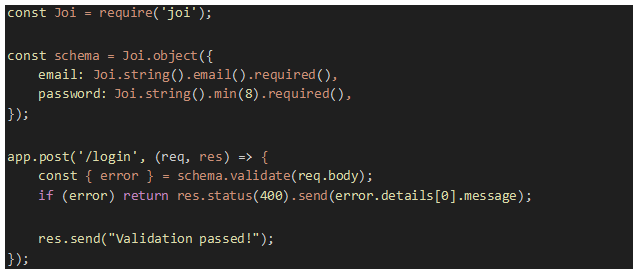
Using Joi for input validation in Node.js:

Using Joi for input validation in Node.js✔️ Prevents invalid data submissions

✔️ Enhances security & API stability


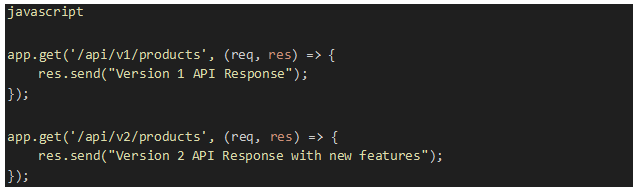
2.  API Versioning

As APIs evolve, versioning ensures that old clients remain functional while new ones can access the latest features.


Methods of API Versioning:

URL Versioning (Most Common)

URL Versioning Header Versioning

URL Versioning

Query Parameter Versioning

Query Parameter Versioning 

Example in Express.js:

Example in Express.js✔️ Ensures backward compatibility

✔️ Allows smooth upgrades


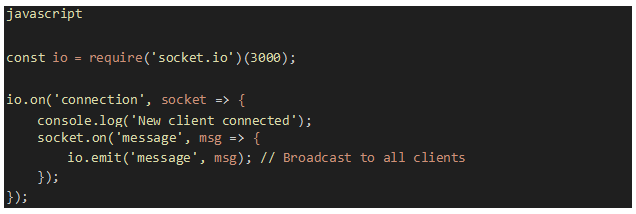
3.  WebSockets to Enable Real-Time Communication

Unlike traditional REST APIs, WebSockets create a lasting connection between the client and server allowing real-time updates for:

✔️ Chat Applications

✔️ Stock Market Updates

✔️ Live Notifications


How to Implement WebSockets (Node.js & Socket.io)

1️⃣ Install Socket.io:

Install Socket.io2️⃣ Create a simple WebSocket server:
Create a simple WebSocket server

Benefits of WebSockets:

✔️ Reduces latency (No need for repeated API calls)

✔️ Efficient resource usage


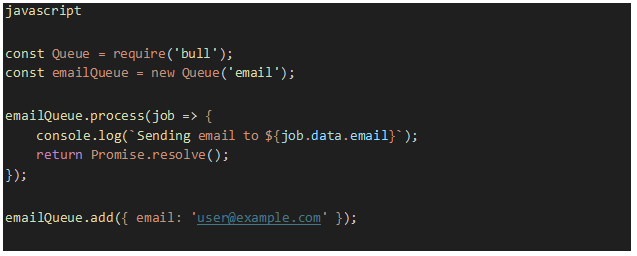
4.  Background Jobs for Async Processing

APIs tend to perform long-running tasks such as:

✔️ Sending Emails

✔️ Processing Large Files

✔️ Database Cleanup

Rather than keeping users waiting, background jobs execute asynchronously through job queues such as Redis, RabbitMQ, or Bull.js.


Example: Using Bull.js (Redis-based Queue)

1️⃣ Install Bull.js & Redis:

Install Bull.js & Redis

2️⃣ Create a job queue in Node.js:

Create a job queue in Node.js:

✔️ Prevents blocking API requests

✔️ Handles large workloads efficiently


API Monetization & Rate Limiting

——————————–

APIs are valuable digital assets, and companies can make money from them by giving paid access, advanced features, or tiered pricing. Unrestricted API usage can lead to misuse slow performance, and rising costs. Using rate limiting ensures fair use, prevents overload, and protects against harmful attacks.


1.  How to Monetize an API

A.  Subscription-Based Model

Charge users a monthly or yearly fee for API access.

🔹 Example: OpenAI’s GPT API, Google Maps API

Implementation:

  • Use Stripe or PayPal for payments
  • Generate API keys for different access levels


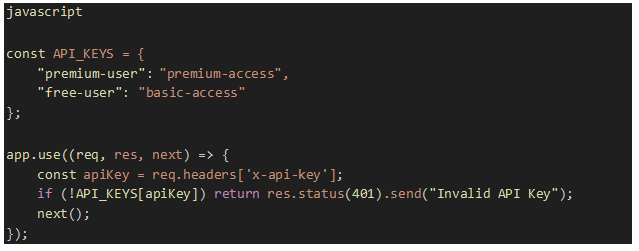
Example API Key Validation:

Example API Key Validation:

✔️ Predictable revenue model

✔️ Encourages long-term customers


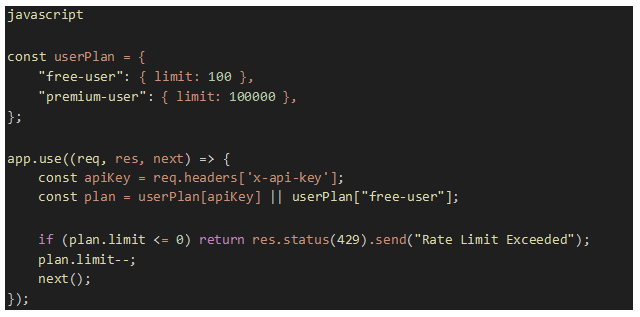
B.  Tiered Access (Freemium Model)

Offer free access with limited features, and charge for premium features.

🔹 Example: Twitter API offers free, basic, and premium tiers.

Tiered Access (Freemium Model)

Implementation in Express.js:

Implementation in Express.js:

✔️ Encourages users to upgrade

✔️ Balances free & paid users efficiently


2.  Implementing Rate Limiting

Rate limiting protects APIs from abuse, bot attacks, and excessive traffic. Popular tools:

Express-rate-limit (Node.js)

✅ Nginx Rate Limiting

Cloudflare Rate Limiting

Example in Express.js

Implementing Rate Limiting

✔️ Prevents API overuse

✔️ Ensures fair usage among all users


Future Trends in API Development

——————————-

APIs are evolving, and what’s ahead will shape how we build software. New technologies like AI-powered APIs, decentralized APIs, and serverless APIs are changing how companies work with data and services. Let’s dive into these new developments.


1.  AI-Powered APIs

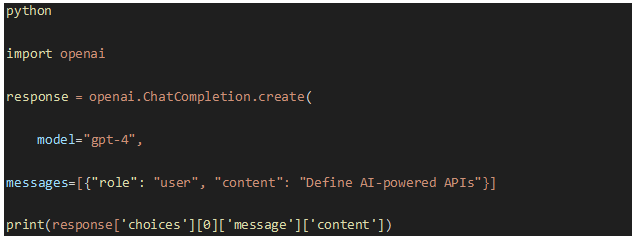
AI-driven APIs are revolutionizing industries by providing task automation, better decision- making, and better user experiences. OpenAI (ChatGPT), Google (Bard), and Stability AI (Stable Diffusion) are among the leading companies pushing this change forward.

A.  How AI APIs Work

AI APIs provide pre-trained models that can be integrated into applications via simple HTTP requests. These APIs can handle:

✔ Text processing (chatbots, summarization, content generation)

✔ Image recognition (face detection, object identification)

✔ Speech-to-text & text-to-speech (virtual assistants)


B.  Example: Using OpenAI’s GPT API

Example: Using OpenAI’s GPT API✅ Advantages of AI APIs:

✔ Quicker incorporation of AI in apps

✔ Economical (no necessity for training of sophisticated models)

✔ Enhances automation (customer care, analysis, predictions)


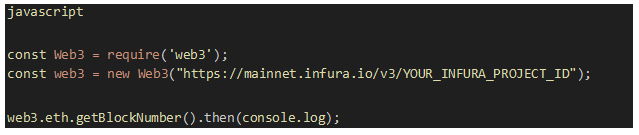
2.  Decentralized APIs (Blockchain-Based APIs)

Centralized servers are used in conventional APIs, that are sources of risks such as single component failure, censorship, and data breaches. Decentralized APIs make use of blockchain technology to increase safety and dependability.

A.  How Decentralized APIs Work

1️⃣ Smart Contracts: API calls execute securely without third-party control.

2️⃣ Distributed Nodes: Data is processed across multiple locations instead of a central server.

3️⃣ Tamper-proof Transactions: Every request is logged on the blockchain for transparency.

B.  Example: Web3 API (Ethereum Blockchain Interaction)

Example: Web3 API (Ethereum Blockchain Interaction) 

✅ Benefits of Decentralized APIs:

✔ More security (no single point of failure)

✔ Censorship resistance (no centralized control)

✔ Data integrity (immutable records on the blockchain)


3.  Serverless APIs (AWS Lambda, Firebase Functions)

Serverless APIs avoid the use of conventional backend infrastructure by executing code on- demand as a response to events.

A.  How Serverless APIs Work

1️⃣ A request invokes a cloud function.

2️⃣ The function runs and returns a response.

3️⃣ The cloud provider manages scaling and maintenance.


B.  Example: AWS Lambda Function (Node.js)

Example: AWS Lambda Function (Node.js)✅ Benefits of Serverless APIs:

Cost-effective (pay only for execution time)

Auto-scaling (handles high traffic automatically)

Easier deployment (no server management needed)


Conclusion

APIs are important in cutting-edge software program development as they facilitate easy integration, automation, and scalability among applications. When growing a public API for third party developers or a private API for internal applications, protection, performance, and implementation are essential. Selecting the right technology stack, optimizing the performance of the API, and adhering to safety high-quality practices assure a stable and efficient API. As businesses continue to adopt digital transformation, APIs will retain a seat at the center of innovation, driving everything from mobile applications to enterprise solutions.


FAQs

What are the protocols APIs employ?

APIs employ HTTP, HTTPS, REST, SOAP, WebSocket, GraphQL, gRPC, and MQTT for inter- application and inter-service communication.

How do public and private APIs differ?

Public APIs are accessible to external developers, whereas private APIs are reserved for internal consumption within an organization.

What programming languages are used for API development?

The best used are JavaScript (Node.js), Python (Django, Flask), Java (Spring Boot), Ruby (Rails), PHP (Laravel), and Go.

What databases are good with APIs?

Common options are MongoDB, PostgreSQL, MySQL, Firebase, Redis, Cassandra, and DynamoDB, depending on API needs.

How do you make an API perform well?

Implement caching, indexing, load balancing, pagination, compression, asynchronous processing, and CDN to enhance API speed and efficiency.

Read More
Sanju May 6, 2025 0 Comments

No-Code and Low-Code Website Development: Is Coding Becoming Obsolete?

Planning to run into scalable website development, right?

Well, that’s why you have landed right here! But the moment you start your project, you may stumble across two popular options: No-code and Low-code!

Speaking of these aspects, low-code and no-code platforms allow businesses to modernize existing applications or create and launch new apps quickly.

But now the question arises- What is no-code and low-code? What is an ideal framework for building websites?

Let’s understand both in detail!


What is low-code development?

———————————-

Simply put, Low-code development can be defined as website/app development to build scalable websites without any difficulty. Furthermore, low-code solutions can not only reduce the expected cost and time required by the building of websites and apps. Thus, it’s an ideal choice for businesses planning to build a scalable website that can easily meet the demands of automation and transformation.


What are the Benefits of Low-Code Development Platforms?

———————————-

There are abundant benefits of low code for website development. Without further ado, let’s take a look at the key benefits of low-code development platforms.

Benefit #1: Saves Time

One of the biggest reasons to invest in low-code development platforms is that you don’t need to wait or hire certified professionals with extensive coding experience. Instead, anyone in your organization can work in a low-code development.


Benefit #2: Enhance Developers’ Productivity

Another major benefit of low code for website development is that it may streamline the development of websites. Furthermore, developers don’t need to spare their time on programming instead, they can work on other projects that require piles of coding.


Benefit #3: Flexibility

When it comes to maintenance or updates, low-code platforms can aid developers in making changes because they don’t need to write hefty codes now. Even if professional developers aren’t present at the moment, anybody on the team can help because maintaining low-code website development is the easiest thing to do. If you have no idea of how to incorporate it into your web development project, it’s wise to hire a dedicated website development company for you.


Benefit #4: Minimize Overhead Cost

It is no secret that using low-code platforms is an incredible way to build websites without hiring additional staff or high-paid developers. Thus, businesses can save a lot of money and focus on other core activities.


Benefit #5: Stay Ahead with Digital Transformation

Last but not least, low-code platforms help businesses to keep up with the pace of the evolving trends which ultimately reduce the conventional app development burden to enhance digital transformation.

Now that we have discussed everything about low-code for web development, it’s time to set our sights on “No-Code”!

Is it better than Low-code? Let’s find out!


What is No-Code Development?

———————————-

Speaking of its counterpart, no-code web development refers to the development method that helps developers build websites without writing even a single line of code. Furthermore, the framework may help companies build and launch apps using visual building blocks to make the website responsive, engaging, and intuitive.

With saving time and cost-saving benefits, no-code platforms are gaining significant traction among developers and industries of all sizes.

But is it better than a low-code development framework, let’s find out!


What are the Benefits of No-Code Development Frameworks?

———————————-

Let’s take a look at the incredible benefits of no-code development frameworks.

Benefit #1: Save Time

One of the most obvious benefits of choosing no-code development frameworks is that you can simply build a website with no code in no time. When you can finish the task in less time and resources, it may significantly save time.


Benefit #2: Boost Employee Productivity

Gone are the days when developers used to spend a lot on website development. But now with the advent of a no-code development framework, developers can solely focus on building websites and apps which can ultimately enhance their productivity at the workplace.


Benefit #3: Design Modifications

Another major reason to invest in a no-code development framework is that developers can seamlessly make changes in the functionality and design of the website without requiring additional resources.


Benefit #4: Accessibility

One of the major highlights of the no-code development framework is that it makes the web development project accessible to small businesses and bootstrap startups looking to gain a robust market foothold.


Benefit #5: No Prior Experience Required

Lastly, the no-code development framework is easy to use and anyone with little or even no coding knowledge can use it to build responsive websites. Furthermore, it could be an ideal way for people with non-technical backgrounds to create prototypes before launching their ideas on the market.

Though a no-code framework seems to be a superior option, the only downside is that developers can run into the risk of a monolithic app architecture due to the lack of proper coding knowledge and experience.

Speaking of their differences, low-code development is generally more sophisticated and can be any type of website or app. On the other hand, no-code frameworks are less complex and can create simple websites or apps. If you are interested in such a framework, always hire a no-code web development company to do it for you.


Low-Code vs. No-Code: What to Choose for Website Development?

———————————-

No matter whether you run into a low-code or no-code development framework, your choice should depend on a wide range of factors, including budget, type of website, how quickly you want to launch, and how much time you need it to complete! Though both solutions tend to support your website development project, businesses seamlessly prefer low-code development solutions with rich functionality.

However, no-code could be an ideal solution for startups with budget constraints. Furthermore, no-code platforms don’t prioritize user experience and solely focus on operational efficiency which could be a deal-breaker for most businesses.


Final Thoughts

So, that’s a wrap to the no-code vs low-code for website development in 2025! Remember that whether you choose low-code or no-code for web projects, you should plan how to cater to your users’ objectives. If you want to build a solid, feature-rich, and scalable website then it’s wise to hire a dedicated website development company for your business objectives.

Read More
Ammy William April 24, 2025 0 Comments

How AI & Automation Are Revolutionizing Web App Development?

Artificial Intelligence is changing every industry and almost every process; we are viewing the integration of this technology. In web application development, AI and automation have opened various opportunities by empowering investors to make a solid presence more quickly. This has flipped the coin drastically from traditional development, aiding a team to be more efficient and effective in web app development.


Businesses increasingly match the pace with technology and assure themselves that they will maintain a sustainable presence in the industry. Traditionally, every process, from strategy development to deployment, was time, effort, and money-consuming. Today, this has been completely taken over by technology, making every process in web app development streamlined with particular business needs. A regular web app is neither a modern-day business requirement nor a user. AI-first modern solutions have taken this place.

However, the development requires expertise and hands-on experience. Hence, AI development services are the best option. The one who is experienced in the industry will help you build a modern, automation-led, and sustainable web presence by making the most of AI.


Continue reading this blog to learn more about AI and automation in the web app industry.


How AI and Automation Lead the Way in Web App Development?

———————————-

We are all familiar with the traditional mode of development. However, not articulating the cons of this approach because the technology revolution we are seeing is one such greater part of it. Before the advent of AI and automation in web app development, various challenges were prominent in the industry, such as repetitive manual coding, time-consuming testing, and more, leading the development cycle longer and costlier. This picture has completely changed after the introduction of AI and automation, like:


1. Code Generation

Gone are the days when the manual writing of code was prevalent. We know that manual coding can sometimes be repeated more than one or two times, making it difficult to debug and process further. This time-consuming venture delays the formulation and working of the web application structure.

But, today, the scenarios are different. Developers can get assistance from tools like GitHub Copilot or Windsurf (AI-powered code editors), which greatly assist in completing web application development without facing the difficulties we once encountered in the manual approach. These can generate basic code structures for web apps, which devs can further enhance according to their expertise.


2. Automated Testing

Testing requires a keen eye on the various aspects to ensure a quality-packed solution. This earlier was a laborious process, as a specific team had to perform every action manually on different browsers to ensure that a web application worked the best on every platform. One of the biggest bottlenecks causing delays in the release of web app solutions.

Now, with the evolution of automated testing, the labor-intensive process has become smoother and efficient. Various automated quality assurance tools that AI powers help a team to overcome manual testing. These can automatically create test cases, test across different browsers, and find potential issues faster than manual testing.


3. Personalized User Experience

Understanding user behavior and curating the interface accordingly was indeed a time-consuming process. How? This is because testing the cases takes longer, matching them with the requirements, and then developing them. As a result, the need for personalized user experience becomes prevalent.

Artificial intelligence has made this easier. The advantage of AI is that it evaluates large sets of data  (including user behavior, history, and preferences) quickly, which in turn helps a business to deliver content to users that they mostly look to browse in a particular web application, significantly enhancing the chances of growth.


4. Data-driven Insights

The prowess of artificial intelligence is that it analyzes mountains of data in a jiffy. This outstanding capability is helpful for developers as AI can analyze user interactions with web apps to provide more accurate usage patterns insights. This will aid developers in making data-backed decisions about whether a feature addition is required for a web application. Not only that, AI technology can evaluate different solutions (A/B testing) and find out the right features or functionalities for a web app that developers can integrate to outshine the impact of a solution.


5. Better Security

Who does not want to build a secure presence on the web? Regarding web applications, the question of security is considered of utmost importance. Here, AI can help a team combat this issue with precision. When integrated into a solution, this technology can identify the security loopholes in real time and recommend the suggested diagnosis to level up the safety of a web solution.


Conclusion

custom web application development company after the advent of Canva has been on a different scale. Every business is actively investing in this domain, and with the advent of AI and automation, every process has become seamless.  The subtle nuance lies in the correct custom web application development company strategies and expertise that add value to the process. You can work with an AI development company for your project and leverage the complete potential of this technology.

Read More
Mosche Amara April 12, 2025 0 Comments

Why Choose Umbraco CMS for Your Next Web Project? Top Development Benefits

Umbraco- The Powerful CMS for Businesses

Umbraco is an open-source system and has emerged as a popular choice for businesses no matter which domain you have.  In this ever-changing digital world, choosing the right CMS (Content Management System) is necessary for your business success. So, with its growing popularity, Umbraco CMS has numerous advantages to offer users. In this blog, we will walk through the top benefits for businesses that are looking at Umbraco as their potential CMS.


Benefits Of Choosing Umbraco CMS

———————————-

Umbraco is open source and available in the latest version with outstanding inbuilt features and functionalities. We have compiled a list of the top advantages of Umbraco CMS, let’s look into the benefits of Umbraco CMS listed below:

1. User-Friendly Content Management

Umbraco CMS is one of the popular content management systems due to its user-friendly interface. Its intuitive and straightforward interface is also for non-technical users. With this easy-access interface, an individual with less technical skills can easily access the Umbraco CMS. Umbraco offers further perks, such as simplified content creation and editing tools that help the team manage their digital assets seamlessly. One interesting factor to consider is that Umbraco is a role-based content management system that allows users to increase collaboration by giving users customized access.


2. Extended Flexibility and Customization

Umbraco is an open-source CMS and offers a high level of customization and standout features for users. Tailored content flexibility facilitates a truly personalized web experience that meets your business requirements. Moreover, Umbraco has a vast array of third-party integrations and extensions to expand Umbraco’s capabilities and align with your project’s unique requirements.


3. Strong Security Features:

Umbraco CMS offers inbuilt security mechanisms like HTTP authentication and support. Today, the most critical factor for the business is security, and you can get that extended level of security in the Umbraco CMS. Regular updates and community-driven approaches keep projects safe and secure against the latest emerging threats, reflecting a commitment to compliance with industry security features.


4. Budget-Friendly and Open-Source Advantages:

Being open source and eliminating hefty licensing fees, Umbraco offers potential economic advantages. Its lower development and maintenance costs make it a cost-effective CMS solution compared to other available content management systems. Lastly, Umbraco has a prominent community, expert developers, and a professional support network to assist you at every stage if you are stuck in something.


5. Scale Your Business With Umbraco CMS:

No matter if you are managing a small blogging website or a corporate site, with Umbraco you can manage all levels of websites hassle-free. Its robust performance optimization supports heavy-traffic websites and ensures your website’s future growth through the latest and modular techniques.


6. Smooth Integration and API Supports:

Umbraco offers seamless third-party integration capabilities, including CRM, ERP, and e-Commerce. Its API-driven architecture supports headless CMS functionalities, offering strong integration options and easy data migration from current or existing CMS platforms.


7. SEO and Performance Optimization:

Umbraco CMS has inbuilt SEO capabilities that enable the creation of SEO-friendly URL structures and metadata management to magnify visibility. Umbraco’s technical abilities, including fast page load speed, make it a primary user choice. Its caching mechanisms and adherence to mobile responsiveness and accessibility standards ensure users and search engines consider your site favourably.


8. Strong Community and Enterprise Support:

Umbraco has an active community that contributes innovative features and regular updates. This expert community boosts Umbraco’s digital presence and helps it stand out as a strong CMS among its competitors. With this developer community support, you will find abundant guidance to maximize Umbraco’s potential.

However, choosing the best CMS according to business requirements is crucial. If you are in the e-commerce domain, then Umbraco can help you grow your e-commerce business. In this digital era, Umbraco has proven records for its efficiency. We hope this benefit gives you clear insights into how Umbraco CMS can be helpful for your business.


In the Crux

A powerful, flexible, and budget-friendly Umbraco CMS is a good choice for any web development project. Its alignment with diverse business needs and industries makes it a prominent option for businesses from small to large enterprises. If you are considering Umbraco in your next web development project. In that case, it will be quite an attractive choice and a good to go solution for building a future-proof and efficient digital platform.

Contact Umbraco Development experts for your next web development project.

Happy Development

Read More
Sanju March 8, 2025 0 Comments

Why Choose Kentico CMS for Your Next Web Development Project?

For companies that want to provide excellent online experiences, the choice of the right content management system (CMS) is very important today. Of the myriad options, the leading choice for organizations that want a robust, reliable solution is Kentico CMS. Among businesses utilizing it, 26% are small companies with fewer than 50 employees.

Medium-sized enterprises make up the largest segment, accounting for 43% of users. Meanwhile, large organizations with over 1,000 employees represent 30% of Kentico CMS customers. In this article, we look at the features and benefits of Kentico CMS to explain why collaborating with a Kentico development company is the way to enhance your web development projects.


What is Kentico CMS?

———————————

Kentico CMS is a complete web content management system made by Kentico Software. Petr Palas founded the company in 2004 as a Czech Republic-based company, expanding overseas and having offices in the USA, UK, Australia, and Amsterdam. Kentico website development is a hybrid of a traditional CMS and a headless CMS, which offers flexibility in content delivery to different channels. With its extensive features, Kentico stands out as a great choice for businesses seeking the option to develop dynamic and mesmerizing digital experiences.


Key Benefits of Using Kentico CMS for Web Development

———————————

  • All-in-One Digital Experience Platform

All the content management, digital marketing, and eCommerce functionalities are integrated into a single platform with Kentico CMS. By lowering the reliance on third-party tools, the consolidation speeds up the workflow and the whole user experience. Moreover, businesses can take advantage of this all-encompassing platform and facilitate the smooth management of their digital presence by exploring Kentico development services.


  • Seamless Omnichannel Experience

Today’s consumers interact with the brand through multiple touchpoints, and therefore, it is vital that you give them a consistent experience. Kentico CMS allows you to deliver content on multiple channels, whether headless or in a traditional CMS model. This maintains the consistency of communication across your viewers, regardless of which medium they opt for.


  • Scalability and Performance

Kentico CMS is an application that is ideal for high-traffic websites. It is architected for enterprise scale, so your website stays pretty responsive and reliable even with your growing business. By working with Kentico, you’ll always have the ability to grow your website without compromising performance and gain the confidence that comes from having a Kentico development company on your team.


  • Advanced Security Features

Every online platform takes security as a priority. With built-in security, such as GDPR compliance and role-based access control, Kentico CMS development is already equipped. The features help safeguard your content and your user data and provide some peace of mind in an increasingly complex digital landscape.


  • Ease of Use and Customization

Kentico CMS offers a highly understandable user interface that is constructed for both advertisers and programmers. Adaptable formats and gadgets simplify the process of generating individualized experiences. This provides teams with a user-friendly environment where they can manage content effectively, hence reducing the effort and time required to update a website.


  • Robust API and Integration Capabilities

In today’s integrated digital ecosystem, there is no room for guesswork. Kentico CMS comes with powerful API support so that it can be easily integrated into 3rd-party CRM, ERP, and other applications. With its headless CMS, businesses can very easily deliver content to many platforms through API first development.


How Kentico CMS Enhances Digital Marketing?

———————————

  • Personalization and Customer Segmentation

To be effective in digital marketing, one must understand and try to cater to individual customer preferences. Kentico CMS utilizes AI-driven content recommendations and dynamic content customization, which gives businesses the capacity to give customized encounters that meet the client’s requirements.


  • SEO and Content Optimization

Organic traffic is an achievement in search engine results. As part of the Kentico website development, you will get built-in SEO tools to optimize the content and get better rankings. Content scheduling and workflow automation are also embedded in these features to enhance efficiency. All these tactics are aimed at making your marketing activities effective and timely.


  • Marketing Automation Features

You will find a solid set of email marketing, A/B testing, and lead nurturing features within the suite of marketing automation tools that Kentico CMS provides. These features allow businesses to automate repetitive tasks, analyze performance, and refine strategies using data-orientated insights. By employing Kentico development services, businesses can completely leverage these tools to improve their advertising endeavors.


Comparing Kentico CMS with Other CMS Platforms

———————————

  • Kentico vs. WordPress

Although WordPress is famous for its ease and vast extension marketplace, Kentico CMS provides a more unified answer with inherent online promotion and electronic commerce functionalities. This all-in-one approach reduces dependency on third-party plugins, minimizing potential security vulnerabilities and compatibility issues.


  • Kentico vs. Sitecore

Sitecore is a prominent player in the enterprise CMS market and is known for its robust features. However, Kentico CMS provides comparable functionalities with a more user-friendly interface and a lower total cost of ownership. This balance renders Kentico a compelling possibility for enterprises pursuing corporate-grade proficiencies without the linked intricacy and cost.


  • Kentico vs. Adobe Experience Manager

Adobe Experience Manager (AEM) is a powerful CMS favored by large enterprises. In contrast, Kentico CMS offers a more cost-effective solution with a faster implementation timeline. Its integrated foundation removes the requirement for numerous separate arrangements, simplifying procedures and lessening expenditure.


Why Kentico CMS is a Smart Investment for Future-Proof Web Development?

———————————

  • Future-Ready with Headless CMS Capabilities

Kentico CMS’s headless capabilities allow businesses to deliver content seamlessly across emerging technologies such as AI and IoT devices. This flexibility guarantees that your virtual existence stays pertinent and reachable, irrespective of how consumer choices alter.


  • Cost-Effective Solution

Budget considerations are pivotal in decision-making. Kentico CMS offers a lower total cost of ownership compared to other enterprise-level CMS platforms. Its inclusive feature set lessens the demand for supplementary third-party tools, resulting in financial economies and streamlined upkeep.


  • Continuous Updates and Support

Staying current with technological advancements is essential for maintaining a competitive edge. Kentico CMS development provides regular software updates and introduces new features and enhancements. Coupled with dedicated customer support and an active community, businesses have access to resources that ensure their platforms remain up-to-date and effective.


Power Up Your Web Development with Kentico CMS

———————————

Kentico CMS stands out as a comprehensive, future-ready, and cost-effective solution for businesses seeking a powerful digital experience platform. Its seamless integration of content management, digital marketing, and eCommerce functionalities makes it a top choice for enterprises aiming to streamline their online presence.

Kentico CMS combines traditional and headless CMS capabilities, offering flexibility in content delivery. Its comprehensive platform eradicates the necessity for excessive external tools, decreasing expenses and intricacy. Scalability and security ensure high performance and data protection for enterprise-level websites. The built-in marketing tools help businesses optimize content strategy, personalize experiences, and automate campaigns.


Ideal Scenarios for Choosing Kentico CMS

Kentico CMS is the best for enterprises that:

  • Require a scalable and high-performing CMS for large websites.
  • Want a secure platform with built-in GDPR compliance and access control?
  • Seek an integrated digital marketing solution without relying on third-party tools.
  • Prefer a future-proof CMS that supports headless development and API-driven integrations.


Consulting an Expert for Kentico Implementation

Implementing Kentico CMS effectively requires expertise to maximize its full potential. A Kentico development company can help businesses leverage its robust features, ensuring a smooth and efficient transition. Whether you need Kentico development services for a new website or an upgrade to an existing platform, consulting professionals will streamline the process and optimize performance. Kentico CMS is more than just a content management system; it is a complete digital experience platform that empowers businesses to grow, engage, and succeed in the digital world.

Read More
Sanju March 6, 2025 0 Comments

How To Choose the Right Web Development Services for Your Brand

Choosing with whom you will develop your brand website could probably be the most difficult decision you will ever have to make for such an endeavor. It is not just a matter of putting your business online; it is an investment in its reputation and success. Now, we are going to show you how to make the right choice in web development services according to your goals so that you may have a prime place in your marketing strategy with your website.


Understand Your Business Needs

————————————–

Set some time aside to identify your business goals before scouring the services. Figure these out at last before all else in order to clarify the scope of the website. Through an online shop, a corporate blog, or a professional portfolio, these would lead you to understand whether you shall be requiring e-commerce functionalities, a content management system, or contact forms for your website. Customize your search for web development services according to this so as to find out exactly the kind of outcome you want.


Research and Shortlist Potential Web Development Companies

————————————–

Your priority should be finding web development companies that suit your requirements. It is very important for a developer to have experience in developing similar sites with good results; again, you can read the reviews and or testimonials from clients who have had the company’s services to know how reliable it is and about customer satisfaction. Look through the portfolio, as this will show you the variety and quality of the work. A diversified portfolio speaks of their flexibility, while high-quality designs speak of their experience in web development services.


Evaluate Their Technical Skills and Expertise

————————————–

To a boring website, there should be a technical backbone.website development services provides a good knowledge about Internet technologies such as HTML5, CSS3, JavaScript, and many more advanced content management systems such as WordPress or Shopify. Ensure they can develop mobile responsive websites that look great on any device. Another thing you should look out for is their capability for other integrations, APIs, and custom features. The right developers should prove their abilities through previous projects and the ability to solve certain problems your brand might be facing.


Consider the Design and User Experience

————————————–

Coding is just one part of web development; also critical is design and user experience. A design makes a huge contribution toward forming an image about what your brand is all about, and you can really go ahead and… But it could be great and clean, modern and fresh, which is what full web development services should do to put on your site. User experience is the fact that the development team should focus on best practices in user experience and user interface design: the site isn’t just intended to be aesthetically pleasing but also usable. Now the said website should be intuitive, simple, and accessible in terms of usage by any type of user.


Discuss the Development Process and Communication

————————————–

Transparency and clear communication during the development process should be very important. Choose the web development company that can provide you the project timetable, explain the expectations, and regularly update statuses. Ask about the process used in managing the project milestone, and how changes or feedback will be factored in during the development stage. Strong communication would leave you with fewer surprises when everything is smooth. Good web development companies consult when the time comes to come up with a responsive idea.


Check Post-Launch Support and Maintenance

————————————–

Your website is finally live, but that shouldn’t mean the end of relationship with your web development company. Continued support and maintenance should be there for an uninterrupted and secure website. Ensure the web development services extend even beyond the completion of the project for support in regards to bug fixing, updating, and security patches. That would prevent your website from lagging behind in functionalities in an ever-changing digital world. Many companies also have long-term contracts or retained services for ongoing maintenance-the investment is worth it.


Consider Budget and Value for Money

————————————–

While the budget happens to be a fundamental pillar, it would not be right to have the proclivity to go for the cheapest option when searching for web development services. Cheap, as you know, is synonymous with compromise, and that compromise would be reflected in the quality of the website, which would then make it not employer friendly. Instead of this, your attention must now be diverted to ensuring the balance between cost and value for money. Look for the companies that have competitive prices and, at the same time, have all the qualities that you would desire in a website. Even though this could cost you a little more, it is going to be a long-term investment that would have your website built firmly and scalability in mind by expert developers.


Conclusion

You will take a more than prudent choice considering these-the requirements of your business, technical qualifications, specifications for design as well as support after the launching. A website is an investment for the future; it is wise to choose carefully. Paired with the right development team, this would make your website a very effective growth tool that would bring new customers into the fold while cementing your brand online.

Read More
Sanju December 31, 2024 0 Comments

Best eCommerce Platform For Developing your Online Store – Magento or Shopify

The eCommerce industry is changing so quickly these days. Keep in mind that countless eCommerce companies are working hard just like you. You will eventually need to put your products online as a business owner if you want to thrive in the digital age, so you will need the best eCommerce platform for this. Developing your eCommerce website on the best platform will enhance your website performance to being on top in today’s competitive world. You explore eCommerce platforms which are best in their own way like Shopify, Wix, BigCommerce, Magento, WooCommerce, Squarespace, Big Cartel, Square Online, Shift4Shop, Volusion, OpenCart etc. In this article we will compare two best platforms for developing eCommerce websites, one is Magento and second one is Shopify. These two platforms are very popular among businesses.


Importance of Choosing the Right Platform for Your eCommerce Website

————————————-

It would be best to first do some proper research to see which platform will be the best for your online store and ensure smooth functionality and great customer conversion. As you enter the competitive eCommerce landscape, you’ll need a platform that is feature-rich and capable of performing well, whether you have a large or small business. When your online store running on the best eCommerce platform means you have organized inventory management, user-friendly interface that attracts users, a smooth payment method and seo optimized website for better search engine visibility.


Comparing Two Web-based Shopping Website Developing Platforms

————————————-

In this article, we’ll explore two prominent ecommerce platforms like Magento and Shopify. These platforms are being used for developing eCommerce websites. Because of their valuable features, both marketplaces have been widely adopted by successful businesses. We will introduce both platforms and explore their advantages and disadvantages to help you determine which platform will be best for your eCommerce website.

Shopify: Some eCommerce website owners found Shopify best digital storefronts to build and manage their online product selling website easily. Shopify launched in 2006 and became a first choice among all sizes of businesses. The reason for shopify popularity is their user-friendly interface and variety of beautiful website design templates. If you’re a startup you can choose this online marketplace and make your brand established. Shopify has the tools to launch and grow an ecommerce store. Here, we’ll cover the key points of using Shopify from Setting up your store to optimizing your sales


Here are the pros and cons of using Shopify for your eCommerce website

————————————-

Pros of Shopify:

User-Friendly Interface: Shopify’s main advantage is their user friendly interface for users and developers also. Visitors love a website’s interface when it is user friendly and easy to navigate. You can easily set up an online store, add products, and manage orders without the need for advanced technical skills. Owners of the shopify can easily customize the design of their online store by drag & drop feature. For newcomers keen to run an e-commerce business but not overly inclined to engage in technical complexities, starting an online store on Shopify is an ideal choice.

Multiple Templates: This is one of the major reasons to consider this eCommerce platform as they provide an excellent choice of web templates. Whether it is a clothing store, a jewellery shop, an art studio or any other business, with Shopify everything is possible within an easy-to-navigate and aesthetically pleasing site that is interesting to the audience.

In-Build Tools: Shopify offers standard features such as online payment facilities. Inventory and sales control Search Engine Optimization These features help online merchants easily set up and manage their online stores. With Shopify, operators can easily expand their operations and reach a larger audience. Shopify can be the best platform for the eCommerce business.

Scalability: Scalability is important for your website when you’re running an online store. Shopify can handle increased traffic and transactions without slowing down the website. It allows you to easily add additional resources or upgrade your hosting plan to accommodate growth.

Security: Websites that are developed with the Shopify platform are the most secure and reliable Shopify because Shopify updates its security features regularly to avoid hacking of the website and secure payment transactions. You can be tension free while using Shopify for your eCommerce website.

Cons of Shopify:

Monthly Fees: Shopify offers a variety of resources and customization options to help businesses grow and expand their online presence. It’s important that companies carefully consider their circumstances and needs before deciding to accept a Shopify assignment, and that they regularly review their weight to ensure they’re getting the best value for their money.

Limited Customization: Shopify may not have as much customization flexibility as Magento offers. Shopify offers limited options for building a professional ecommerce website. If you have specific customization requirements, Shopify won’t be perfect for you.

Content Management: Shopify’s blogging resources are definitely more limited compared to platforms like Magento or other ecommerce platforms. Shopify allows users to create and publish blog posts. But it lacks the advanced resources and customization options available in dedicated content management systems.

Exporting Data Limitation: Moving your store to another platform can be challenging for Shopify due to some limitations in dice export options. Shopify lets you export products, customer data, and orders virtually. Not at all. The process may not be as straightforward or straightforward as on some other platforms.


Magento

————–

Magento is an open source ecommerce platform for developing ecommerce websites. Magento helps ace companies run powerful online stores. Magento launched in 2008 and has become a top school for enterprises and midsize companies looking for a solution that is Customizable and scalable for individual ecommerce needs. Scalability is one of the main advantages of Magento. Magento can readily change to meet your evolving requirements. as your company expands. With a wide range of extensions and integrations, You can customize your online store to suit your specific needs.


Here are the pros and cons of using Magento for your eCommerce website

————————————-

Pros of Magento

Flexible Platform: Magento is a powerful platform that can handle a large product catalog. Complex product configuration and a variety of presentations It is a highly customizable option that makes Magento ideal for medium to large companies with high growth potential. With its open-source nature, developers can customize and extend the platform to create the best eCommerce solutions for each business.

Customization: Magento offers a wide range of customization options. which helps companies. Their online stores can be designed according to their specific needs and brands. Companies design attractive websites for their online stores. Customize themes and models or create a new design from scratch.

Scalability: Magento allows you to add new products, resources, and functionality. Shopify is still a popular ecommerce platform, but Magento is considered more friendly and easy to install for companies. Embora or Shopify can also support a certain level of growth. It may not be as flexible or customizable as Magento when dealing with more advanced requirements.

Community Support: Magento has a huge and active community of builders, supporters, and traders who can offer help, recommendation, and sources that will help you enhance your ecommerce internet site. Both systems provide customer service via various channels together with stay chat, email, cellphone, and online documentation.

Control Over Hosting: The choice of hosting solution is entirely up to you. This enables you to scale your Magento store independently. Self-hosting would be suitable for a basic eCommerce setting. Improved functionality, aesthetics, and a variety of system integrations necessitate comprehensive hosting support.


Cons of Magento

Complexity: Magento can be more complex to understand for beginners you will need the help of a developer to manage your website, an expert Magento Developer will help to set up and manage your eCommerce website. Developers are experienced in Magento because they already work on Magento and they will surely deliver high-performance eCommerce websites.

Cost: Companies must purchase a licence to use the software. This can increase acquisition costs and ongoing expenses. Magento can be more expensive if you are just starting in the eCommerce industry and you don’t have much budget to spend. If you have a small budget then you should move to other online store development platforms.

Performance issues: Magento sites may experience slow loading times, especially if significant customization is needed and heavy themes are utilized. This delay can be attributed to various elements, including intricate features, bulky themes, and extensive databases.

Learning curve: Magento’s steep learning curve is a significant disadvantage, particularly for businesses new to e-commerce website development. This complexity can require substantial time and resources to master the platform, making it challenging for teams without technical expertise. For companies seeking a quicker and more user-friendly solution, this steep learning curve can be a considerable drawback.

Read More
Sanju November 5, 2024 0 Comments