
Integrating Payment Gateways: Challenges & Solutions

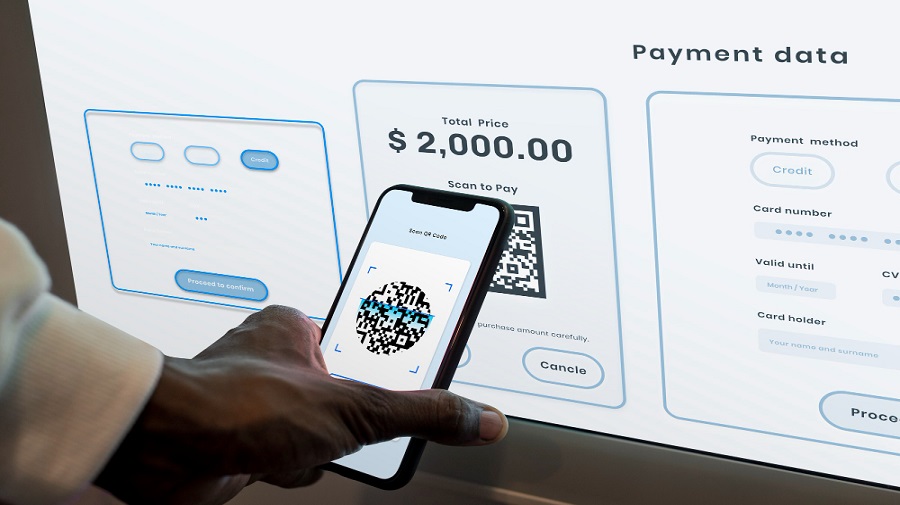
The payments world moves fast. Users expect transactions to clear in seconds. Merchants want simple flows and low failure rates. Regulators demand clarity, traceability, and control. In this environment, payment gateway integrations sit at the core of digital commerce. They decide how money moves. They decide who stays competitive.
A strong foundation of fintech software solutions helps companies build these systems with precision. Yet the work is not simple. Gateways must pass through layers of compliance, security, routing, and operations. Many teams underestimate the complexity until it slows growth.
This guide explains the real challenges and practical solutions. The goal is clear: help leaders build payment systems that are reliable, compliant, and built for scale.
Challenges and Practical Solutions of Integrating Payment Gateways
———————————–
Payment systems decide how money moves. The work must be exact. The risks are high. Leaders must build systems that are secure, compliant, and resilient.
Challenge 1: Fragmented Payment Ecosystem
Payments are not a single system. They are a chain of many actors: issuers, acquirers, networks, processors, fraud engines, and regulators. Each actor has its own rules, formats, timelines, and APIs.
How this creates problems
- Companies deal with different API structures when integrating multiple gateways.
- Error codes vary.
- Refund logic changes from one gateway to another.
- Settlement cycles differ based on region and product.
- Some gateways lack updated documentation.
The result is inconsistent behavior. A small change on the gateway side can break live flows on your platform.
Solution: Build an Aggregation Layer
Leaders are moving toward unified payment orchestration.
This layer:
- Normalizes APIs across gateways
- Converts data into standard schemas
- Creates uniform error handling
- Allows routing across multiple gateways
- Reduces vendor lock-in
With this layer, switching or adding gateways becomes a simple configuration change, not a rebuild.
A strong aggregation layer also makes compliance easier because data is centralized and structured.
Challenge 2: High Transaction Failure Rates
Payments fail for many reasons: network breaks, issuer declines, incorrect routing, risk flags, or gateway downtime.
For merchants, each failed payment hits conversion rates. For banks and fintechs, failure rates create distrust and support loads.
Why failures happen
- Poor routing logic sends transactions through high-risk paths.
- No retry mechanisms.
- Missing device or location signals that banks expect.
- Latency during peak hours.
- Regional gateway downtime.
Practical Solutions
1. Smart Routing
Route transactions based on:
- Issuer
- Card type
- Amount
- Geography
- Time of day
- Past performance
This improves approval rates without breaking rules.
2. Auto-Retries
A quick retry with another provider or different 3DS flow often saves the transaction.
3. Device Intelligence
Passing data like IP, device ID, and behavioural markers helps issuers trust the transaction.
4. Active Monitoring
Track declines in real time. Alert teams when patterns change.
When combined, these steps can raise success rates by 10–20%. For large platforms, this means millions in recovered revenue.
Challenge 3: Complex Compliance Requirements
Payments involve strict rules. PCI-DSS, KYC, AML, GDPR, and local regulatory guidelines create a heavy load.
Where teams struggle
- Storing card data incorrectly
- Missing audit trails
- Weak transaction monitoring
- Poor encryption practices
- No separation between sensitive and non-sensitive data
- Lack of periodic compliance checks
- Inability to produce logs on demand
Compliance is not a one-time effort. It demands ongoing discipline.
Solutions: Compliance-by-Design
Strong fintech software solutions embed compliance into the system itself.
Key steps:
- Tokenize all card data
- Use HSMs or certified vaults
- Add automated audit logs
- Apply role-based permissions
- Set AML and fraud rules as code
- Validate all external APIs for PCI compliance
- Maintain incident response protocols
Systems must show regulators how each transaction moved through the flow. The logs must be unalterable.
These controls cut the risk of penalties and build confidence with banks and regulators.
Challenge 4: Handling Multiple Payment Methods
By 2026, customers expect wide choices: cards, UPI, wallets, BNPL, bank transfers, QR payments, and alternative rails.
Market expansion brings even more:
- ACH in the US
- SEPA in Europe
- PIX in Brazil
- Fast payments in Singapore and Australia
The complexity
Each method has unique:
- Data formats
- Authentication steps
- Settlement cycles
- Refund processes
- Chargeback protocols
- Reconciliation systems
Failing to support popular local methods can block entry into new markets.
Solution: Modular Payment Method Architecture
Build systems with plug-and-play modules. Each module handles:
- Data validation
- Standardized responses
- Authentication flows
- Settlement metadata
The orchestration layer decides which method to expose.
This approach avoids rebuilding the platform every time a new payment method appears.
Challenge 5: Security Threats Continue to Rise
Payment systems face constant attacks. Fraudsters test stolen cards, bypass authentication flows, and manipulate APIs.
Common attack types
- Card testing
- Account takeover
- Data interception
- Credential stuffing
- Chargeback fraud
- Man-in-the-middle attacks
Solutions: Security as a Continuous Practice
Security must live inside the system’s daily operations.
Key actions:
- Encrypt all data in motion and at rest
- Add real-time card testing defenses
- Build anomaly detection models
- Use device fingerprinting
- Apply strict rate limits
- Rotate keys and credentials
- Monitor for unusual API patterns
- Run red-team simulations
- Enforce 3DS 2.x for high-risk flows
Security becomes stronger when logs, alerts, and models work together.
Challenge 6: Difficult Reconciliation and Settlement
Reconciliation is often the most painful part of payments.
Different gateways send reports in different formats.
Settlement cycles vary.
Refunds and chargebacks complicate the process.
Why this happens
- No unified ledger
- Inconsistent reference IDs
- Missing webhook retries
- Manual processes
- Disjointed refund logic
Errors lead to financial discrepancies, customer disputes, and delayed reporting.
Solution: Build a Central Payment Ledger
The ledger tracks:
- Authorization
- Capture
- Refund
- Chargeback
- Settlement
- Adjustments
Each event updates the ledger in real time. External reports from gateways reconcile against this ledger.
The result:
- Faster month-end closing
- Clean audits
- Reliable data for finance and operations teams
A central ledger also helps with compliance reporting.
Challenge 7: Scaling the System Under Load
Peak hours test payment systems. Flash sales, salary days, and festive periods create traffic spikes. Legacy systems often break under this load.
Where scaling fails
- Synchronous API calls
- Single-threaded queues
- Slow database queries
- Poor caching strategy
- No parallelism
- Large payloads
Solutions: Build for Horizontal Scale
Key design choices:
- Use message queues
- Cache issuer and routing data
- Split API paths by function
- Reduce synchronous operations
- Use smaller, modular services
- Implement auto-scaling rules
- Optimize payloads
Scaling is not about faster servers. It is about clean architecture.
Challenge 8: Poor Visibility Into Payment Failures
Teams need clarity to act fast. But many platforms lack clear dashboards, logs, and tracing.
What goes wrong
- No real-time view of gateway health
- No drill-down on issuer declines
- No breakdown by card type, device, or geography
- No alerts for unusual drop in approval rates
Solution: Build Strong Observability
Good observability answers simple questions:
- Why did a payment fail?
- Where did it fail?
- Is it a user issue or a gateway issue?
- Is it a regional outage?
- Is fraud causing declines?
Dashboards, structured logs, event tracing, and alerts create this view.
Challenge 9: Managing Global Expansion
Launching in a new market requires local compliance and payment rails. Integration work multiplies fast.
Common challenges
- Handling local payment methods
- Meeting local data laws
- Dealing with regional fraud patterns
- Integrating country-specific gateways
- Managing cross-border fees
- Handling currency conversion
Solution: Build a Global Payment Framework
Key components:
- Multi-currency ledger
- Country-specific routing rules
- Local risk models
- Configurable tax and fee engines
- Localized checkout flows
- Data residency controls
With this framework, teams expand into new markets without major rebuilds.
Challenge 10: Long Integration Cycles
Many teams spend months connecting with a single gateway. Documentation gaps, version mismatches, and sandbox issues add delays.
Why this happens
- Lack of standardized integration patterns
- Poor testing environments
- No mock gateways
- Incomplete error mappings
- Missing certification steps
Solution: Reusable Integration Templates
A reusable framework includes:
- Standardized request and response formats
- Unified error codes
- Mock gateway environments
- Prebuilt test scenarios
- Automated integration testing
This cuts the time from months to weeks. It reduces integration risk and eases vendor negotiations.
A strong set of fintech software solutions helps teams:
- Reduce failure rates
- Improve routing
- Simplify compliance
- Support new payment methods
- Lower risk
- Expand into global markets
- Increase revenue
- Strengthen trust
The companies that invest early win in the long run.
- They move money with speed and precision.
- They respond to outages and fraud with calm control.
- They operate with clean data and stable systems.
The companies that delay struggle as payment volumes rise.
Conclusion
Payment gateway integration is not plug-and-play work. It demands discipline in design, control, and operations. The challenges are real: fragmented systems, rising fraud, scaling issues, compliance pressure, and global expansion demands.
But each challenge has a clear solution. With the right architecture, security, routing, and observability, teams can build systems that run at scale, with low failure rates and strong compliance footing.
In a world where every second counts, the winners will be the companies that treat payment infrastructure as core to their strategy, not a backend task.