
Software Code Auditing: Why It Matters and How to Do It Right

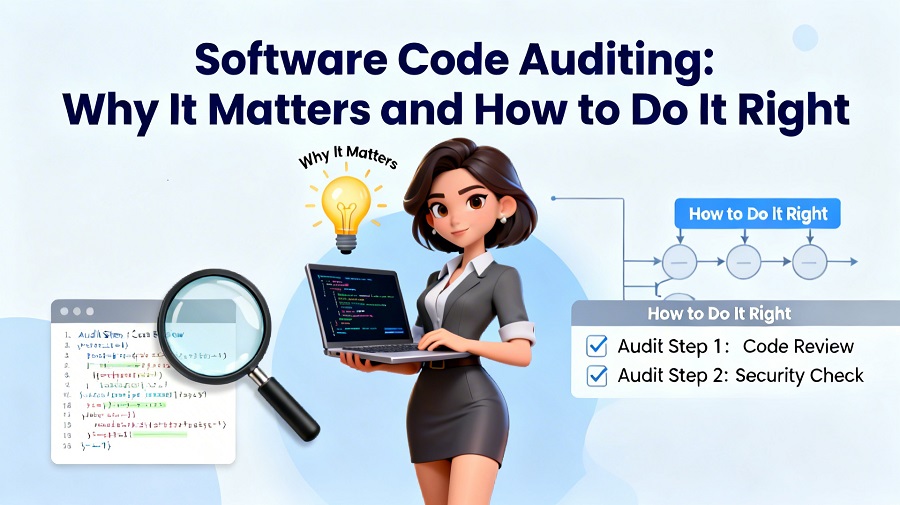
Software code auditing is a critical step for maintaining system stability, security, and long-term scalability. In 2026, applications rely on complex architectures, third-party integrations, and cloud infrastructure. Without regular audits, these systems accumulate hidden issues that affect performance and increase operational risks.
Fixing problems after release often costs significantly more than preventing them during development. A structured audit helps detect vulnerabilities early, reduce technical debt, and improve code quality before issues impact users or business operations.
If your product processes sensitive data or scales rapidly, working with providers that offer code audit services ensures your system remains secure, efficient, and maintainable.
This guide explains how code auditing works and how to implement it effectively.
What Is Software Code Auditing?
—————————-
A software code audit is a methodical evaluation of a software system including its source code, structure and dependencies.
The objective of an audit is to determine the quality of the completed solution in terms of; overall system efficiency, quality of completed solution design, and the security of the completed solution.
An audit will focus on identifying structural deficiencies, security concerns and performance concerns with the purpose of identifying long-term issues with maintainability.
Audits differ from traditional code reviews in that the analysis will take a broader look at how multiple components work together, how data is passed from one component to another and whether the overall architecture can scale without degradation of performance.
Why Code Auditing Is Essential in Modern Development
—————————-
Current-day software is highly complex due to its integration with many other systems that are continuously changing.
Software uses APIs, external libraries, and various distributed services, which means that each of these dependencies can introduce different kinds of risk. Over time, as audit processes are not able to keep up with the rapid pace of change occurring to this software, those risks get compounded and become increasingly challenging to resolve.
Security is a major concern. If vulnerabilities exist, they can leave user data at risk and can also have a negative impact on your company’s finances or put you at risk of being sued.
Performance is also a concern; poor-performing code can lead to degraded loading times and higher than anticipated costs for the supporting infrastructure.
Auditing code allows you to manage the complexity of your systems, and as the system continues to grow, to ensure that the product maintains an acceptable level of reliability.
What Issues Can a Code Audit Reveal?
—————————-
A quality audit will find issues that are often hidden during development.
Security deficiencies like weak authentication, poor data validation, and insecure API endpoints should be found early on in the process. Because they directly impact user trust and compliance, these types of deficiencies can be some of the most serious issues you find during an audit.
Poorly written code (e.g., duplicated code, disorganized code, or a lack of documentation) makes things harder to maintain and expand when systems are in place.
Application performance problems (slow applications) and application scalability limits are exposed as more users use the application.
Dependency issues stem from out-of-date libraries or unsupported frameworks. Dependency issues can give rise to vulnerabilities or compatibility problems.
Finding these issues during an audit will help eliminate the need for expensive fixes in the future.
How to Conduct a Code Audit Step by Step
—————————-
A systemized methodology provides clarity for auditors, which enables delivery of actionable audits.
Define the scope of the audit. This includes critical application modules, integration points, or any area that affects the performance or security.
Evaluate the quality of the code structure. Considerations include code readability, consistency, and whether coding standards are being met.
Perform a review of the security mechanisms in place, including authentication, authorization, and data handling.
Evaluate performance by identifying inefficient or redundant operations, heavy volume queries, or processes that require excessive resources.
Determine the status of dependencies by verifying that all libraries and packages are current and continue to be supported.
Document the results of your audit, classifying them by severity, and assign priority to resolve them and provide the resources necessary to implement the necessary solutions.
What Tools Support Code Auditing?
—————————-
Repetitive checks are made easier with tools and are carried out more accurately.
Static analysis tools can look for vulnerabilities and quality issues within a piece of code without having to run it (i.e., performing a check before running it). These tools help identify many standard software coding errors and problems.
Dynamic analysis tools execute code while checking its operation so that runtime problems and performance issues can be found.
Security scanners will identify any known vulnerabilities in any third-party libraries and dependencies you rely on.
Performance monitoring tools will help you see how your system is functioning under heavy load conditions and will show you where your system is creating performance bottlenecks.
Using several analysis, monitoring, and scanning tools gives you a better understanding of your system overall health.
Common Mistakes in Code Auditing
—————————-
Numerous businesses conduct code auditing incorrectly, diminishing the benefit of this process.
Many businesses perform audits as a single event rather than as a continuous event. Since many systems are continuously changing, a company must have ongoing auditing.
There are several additional considerations that must be considered when auditing code than security.
Either lack of clear documentation or inadequately documenting audit results makes it difficult for a business to take action and track progress of code (thus causing problems).
If audit results are ignored, they will continue to show up repeatedly, adding to the technical debt.
If a company avoids making these mistakes, regularly performing audits will positively impact the quality of its systems long-term.
How Often Should You Audit Your Code?
—————————-
The frequency of audits is based on system complexity and business requirements.
Regularly scheduled audits should be done on high-risk systems to ensure compliance, especially after major updates or integrations.
Startups typically perform an audit prior to launching their product and when scaling their business.
Continually monitoring enterprise systems, along with performing periodic in-depth audits, can help maintain stability and significantly reduce the chances of prolonged degradation.
Benefits of Professional Code Auditing
—————————-
External third party auditors lend objective insight and a structured approach.
They uncover issues that might be missed by internal teams because of their continual exposure to the codebase. Their experience enables them to identify patterns and risks more easily.
Professional audits yield concrete reports, which detail a strategy for improvement, including prioritization of improvements, so that development teams can concentrate their efforts on addressing the most important issues.
They also help establish stronger development methodologies, thus reducing risk in the future.
How to Act on Audit Results
—————————-
You should implement your audit findings as tangible improvements.
You can develop an action plan for addressing issues based on both their severity and their overall impact. You will want to immediately address the most critical vulnerabilities.
You can develop a project roadmap for resolving the identified issues, which will allow you to track your progress in a structured manner without interfering with your development process.
Next, you should integrate improvement measures into your development processes to avoid these types of issues in the future.
Make sure to track your progress toward resolution of issues, and validate each fix to ensure that all of your issues have been resolved.
Final Thoughts
Auditing software code is essential when developing consistent and expandable systems.
Auditing will assist you to identify any concealed threats; enhance your software program’s performance; and sustain a good level of quality throughout the life-cycle of your code. Businesses that commit to regularly conducting audits decrease their technical liabilities and minimize costs incurred due to failures.
A systematic audit process integrated with continual enhancement will allow you to guarantee your systems are secure, effective and positioned for future growth.