From Concept to Launch: The Complete Roadmap for Social Media App Development

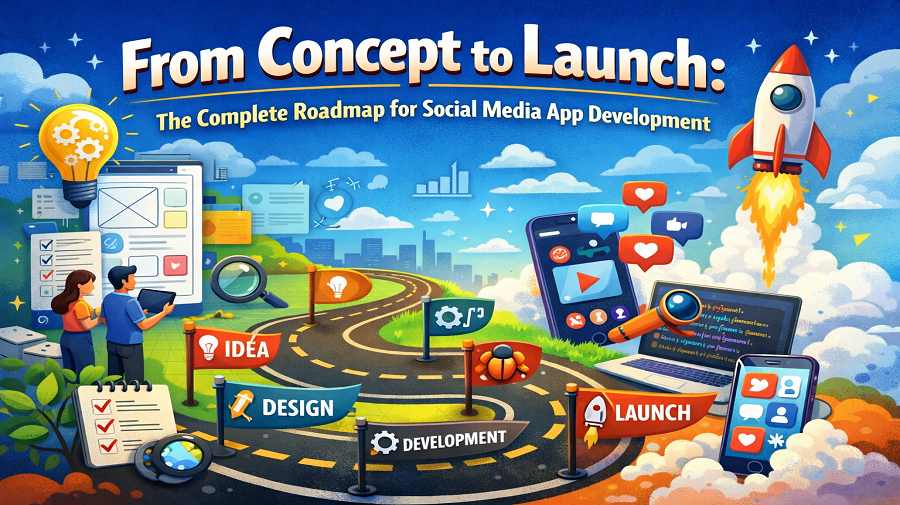
Applications of social media have become some of the basic elements that connect billions of users around the world. The biggest opportunities available to startups and independent businesses when they embark on developing successful social media platforms are that they need to face high competition in the market and high user expectations that follow their businesses.
There are greater than great ideas needed to create successful achievements. You should have a strategic plan that will guide you from your first thought to the end product you launch. When you engage the services of a special mobile application development firm and utilize their professional social media app development company, your product will be scaled, user-friendly, and scalable.
This whole procedure of developing social media apps will be clarified to you with this detailed guide.
Step 1: Define Your Idea and Market Research
——————————–
To develop a successful application, it must have an excellent idea that will initiate the application development process. The work of developing an idea is of equal importance compared to the process of its validation.
Key Actions:
- Identify your target audience
- Analyze competitors (Facebook, Instagram, niche platforms)
- Define your unique value proposition
- Study market trends
Questions to Answer:
- Who will use it?
- What problem does your app solve?
- Why would users switch from existing platforms?
There are two fundamental services offered by a custom mobile application development firm to its customers: creating their product ideas and carrying out feasibility analysis of their projects to realize long-term success.
Step 2: Choose the Right App Type
——————————–
The applications of social media are in various styles, and the users must choose them based on preferences. The right choice of social media platform will define your feature set and determine the interactions that the users will have with your application.
Common Types:
- Networking Apps (LinkedIn-style)
- Media Sharing Apps (Instagram, TikTok)
- Discussion Forums (Reddit-style)
- Messaging Apps (WhatsApp, Telegram)
- Niche Community Apps
With an appropriate choice of category, the development processes become better and assist teams in reaching their intended audience in a better way.
Step 3: Define Core Features and Functionalities
——————————–
The social media application must have simple functionalities that can be upgraded to complex functionalities in the future.
Must-Have Features:
- User registration and profiles
- News feed or timeline
- Content sharing (text, images, videos)
- Messaging and chat
- Push notifications
Advanced Features:
- AI-based recommendations
- Live streaming
- Stories and reels
- AR filters
- Content moderation tools
Creation of social media applications is a professional task that needs professionally provided services, which will ensure that everything is developed and the needs of the user are satisfied.
Step 4: Create a Wireframe and UI/UX Design
——————————–
The attractiveness of users will rely on the interaction between the pleasing design and the interface design.
Design Process:
- Create wireframes for layout structure
- Develop prototypes for user flow
- Design UI elements (colors, typography, icons)
Focus Areas:
- Simplicity and usability
- Fast navigation
- Consistent branding
An experienced mobile application development firm makes sure your application design is functional as well as appealing to the eye.
Step 5: Select the Right Technology Stack
——————————–
The performance and growth of your app are based on the technology stack you use. Technology stack can make or break your app in terms of its performance, scalability, and future growth.
Frontend:
- Flutter
- React Native
Backend:
- js
- Python
Database:
- MongoDB
- Firebase
Cloud Services:
- AWS
- Google Cloud
The correct process of selecting the right technology involves professional advice of the social media application development firms who are aware of your business needs.
Step 6: Make a Minimum Viable Product (MVP)
——————————–
A minimum viable product is better than making a full application at the start of your project.
Benefits of MVP:
- Faster time to market
- Lower development cost
- Early user feedback
- Reduced risk
MVP Focus:
- Core features only
- Basic design and functionality
- Scalability for future updates
A traditional mobile application creation firm will assist you to identify key aspects to be included in your minimum viable product innovation.
Step 7: Backend and Frontend Development
——————————–
The backend and frontend components selection should place into consideration various aspects depending on the next step.
Backend Development:
- Database management
- Server-side logic
- API integration
Frontend Development:
- User interface implementation
- Responsive design
- Smooth navigation
The two layers should be compatible with one another and operate effectively to give customers the best experience ever.
Step 8: Integration of Third-Party Services
——————————–
Third-party tools and services are required to make the system realize its potential in terms of operation.
Common Integrations:
- Payment gateways
- Social logins
- Analytics tools
- Cloud storage
- Chat APIs
The social media applications provided by the professionals have secured and effective system components that must be incorporated into their systems.
Step 9: Testing and Quality Assurance
——————————–
Application testing must be carried out since it assists in the detection of bugs as well as performance under different conditions of operation.
Types of Testing:
- Functional testing
- Performance testing
- Security testing
- Usability testing
Goals:
- Identify and fix bugs
- Ensure smooth performance
- Validate user experience
A custom mobile application development company conducts testing to deliver a reliable product.
Step 10: Launch Your App
——————————–
Application launch process is initiated following testing procedures, which have completed.
Effective marketing is necessary to have a successful launch.
Pre-Launch Checklist:
- App store optimization
- Marketing strategy
- Beta testing feedback
- Performance optimization
Launch Strategy:
- Soft launch for limited users
- Full-scale release after improvements
Step 11: Marketing and User Acquisition
——————————–
A successful launch requires strong marketing efforts.
Effective Strategies:
- Social media marketing
- Influencer collaborations
- Paid advertising
- Referral programs
- Content marketing
Marketing should be aimed at creating awareness and attracting the earliest adopters.
Step 12: Post-Launch Support and Maintenance
——————————–
The development process does not end once it is launched, since organizations need to have continuous development in order to gain sustainable success.
Post-Launch Activities:
- Monitor app performance
- Fix bugs and issues
- Release updates and new features
- Analyze user behavior
A custom mobile application development firm will offer continuity services to make sure your application is competitive.
Common Challenges in Social Media App Development
——————————–
1. High Competition
The solution is that businesses should focus their efforts on special market segments as well as their unique product characteristics.
2. User Retention
The solution would involve organizations developing customized systems that will send notifications to the users in order to enhance user engagement.
3. Scalability Issues
The company needs cloud computing systems and development infrastructure with the capacity to support increased demands.
4. Data Security Concerns
The security solutions needed by the organization are good encryption and adherence to the industry standard.
Cost Factors in Social Media App Development
——————————–
A number of factors will dictate the cost of developing a social media application.
- App complexity
- Number of features
- Technology stack
- Development team location
- Maintenance requirements
By recruiting skilled social media application developers, businesses will be able to save costs and still meet their development standards.
Future Trends in Social Media App Development
——————————–
The companies must adopt the emerging trends in business since they desire to keep on their competitive advantages.
Key Trends for 2026:
- AI-driven personalization
- Short-form video dominance
- AR/VR experiences
- Decentralized platforms
- Enhanced privacy features
A progressive custom mobile application development company would assist you in integrating such trends in your application.
Final Thoughts
Development of a successful social media application requires developers to create several development stages, and they should be updated regularly. Starting with idea validation to the optimization after launch, each step matters a lot in defining the success of your app.
The corporations will be able to develop user-friendly platforms by collaborating with reputable custom mobile application development company and relying on their professional social media app development solutions.
The ability to succeed in 2026 and later would demand that organizations offer value and develop easy user experiences and flexibility to evolve along with changing digital environments.