The Future of CRM Software in Digital Transformation

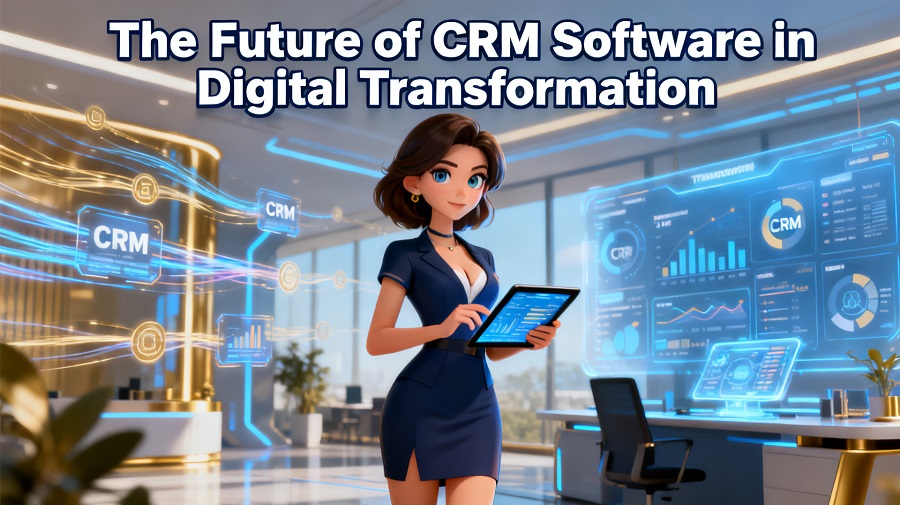
Digital transformation has become this kind of strategic priority for organizations across basically every industry. As businesses start embracing new technologies to improve operations, boost customer experiences , and get a clearer competitive edge, Customer Relationship Management (CRM) software keeps ending up as this key player in the whole transformation journey.
These days, modern CRM solutions are no longer just about storing contacts or doing a simple list. They’ve grown into centralized platforms that connect sales, marketing, customer support, analytics, and business intelligence too . Because customer expectations are rising so fast, companies are putting more money into advanced CRM technologies in order to craft personalized experiences and in the same time , strengthen customer relationships.
So, if you look ahead , the future of CRM software seems tightly linked with emerging tech like artificial intelligence, automation, cloud computing, predictive analytics, and that broader data-driven decision making approach. Organizations that actually leverage these innovations will generally be better prepared to adapt when market conditions shift, and they can deliver those exceptional customer experiences more reliably.
In this article, we’ll explore how CRM software is influencing digital transformation , and what businesses can reasonably expect from the future of customer relationship management.
CRM as the Foundation of Digital Transformation
—————————–
Digital transformation is kinda about using technology to make business processes run better, improve the customer feel , and also boost organizational efficiency, all in one go. CRM systems, in particular, sort of act as the backbone of these efforts, because they bring customer data together in one place and then, well, deliver useful insights about customer behavior.
Companies then rely on CRM platforms to do a range of things like:
- Handle customer interactions
- Keep track of sales activities
- Automate marketing campaigns
- Upgrade customer support
- Examine customer trends
- Strengthen decision making
And as digital transformation keeps expanding , CRM solutions are getting more and more important , mainly for linking different business functions and making sure the customer journey stays seamless, not broken up.
The Shift Toward Customer-Centric Business Models
—————————–
Today’s customers kind of expect a personalized experience, instant help, and really consistent conversations across multiple channels. But back then, most traditional business models where mostly product , service focused. Still, modern organizations now put the customer right at the center of their strategy, like it’s the main thing.
With CRM software businesses can… basically:
- Understand what customers prefer
- Track their interactions over time
- Personalize the communications
- Anticipate what customers might need next
- Improve customer retention rates
And when a company truly leans into customer-centricity, they’re much more likely to grow those long-term relationships and end up with sustainable growth, not just quick wins.
Artificial Intelligence Will Transform CRM Systems
—————————–
Artificial intelligence, or AI, is coming along pretty fast and it’s becoming one of the most influential technologies in CRM development. In the near future, CRM systems will probably lean on AI more heavily, not just for speed , but to help automate those repetitive tasks and then somehow spit out actionable insights, which is kinda the whole point.
AI-Powered Customer Insights
AI has this ability to take in huge chunks of customer data, and then surface patterns or trends that people might miss, or maybe just not notice in time. From there, businesses can use those insights to do things like:
- Predict customer behavior
- Improve sales forecasting
- Spot potential upselling opportunities
- Lower customer churn
Intelligent Chatbots and Virtual Assistants
AI-driven chatbots are already changing customer service in a noticeable way. Going forward, future CRM platforms will likely blend in more intelligent virtual assistants that can help with things such as:
- Answering customer questions
- Scheduling appointments
- Handling or resolving support issues
- Offering personalized recommendations
Altogether, these improvements should boost customer satisfaction while also reducing operational costs, which, in practice , tends to matter a lot.
Automation Will Drive Greater Efficiency
—————————–
Automation is one more big trend, that seems to be shaping the future of CRM software, kind of quietly at first then really quickly. A lot of organizations are now using automation to help streamline their workflows and to get rid of all that repetitive work .
You can see it in things like, Lead assignment, Email marketing automation, customer onboarding, and then those follow-up reminders that just happen on time . Also there’s sales pipeline management which keeps the whole process moving without too much manual nudging.
When businesses invest in CRM system development services they can build automated workflows that fit their own way of working , and match the exact customer journey they have in mind. And honestly, automation doesn’t only increase productivity it also helps employees spend more time on higher-value tasks , the ones that actually push growth forward.
Cloud-Based CRM Solutions Will Dominate
—————————–
Cloud computing has, kind of, reshaped how businesses deploy, and handle their software applications.
Cloud-based CRM platforms give a handful of advantages, like lowering the infrastructure costs, plus scaling up when demand rises. There’s also the remote accessibility side of things and automatic updates that just happen in the background, which helps keep everything smoother. Even collaboration tends to feel more connected , less siloed.
And since remote, as well as hybrid work models keep growing , cloud CRM systems will keep turning into something you really can’t do without.
More and more organizations are also partnering with a custom software application development company to craft cloud-native CRM solutions. The goal is to back long-term scalability, but also flexibility, so the setup can actually adapt as requirements shift.
Data Analytics Will Become More Advanced
—————————–
Data is often talked about like the new currency of business, but also it feels like CRM systems are turning into serious data analytics platforms or something close to that. Anyway, in the next wave of CRM solutions, you can expect stuff like
Predictive Analytics
Companies will be able to forecast customer behavior, sales trends, and market opportunities with more precision, not just guesses, you know.
Real- Time Reporting
Executives and managers will have instant visibility into performance metrics plus business insights. It’s basically quicker answers, faster reaction.
Customer Journey Analysis
Organizations will understand how customers interact with the brand across multiple touchpoints, from first click to all that follow up.
And then, these advanced analytics will help with sharper decision-making, while improving overall business performance too, in the end.
Omnichannel Customer Engagement Will Be Essential
—————————–
Customers will interact with businesses through a bunch of different channels like, Websites, social media, Email, Mobile apps. Also there is live chat and phone support . In the future CRM systems should give you one unified view, sort of a complete picture of customer interactions, across all these places, at once.
With this kind of omnichannel method you usually get more consistent customer experiences. It can also lead to faster problem resolution , and better back and forth communication. In the end, it tends to increase customer loyalty too.
Organizations that manage to deliver this kind of seamless omnichannel journey are more likely to stand out in competitive markets, even when others are pretty similar.
Integration Will Become a Priority
—————————–
Businesses depend on a bunch of software applications to run day to day operations, somehow. In the future , CRM platforms will fit together nicely with ERP systems, marketing automation tools, accounting software and e-commerce platforms, plus business intelligence solutions. With these connections in place, data silos get cut down, and overall organizational efficiency improves, even if it sounds a bit too neat.
Also, the companies that provide CRM system development services are now leaning more toward crafting flexible CRM ecosystems. Their aim is to enable smooth connectivity so everything can talk to everything, without the usual friction.
Enhanced Security and Compliance
—————————–
As businesses gather more and more customer data , the security and compliance needs keep going up, kind of steadily but also in kind of sudden ways sometimes. In the coming days, CRM systems will likely include things like: advanced encryption, multi factor authentication, and role based access controls.
There also should be some automated compliance monitoring, not just manual checks all the time. For organizations working in regulated industries, these upgraded security options are going to help a lot more, because well, they usually have less wiggle room and more audits to deal with..
The Growing Demand for Custom CRM Solutions
—————————–
Even though off-the-shelf CRM platforms give a lot of benefits, they might not really cover the odd little needs that each business has, you know. As digital transformation efforts get more and more advanced, the desire for tailored CRM systems will keep growing and growing.
A custom software application development company can partner with organizations to build CRM setups that click with their particular workflows , plus match the industry requirements and the overall business goals. With custom work , you tend to get:
– More flexibility
– Stronger scalability
– Functionality that’s tied to the specific industry
– Improved user experiences
Overall, these upsides make custom CRM development a pretty compelling choice for teams aiming for long term growth .
Conclusion
The future of CRM software seems tied in with the bigger digital transformation push . Like, artificial intelligence , automation, cloud computing, predictive analytics , and omnichannel engagement are all kind of reshaping how companies talk to customers , plus how they actually handle customer relationships day to day.
Businesses that put money into modern CRM solutions are likely to be more ready for what customers expect next , and they can also boost operational efficiency, and still manage to pull off sustainable growth. And yeah, whether that means using advanced CRM platforms , or going for a custom approach through professional CRM system development services , organizations now have this pretty real chance to use customer data as a strategic edge.
And as digital transformation keeps speeding up, CRM software will stay kind of central to business success, it helps teams form stronger bonds, make smarter decisions, and keep thriving in a world that’s increasingly focused on the customer.