Web Application Development vs Mobile App Development: Which Is Better for Startups?

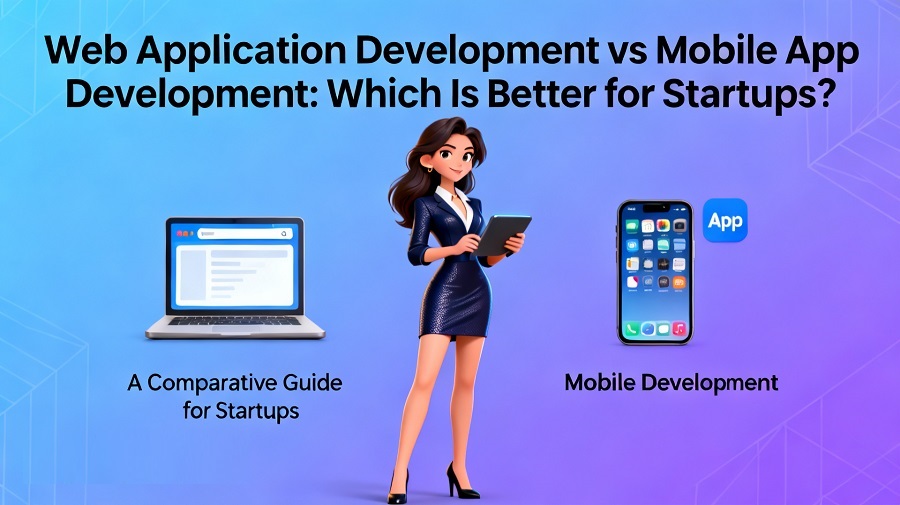
Startups usually end up stuck on one big question during their digital transformation journey, like, should they go for a web application or a mobile app? Both options bring their own benefits, but picking the right path really depends on what the company is trying to achieve, who the users are, how much money is available, how far they need to scale, and the bigger picture growth plan.
In today’s very competitive digital space, startups need more than just “something that works.” They need solutions that bring people in and also keep everything smooth, improve operational efficiency, and push actual business growth. So yeah, knowing the difference between web application development and mobile app development matters a lot before a real technology investment is made.
Here, we’ll look at web applications and mobile apps more closely. We’ll cover their benefits along with their limitations, then help startups figure out which option fits their needs best, without getting stuck too early.
Understanding Web Application Development
—————————–
A web application is a software program that runs inside a web browser, and yes, it can be accessed through the internet. Unlike those more traditional websites , web applications usually give interactive features and a more dynamic user experience, which feels smoother, honestly.
You can find examples like Gmail, Trello, Canva, Slack Web, and Google Docs, too.
A professional web application development company basically helps businesses build scalable and responsive web apps, so they work well across different devices and browsers, not just one setup.
Key Features of Web Applications
- Access through a browser
- No installation required
- Cross-platform compatibility, so it fits multiple systems
- Updates and maintenance are simpler
- Responsive user interface
Web applications are often chosen by startups that want a quicker launch, plus wider accessibility. They can roll out, tweak, and improve things without the whole “install it first” headache, you know.
Understanding Mobile App Development
—————————–
Mobile applications are software programs that are made especially for phones and tablets. In most cases, these apps get downloaded and installed through the Apple App Store or Google Play Store, depending on what people use.
They are usually grouped into a few broad types: native apps, hybrid apps, and cross-platform apps.
And honestly, businesses often lean toward custom mobile app development services to build a more personalized experience for their specific audience.
Key Features of Mobile Applications
- Device-specific optimization and a kind of smarter tuning
- Offline functionality with that “it still works” feeling
- Push notifications for timely updates and little nudges
- Better performance, more speed, more responsiveness
- Access to device hardware, basically, the phone can help directly
Mobile apps are a good fit for businesses that focus on strong user engagement and more personalized customer experiences, that kind of tailored journey.
Key Differences Between Web Apps and Mobile Apps
—————————–
Accessibility
Web applications are kind of nice because you can access them from almost any browser, no installation needed. Like, you just open a URL and then you start using it, pretty straightforward.
Mobile apps, though, well, they usually need you to download and install them from the app stores first.
Development Cost
For web application development, it is often more cost-effective since one builds works across multiple devices and different operating systems, without needing separate versions.
Mobile app development, on the other hand, tends to be more expensive because you end up doing distinct releases for iOS and Android, and that adds more work.
User Experience
Mobile apps give a smoother and more personalized experience , mainly because they’re optimized for specific devices and their usual behaviors.
Web apps are flexible, but they might not match the same level of speed or responsiveness that comes with native mobile applications.
Performance
Mobile apps are usually faster since they can directly work with device hardware and resources.
Web applications depend on internet connectivity and also on how well the browser behaves, so performance can vary.
Maintenance
Web apps are easier to maintain because updates can be pushed centrally.
Mobile apps require users to get updates via the app stores, which slows things down a bit.
Offline Access
Mobile apps can support offline functionality in many cases.
Most web applications, instead, need internet access to function properly, so they don’t really work the same way when you’re offline.
Benefits of Web Application Development for Startups
—————————–
Lower initial investment
Startups usually run with pretty tight budgets. Web apps are often less costly to create and keep running than mobile apps.
Faster time-to-market
Web applications can be built and released sooner, which lets startups check out new ideas faster.
Cross-platform compatibility
A single web app can work on desktops, tablets, and smartphones without needing several different builds.
Easier updates
Teams can push changes right away, no need to wait for user downloads or deal with app store approvals.
Better reach
People can open web apps straight in their browser , no installs needed. That kind of lowers the entry barriers and makes access more straightforward.
Benefits of Mobile App Development for Startups
—————————–
Enhanced user engagement
Mobile apps can give a more customized experience and also allow direct communication via push notifications. It feels closer, not just another website or something.
Better performance
With a mobile app, you usually get smoother functionality and quicker loading times, so everything seems to run more fluidly.
Offline functionality
Some features are still usable even when there is no internet connection, which is pretty handy in the day-to-day.
Improved customer loyalty
Mobile apps support businesses in building a stronger brand connection, and that often leads to better customer retention too.
Access to device features
A mobile app can integrate with various on-device capabilities, for example:
- Camera
- GPS
- Microphone
- Sensors
- Biometric authentication
And that really helps enable advanced functionality, overall.
When Should Startups Choose Web Applications?
—————————–
Web applications are pretty good for startups that need faster launch timelines, have a somewhat limited budget, and want wide accessibility, like for many kinds of users. They usually fit informational or productivity platforms, and the team needs easy scalability later on.
Examples you’ll often see are: SaaS platforms, online marketplaces, CRM systems, educational portals, and booking platforms.
A startup that partners with a reliable web application development company can more or less get their digital product out quicker and scale it without paying big for heavy infrastructure costs.
When Should Startups Choose Mobile Apps?
—————————–
Mobile apps are pretty ideal for startups that,
- Need strong customer engagement,
- Rely on frequent user interaction,
- Want a more personalized experience,
- Require offline capability,
- Depend on device-specific features.
Like you can see in examples such as food delivery apps, fitness apps, social media platforms, gaming apps, and ride-sharing apps.
And when businesses invest in custom mobile app development services, they often think more about customer retention and brand loyalty, not just the launch.
Can Startups Use Both Web and Mobile Apps?
—————————–
Yes, most successful startups at some point end up using both platforms, eventually. A sort of typical pattern is like this: they might start with a web application first, just to validate the business idea. Then, later, once users show real demand, they build a mobile app. In practice, it helps them cut down on early risks while they broaden the whole digital ecosystem step by step.
For example, Airbnb began as a web platform, not a mobile thing first. Facebook originally put most of its effort into desktop web access. And a bunch of SaaS businesses start with web apps before moving into mobile expansion.
Important Factors Startups Should Consider
—————————–
Budget
If funding seems limited, web applications are often the better starting point, rather than jumping right into something more complex.
Target Audience
First, analyze where your audience spends most of their time, and how they actually behave. Mobile-first users might prefer apps, while professional folks may lean toward web platforms.
Business Goals
Make sure the platform lines up with the long-term business objectives, plus whatever scalability requirements you have on the roadmap.
Time-to-Market
In most cases, web applications bring a faster time-to-market because their development cycles are shorter.
Feature Requirements
Some capabilities, like GPS tracking, camera access, or offline usage, may call for a mobile application instead of a web solution.
Maintenance Costs
Web apps are generally easier to keep up with and cheaper to maintain, even when things change over time.
Future Trends in Web and Mobile Development
—————————–
Both web and mobile technologies are moving fast, like really fast.
Progressive Web Apps (PWAs)
PWAs kind a mix the good parts of web and mobile applications, so they give these app-style experiences that run in browsers without too much hassle.
AI Integration
AI-driven personalization is getting more and more common across both of them, and it feels like everyone is doing it now.
Cross-Platform Development
Tools such as Flutter or React Native make mobile development easier, kind of “write once, run smoother” in a way. And yes, that matters.
Cloud-Native Applications
Cloud infrastructure keeps getting better, and that helps with scaling as well as performance for web AND mobile solutions.
Low-Code and No-Code Development
Many businesses are starting to use low-code, or even no-code approaches, because faster delivery is a big deal these days.
Which Option Is Better for Startups?
—————————–
There really is no universal, one-size-fits-all answer; it doesn’t work like that.
Choose Web Applications if you want lower development costs, and if you’re aiming for faster deployment. Also, when broad accessibility matters a lot, because people will access it in different ways. And if your platform leans toward information delivery or simple productivity, web apps usually fit better.
Choose Mobile Apps if user engagement is the real priority, like if you want people to come back again and again. When offline functionality is required or you need those advanced levels of personalization, mobile apps tend to shine. Plus, if your business depends heavily on mobile interactions, it usually makes sense to go that route.
In the end, the best decision is about business strategy, audience behavior, and what you plan for future scalability. Not only one thing, but the whole picture, altogether.
Conclusion
Both web application development and mobile app development actually give startups some really strong chances, even if you don’t notice it at first. Web apps tend to be more cost-efficient and flexible, plus they can launch pretty fast. Mobile apps usually bring better user engagement, more personalization, and that smoother performance feel that people like.
That said, startups really should look closely at their business goals first, who they’re trying to serve, the technical needs, and the budget before picking one route. In a lot of situations, it can be smarter to start with a web application, then later extend that into mobile applications, sort of a step-by-step expansion that scales.
Also, working with a seasoned web application development company, or putting resources into custom mobile app development services, can help a startup build solid, high-performing digital products. In the end, this kind of foundation supports long-term growth and better chances of winning in the market.