The Role of Product Customization in Modern Ecommerce

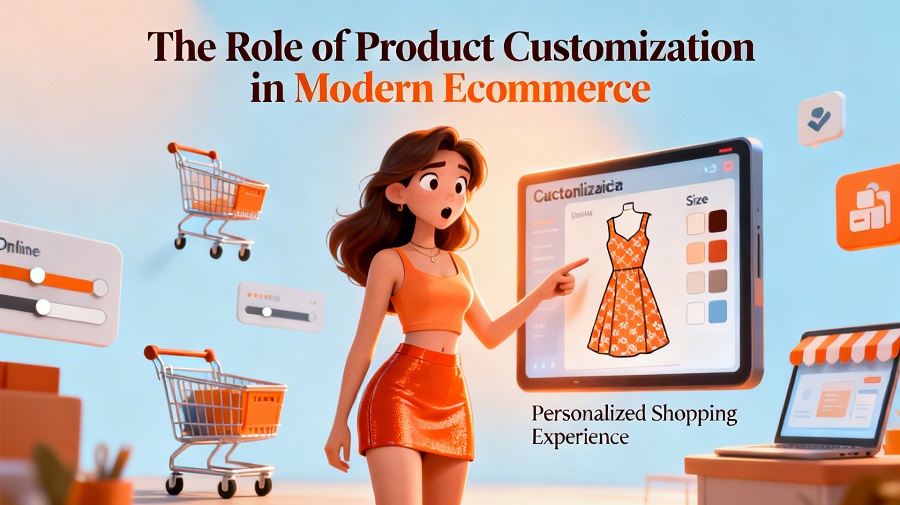
Ecommerce is not just a basic online shopping experience, but an experience in shopping. Customers do not want to visit catalogs that are standing still and offer the same products. They desire the freedom to customize their purchases. Whether it’s personalizing sneakers, designing phone cases, or giving gifts, customers are increasingly opting to shop for goods that represent who they are.
The change has made product customization one of the most dynamic trends shaping the current ecommerce landscape.
Businesses have shifted to involving buyers in the design process rather than providing fixed products. The brands should be able to provide personalized shopping experiences through technologies such as a Magento product customizer and to operate efficiently.
Customization does not only concern aesthetics. It influences customer interactions, sales, and retention. Amid saturation, ecommerce brands can transform any ordinary online shop into an innovative digital marketplace by offering customizable products.
Role of Product Customization in Modern Ecommerce
——————————–
Product customization is a fundamental transformation in ecommerce customer interactions. The customers are not merely picking up the items; they are involved in making them. This revolution makes ecommerce a joint effort between the brand and the buyer.
Transforming Buyers into Co-Creators
This customization changes the association between the brand and the customer. Rather than having a few variations, companies enable customers to customize products.
Customers may usually vary:
- Colors and patterns
- Text or personalized messages
- Images or logos
- Material or finish options
By designing their own products, customers will have a more emotional attachment to what they have purchased. This enhances satisfaction and buyer hesitation is minimized.
Increasing Engagement During the Shopping Journey
Product differentiation software will motivate consumers to spend additional time on product pages. Customers do not have to go shopping and walk away but can explore different design possibilities. It is a commonplace involvement that leads to:
- Longer time spent on product pages
- Increased exploration of product variations
- Greater interest in brand offerings
- Higher likelihood of completing the purchase
Interactive shopping experiences are more effective than fixed product displays.
Reducing Product Comparison with Competitors
Traditional ecommerce may result in the customer going through the same product in several stores in search of the cheapest price.
This behavior is reduced through customization since:
- Personalized products are unique
- Exact comparisons become difficult
- Customers value their design choices
- The product feels more exclusive
This assists companies in competing on experience rather than price.
Building Stronger Emotional Connection with the Brand
Personalized products typically have a personal connotation. Customers will have a deeper emotional connection to customized purchases, whether a gift or a product tailored to their tastes. This emotional attachment induces:
This emotional connection leads to:
- Higher brand loyalty
- Increased repeat purchases
- Positive word-of-mouth recommendations
- Stronger long-term customer relationships
Customization is what makes ecommerce not regular selling but one that is personalized to the brand.
Benefits of Product Customization for Ecommerce Businesses
——————————–
Though customization enhances customer experience, it also has strategic benefits for ecommerce companies. The effects of successful brands using customization effectively would be observed in increased revenue and improved brand positioning.
Higher Conversion Rates
Customers who are involved in the design of a product will be more likely to buy it. This participation makes them more committed to making the transaction. Customization works better in conversion since:
- Buyers feel ownership over the design
- Visualization reduces uncertainty
- Personalized products feel more valuable
- Purchase hesitation decreases
The number of customers designing products is much less likely to drop the purchase.
Increased Average Order Value
Premium options are often brought about through customization. Customers will most often be willing to pay more for products that align with their tastes. Examples include:
- Custom engraving or printing
- Upgraded materials or finishes
- Additional design elements
- Exclusive product combinations
These high-end solutions raise the average order value without requiring additional marketing.
Better Customer Retention
Customers are more likely to return later to make another purchase when they design their own products. The brand identity is defined by the customization experience.
Retention benefits include:
- Stronger brand attachment
- Repeat customization orders
- Higher lifetime customer value
- Increased customer satisfaction
Satisfied customers usually test new product designs every time they visit.
Unique Brand Positioning in Competitive Markets
There are numerous ecommerce shops of similar products. Personalization helps brands stand out by providing experiences that competitors might not offer. This distinction enables businesses to:
- Position themselves as innovative brands
- Offer exclusive product experiences
- Create memorable customer interactions
- Build stronger brand recognition
With the saturation of ecommerce markets, experience may be more important than the price.
How Magento Enables Product Customization
——————————–
Magento is among the most malleable ecommerce platforms in existence, thus making it a more suitable option to companies that deal with products that are customizable. Its architecture is conducive to highly customized tools that are incorporated on the product pages.
Interactive Design Capabilities with Magento Product Customizer
A Magento product customizer enables customers to customize products visually on the shopping interface.
Customers can typically:
- Upload their own images or logos
- Add personalized text
- Choose colors or patterns
- Adjust layout positioning
Such tools enable the customers to have total artistic freedom of the final product.
Advanced Customization with Magento 2 Product Customizer
The recent ecommerce shops usually adopt Magento 2 product customizer tools that are more elaborate and more effective. Key capabilities include:
- Real-time product preview updates
- Drag-and-drop design elements
- Dynamic pricing based on selections
- Mobile-friendly customization interfaces
This enables firms to offer the best interactive customization experiences.
Integration with Order Processing and Production Systems
Customization should be in sync with back-office operations. Magento enables customization tools to integrate with inventory and production processes.
This integration ensures:
- Accurate product pricing calculations
- Automated order configuration data
- Efficient manufacturing preparation
- Reduced manual processing errors
Scalability of customization is achieved through operational alignment.
Conclusion
Product customization has become a hallmark of new ecommerce. Customers are increasingly demanding products that match their tastes, not generic ones. Ecommerce businesses can increase engagement, brand attachment, and conversion by enabling shoppers to be involved in product design.
Magento product customizer and Magento 2 product customizer are technologies that allow brands to provide interactive design experiences without compromising operational efficiency. With the continued development of ecommerce, customization will become more relevant to customer expectations and business development. The brands that are customized nowadays are not selling products; they are allowing people to make something that is uniquely theirs.