How Every Stage of the Customer Journey Influences Sales

The customer journey is much more than the moment someone decides to make a purchase. Every interaction a customer has with a business, from discovering a brand for the first time to receiving their order and deciding whether to return, plays an important role in shaping future sales. Companies that understand this journey are better equipped to build trust, increase customer satisfaction, and encourage repeat business.
Many businesses focus heavily on attracting new customers, but long-term success depends on creating a positive experience throughout every stage of the buying process. When customers enjoy a smooth journey, they are more likely to recommend the business to others, leave positive reviews, and make additional purchases in the future.
Building Awareness And Making A Strong First Impression
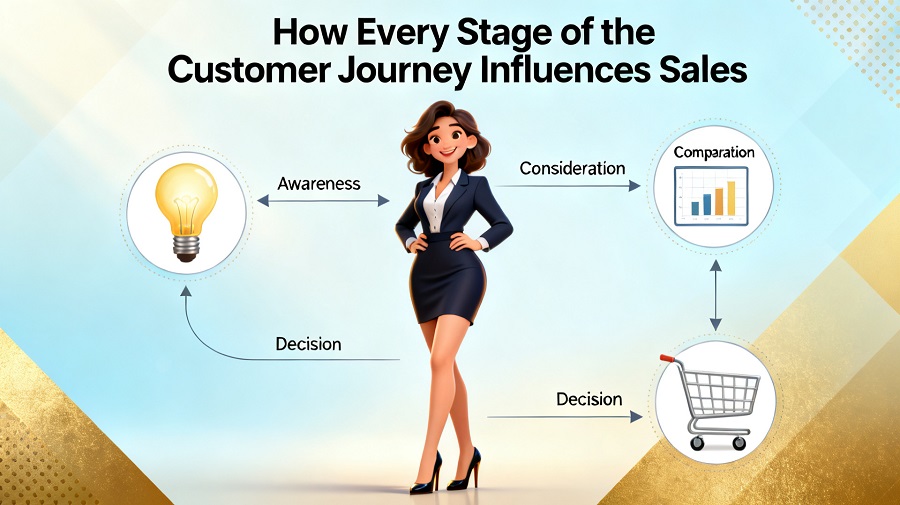
Every customer journey begins with awareness. Before someone can become a customer, they need to know that a business exists. This stage often includes social media, search engines, online advertising, word-of-mouth recommendations, and content marketing.
First impressions matter. A professional website, consistent branding, and clear messaging all help establish credibility. Customers are more likely to continue exploring a business if they quickly understand what it offers and why it stands out from competitors. Businesses that invest in helpful content, engaging social media posts, and informative product descriptions often create a stronger connection with potential buyers before any purchasing decision has been made.
Helping Customers During The Consideration Stage
Once customers are aware of a business, they begin comparing their options. They may read reviews, browse products, compare prices, or ask friends for recommendations. During this stage, transparency becomes essential. Clear pricing, detailed product information, frequently asked questions, and responsive customer support help remove uncertainty. Customers want reassurance that they are making the right decision.
New businesses can sometimes struggle here because they have fewer reviews or a limited reputation. However, providing excellent customer service, offering clear communication, and showcasing testimonials from early customers can quickly help build confidence. Making it easy for customers to find answers also reduces the likelihood that they will leave the website and purchase elsewhere.
Product Discovery And Browsing
Even when customers decide to shop with a business, they still need to find the right product quickly. A confusing website, poor search functionality, or disorganized product categories can result in lost sales. Clear navigation, useful filters, high-quality images, and accurate product descriptions help customers browse with confidence. Personalized recommendations and related product suggestions can also increase average order value by encouraging customers to discover additional items they may not have originally considered.
Creating A Smooth Purchasing Experience
The buying process itself should be as straightforward as possible. Complicated checkout procedures, hidden fees, or confusing payment options can all cause customers to abandon their purchase. Successful businesses focus on removing unnecessary barriers. Offering multiple payment methods, displaying total costs upfront, and providing clear delivery information all contribute to a positive buying experience.
Customers appreciate businesses that respect their time. A fast, secure, and intuitive checkout process encourages completed purchases while reducing frustration.
The After-Sales Stage And Its Impact On Customer Trust
Although many businesses view shipping as something that happens after the sale, customers see it as a vital part of the overall experience. In many cases, the shipping stage has a significant influence on whether someone decides to buy again.
Customers expect their purchases to arrive safely, on time, and in good condition. Delays, damaged goods, poor communication, or unreliable delivery services can quickly undo the positive experience created during the earlier stages of the customer journey. When customers receive regular updates, accurate delivery estimates, and well-packaged products, they develop greater confidence in the business.
This trust often leads to repeat purchases because customers know they can rely on the company to fulfil future orders just as successfully. Shipping also influences recommendations. Customers who have a positive delivery experience are far more likely to tell friends and family about the business or leave favourable online reviews. These recommendations then support the awareness stage for entirely new customers, creating a cycle that continues to generate sales.
The problem is that shipping can present particular challenges for newer businesses. Established retailers often benefit from long-standing relationships with courier companies, negotiated pricing, and dedicated logistics teams. Smaller companies rarely have these advantages. New businesses may struggle to find dependable carriers, compare delivery options, or manage shipping costs while remaining competitive. Choosing the wrong delivery partner can result in missed deadlines, damaged items, and dissatisfied customers, all of which can harm a growing reputation.
Fortunately, there are solutions that simplify this process. Businesses looking for reliable delivery options can use www.shiply.com to connect with transport providers for a wide variety of shipping needs. This makes it easier for smaller companies to compare services, find suitable transport options, and arrange deliveries without needing an extensive logistics network of their own. Having access to dependable shipping helps businesses provide a better customer experience from the very beginning, strengthening trust and supporting long-term growth.
Product Quality Shapes Future Sales
The customer journey continues once the order has arrived. The quality of the product itself determines whether expectations have been met or exceeded. If customers receive exactly what was promised, they are far more likely to return. Consistent product quality builds confidence in the brand, while poor-quality products can discourage future purchases regardless of how strong the earlier stages of the journey were.
Communication After The Purchase
The customer journey does not end once an order has been dispatched. Post-purchase communication plays a major role in maintaining customer confidence. Order confirmations, dispatch notifications, tracking updates, and estimated delivery times all reassure customers that their purchase is progressing as expected. Keeping customers informed reduces uncertainty and decreases the number of support enquiries.
Businesses should also make it easy for customers to ask questions if any issues arise. Quick responses and proactive communication demonstrate that customer satisfaction remains a priority even after payment has been received.
Returns And Customer Support
Even the best businesses occasionally need to process returns or exchanges. A simple, clearly explained returns policy gives customers confidence to buy, especially when purchasing from a new retailer. Excellent customer support is equally important. Whether answering pre-sale questions, resolving delivery issues, or helping customers after purchase, responsive support demonstrates that a business values its customers beyond the initial transaction. When problems are handled professionally and efficiently, customers often remember the positive service rather than the issue itself.
Reviews, Recommendations And Advocacy
Satisfied customers often become a business’s best marketers. Positive reviews, testimonials, and recommendations on social media or through word of mouth help attract new customers who are still in the awareness stage of their own journey. Encouraging customers to leave honest reviews not only builds credibility but also provides valuable feedback that can improve products and services over time.
Re-Engagement And Building Loyalty
Retaining existing customers is often more cost-effective than continually acquiring new ones. Businesses that stay connected through email newsletters, personalized offers, loyalty programs, or product recommendations remain front of mind when customers are ready to purchase again. These ongoing interactions strengthen relationships and encourage repeat business, increasing customer lifetime value while reducing reliance on constant new customer acquisition.
Every Stage Works Together
The customer journey should never be viewed as a series of separate events. Each stage directly influences the next, and weaknesses in one area can affect the entire experience.
A strong marketing campaign may attract visitors, but poor product information can reduce conversions. An excellent checkout process may secure the sale, but unreliable shipping can prevent repeat business. Likewise, outstanding customer support, an easy returns process, and consistently high-quality products all contribute to stronger customer loyalty.
Businesses that examine the entire customer journey rather than focusing on individual touchpoints are better positioned for sustainable growth.