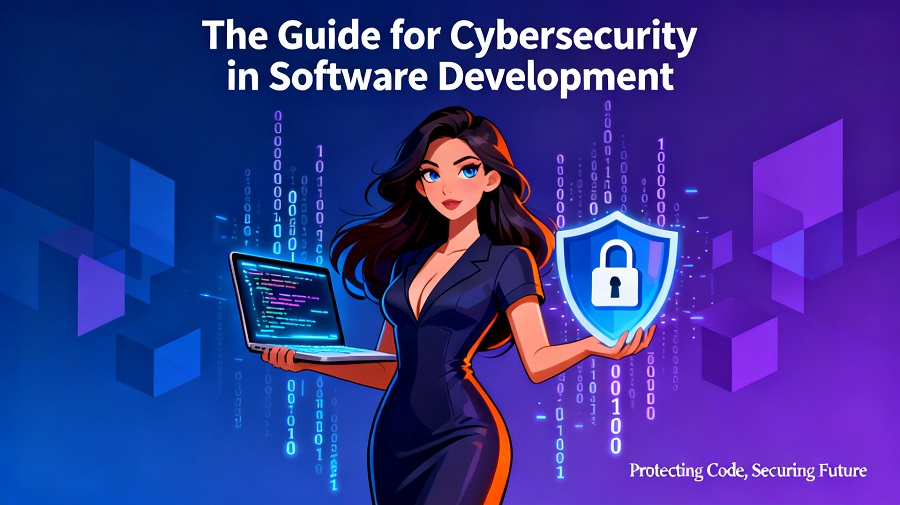
The Guide for Cybersecurity in Software Development

Cybersecurity is more than an IT topic. It’s a process that requires continuous detection and response so that a few seconds of a cyber-incident won’t ruin the business’s reputation. This indicates that the importance of cybersecurity cannot be ignored, and if overlooked, it results in grave consequences for businesses.
With the escalation of cyberattacks, data breaches, financial losses, reputation damage, operational disruptions, and unexpected regulatory consequences are common. With so many cyber threats, taking the best cybersecurity practices will help businesses prevent fraud and stay secure. The practices ensure sensitive data remains protected, cyberattacks are proactively identified, software integrity is preserved, and user trust is maintained.
This blog will walk you through common cyber threats that appear during software development and the best practices to fix them ahead of time. Let’s explore!
Common cyber threats in software development
—————————–
Awareness of cyber threats in software development is essential for businesses so that they can create effective defensive mechanisms to keep the software protected. They are-
– Malware attacks
– Distributed denial of service attacks
– Phishing attacks
– Social engineering
– Insider threats
– Weak authentication and password policies
– Unpatched software
– Lack of employee awareness
10 best cybersecurity practices to protect software
—————————–
With an understanding of various types of cybersecurity threats, businesses can take care of a couple of things and consider these practices to keep the software protected.
– Secure coding practices
Secure software development is followed by the adoption of secure coding practices such as input validation, authorization mechanisms, error handling, and data encryption. By following secure coding guidelines and standards, security flaws in the code are minimized. Also, secure coding practices prevent attackers from exploiting the system with potential vulnerabilities.
– Scan vulnerability continuously
Another approach to address potential security weaknesses is identifying and addressing them with continuous vulnerability scanning. Automated tools are employed that scan the code, search for weaknesses in encryption protocols, identify vulnerabilities in authentication mechanisms, and others. It minimizes the risk of cyberattacks.
– Regular updates and patch management
Rapidly evolving cyber threats require businesses to be vigilant and ensure software is updated and security patches applied. Keeping software up to date ensures software remains resilient during emerging threats and protects against vulnerabilities. During software development, using up-to-date libraries and frameworks lowers the possibility of vulnerability attacks.
– Use static code analysis tools.
Instead of using manual tools for code quality checking, using static code analysis tools helps with auto-searching for issues related to source code security. Implementing static code analysis tools helps identify XSS vulnerabilities, injection vulnerabilities, and buffer overflows so that they are fixed before the code is released.
– ISO 27001 certification
The well-known security standard for information security management systems (ISMS) is ISO 27001. Businesses looking to enforce strong security mechanisms prefer obtaining ISO 27001 accreditation. Businesses should design a framework following ISO 27001 guidelines to control security risks and keep the data safe.
– Real-time monitoring
No method can beat the active monitoring of software in real-time for security flaws and threats. Continuous tracking ensures there’s someone who is actively keeping an eye on every questionable activity in performance indicators, network traffic, and system logs. This way, ongoing monitoring reduces the impact of breaches or even prevents them ahead of time.
– Remain agile
Agile methodology is known for making MVP software development responsive and flexible, as it allows the development team to quickly accommodate changes during development and shift according to security requirements. Penetration testing, routine code reviews, and security assessments are the proactive security measures that must be taken before fraudsters take undue advantage of them.
Conclusion
In the world of ever-changing cyberattacks, cybersecurity plays a critical role in software development. The awareness of cyber threats helps avoid the consequences of ignoring cyber security measures, and when the best cyber security practices are considered during software development, the results are stupendous. Businesses should consider cybersecurity practices to improve the software robustness and build the integrity of the software solution.
Are you planning to build software that’s cyber threat-proof? Connect with a leading software development company or cybersecurity experts to guide you on how to build scalable software that’s 100% secure. Leverage the expertise and experience of cyber experts to safeguard the business software project against vulnerabilities. All the best!