The Silent ROI of CRM: How to Automate Customer Retention Without Losing the Human Touch

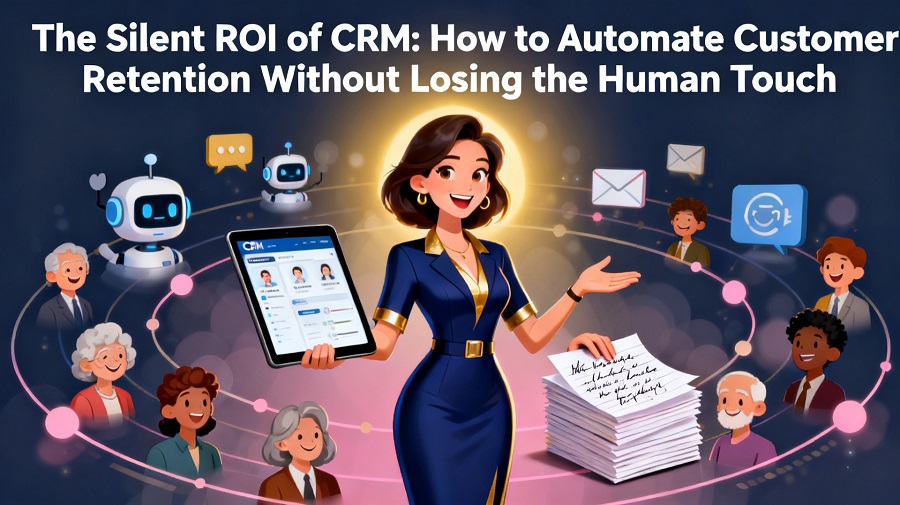
Customer retention has quietly become one of the most valuable and sustainable growth drivers for modern businesses, especially in an environment where customer acquisition costs continue to rise significantly. As a result, organizations are increasingly shifting their focus toward CRM-driven retention strategies that are powered by automation and Artificial Intelligence to improve long-term customer engagement.
However, this transition requires maintaining a critical balance: automation must be implemented in a way that enhances, rather than replaces, the human connection that underpins strong customer relationships.
It is within this context that the concept of “silent ROI” emerges referring to measurable returns generated by CRM systems that operate seamlessly in the background, improving efficiency and customer experience without creating visible disruption.
Why CRM Automation Is Reshaping Customer Retention
——————————-
Recent developments in CRM technology highlight a clear shift toward intelligent, automated ecosystems.
According to a 2025 announcement, Done.ai Group introduced an AI-powered CRM as the first module of its Done OS platform, specifically designed to streamline workflows and enhance customer engagement in a growing Nordic market.
The system integrates automation with operational processes, enabling businesses to manage customer relationships more efficiently while reducing manual intervention.
Key Takeaways
1. CRM platforms are evolving into AI-driven ecosystems
Contemporary Customer Relationship Management (CRM) platforms have undergone a significant transformation from traditional data repositories to AI-enabled ecosystems that integrate multiple business functions. This evolution is characterized by the incorporation of Artificial Intelligence to facilitate real-time data analysis, predictive modeling, and automated decision-making.
2. Automation is being embedded directly into business workflows
The integration of automation within CRM systems has progressed from peripheral functionality to a foundational component embedded within core business workflows. This shift is evident in solutions such as AGCRM v2.0, launched in 2025, which consolidates multiple operational processes into a unified platform to streamline service management. By embedding automation into workflows, organizations can standardize routine processes, reduce operational inefficiencies, and enhance consistency in service delivery. This structural integration minimizes reliance on manual intervention and supports scalable operations across diverse business environments.
3. Customer engagement is becoming more proactive than reactive
The paradigm of customer engagement is shifting from reactive response mechanisms to proactive, data-driven strategies. AI-enabled CRM systems facilitate this transition by leveraging historical and real-time data to predict customer needs and trigger pre-emptive actions. This approach allows organizations to initiate interactions such as service reminders, personalized communications, and issue prevention measures before customer dissatisfaction arises. As demonstrated by recent CRM innovations, proactive engagement enhances customer experience by reducing friction and anticipating expectations
What “Silent ROI” Really Means in CRM
——————————-
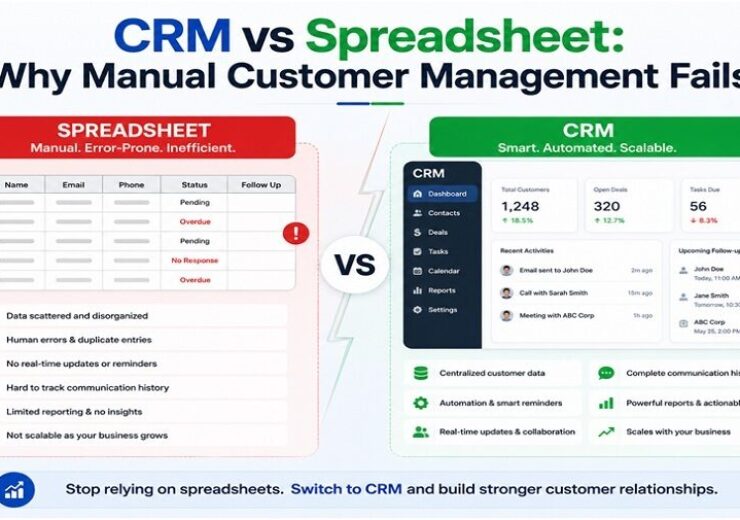
Silent ROI refers to incremental improvements that occur without visibly altering the customer experience. Rather than producing immediate or noticeable changes, it enhances service delivery in subtle ways that collectively generate long-term value. These gains are often embedded within CRM systems and operate in the background, ensuring efficiency while maintaining a seamless customer journey.
- Faster response times
AI-powered CRM systems enable instant acknowledgment of customer queries and automate initial responses or task routing. This reduces waiting time and ensures that customer requests are addressed promptly. As a result, customers perceive the service as efficient and responsive, even though much of the process is automated. - Improved service consistency
Automation standardizes workflows and communication processes, ensuring that all customers receive uniform and reliable service. Whether it is follow-ups, updates, or notifications, CRM systems eliminate variability caused by human limitations, thereby strengthening trust and brand reliability. - Reduced churn through timely engagement
CRM systems equipped with Artificial Intelligence can identify patterns in customer behaviour and trigger timely interactions, such as reminders or personalized messages. These proactive engagements help address potential issues before they escalate, reducing the likelihood of customer disengagement.
For example, AI-powered CRM platforms can automatically initiate follow-ups, send reminders, and provide service updates without requiring manual intervention. These processes occur seamlessly in the background, ensuring that customers receive timely and relevant communication.
This creates value that customers experience as seamless service, not automation.
Automation Without Losing the Human Touch
——————————-
A common misconception is that automation reduces personalization. In reality, modern CRM systems are designed to enhance it.
In 2025, ITK Solutions launched AGCRM v2.0, a unified CRM platform for multi-brand automotive workshops. The platform integrates multiple service operations into a single system, improving coordination and customer communication.
By centralizing data, businesses can:
- Understand customer history instantly
Centralized CRM systems provide immediate access to past interactions, preferences, and service records. This enables faster decision-making and more informed customer engagement. - Provide context-aware responses
With complete customer data available, responses can be tailored based on previous interactions and specific needs. This ensures communication remains relevant and personalized. - Deliver consistent service across touchpoints
Unified systems standardize processes across channels such as email, calls, and support platforms. This ensures customers receive the same quality of service regardless of how they interact.
How Human Touch Is Preserved
——————————-
| Automation Feature | Human Impact |
| Automated reminders | Timely, helpful communication |
| Unified customer data | Personalized interactions |
| Workflow automation | Faster response from real agents |
What AI Enables in CRM
——————————-
- Predictive engagement based on behaviour
Artificial Intelligence enables CRM systems to analyse past customer behaviour and predict future actions. This allows businesses to initiate timely and relevant interactions before issues arise, improving retention and customer satisfaction. Additionally, predictive models help identify early signs of disengagement, enabling organizations to intervene proactively with personalized communication and targeted solutions. This not only strengthens customer relationships but also enhances long-term loyalty. - Automated task management
AI automates routine CRM tasks such as follow-ups, scheduling, and data updates, ensuring consistency and reducing manual effort. This improves efficiency while allowing employees to focus on more complex responsibilities. Furthermore, automation minimizes human error and ensures that critical tasks are executed without delay, thereby maintaining workflow continuity and operational accuracy. As a result, organizations can scale their operations without proportionally increasing resources. - Real-time insights into customer interactions
AI-driven CRM systems provide immediate insights by continuously analysing customer data. This helps organizations respond quickly to customer needs and adapt strategies in real time. In addition, real-time visibility into customer behaviour enables more informed decision-making and allows businesses to refine engagement strategies dynamically. This ensures that interactions remain relevant, timely, and aligned with customer expectations.
The Ethics of Transparency and the “Authenticity Gap”
——————————-
As automation becomes more sophisticated, businesses face a new challenge: the “Authenticity Gap.” This occurs when a customer feels “tricked” by a bot that is pretending to be human. To maintain a true human touch, organizations must navigate the ethical implementation of their CRM tools with total transparency.
The latest industry standards in 2025-2026 suggest that Transparency is a Trust Multiplier. When implementing automated response systems, the goal should not be to replace the human identity, but to “bridge the gap” until a human can take over.
- Identity Clarity: Clearly labeling AI-driven interactions (e.g., “I’m the Done.ai Assistant, let me get a head start on your request while I find a specialist”) actually increases customer satisfaction. It manages expectations regarding response complexity while still providing the “Silent ROI” of speed.
- Context Handover: The most critical “Human Touch” moment is the handoff. A unified CRM ensures that when a human agent enters the conversation, they aren’t asking the customer to repeat themselves. They have the full transcript of the automated interaction, the customer’s history, and the predicted solution ready to go.
- The Empathy Buffer: Automation should be used to handle “Information Tasks,” while humans are reserved for “Empathy Tasks.” By automating the data retrieval and scheduling aspects of a service call (as seen in the AGCRM v2.0 digital job cards), the human agent is freed from the stress of administrative work. This allows them to bring more patience, creativity, and genuine empathy to the conversation qualities that AI cannot yet replicate.
Balancing Efficiency and Empathy
——————————-
The primary challenge in CRM implementation does not lie in the adoption of automation itself, but in the manner in which it is strategically designed and executed. An effective CRM system must achieve a balance between operational efficiency and human-centric engagement to ensure that technological advancements enhance, rather than diminish, the quality of customer relationships.
A well-structured CRM framework is characterized by its ability to automate repetitive and routine tasks, thereby reducing operational burden and minimizing the likelihood of human error. By handling activities such as follow-ups, notifications, and data updates, the system allows human agents to redirect their focus toward more complex and value-driven interactions that require critical thinking and emotional intelligence. Furthermore, standardized workflows embedded within the CRM ensure consistency in communication and service delivery across multiple customer touchpoints, which is essential for maintaining reliability and trust.
Best Practices
From an implementation perspective, organizations should adopt a structured approach to balancing automation with empathy. Automation should primarily be utilized for routine and predictable communication processes, such as reminders and status updates, where efficiency and timeliness are critical. In contrast, human interaction should be reserved for complex, sensitive, or high-impact situations that require personalized attention and nuanced understanding.
Additionally, maintaining transparency in automated interactions is essential. Customers should be aware when they are engaging with automated systems, as this clarity helps manage expectations and preserves trust in the communication process. Transparent automation also reinforces the perception of authenticity, even within system-driven interactions.
Next Steps: How to Apply This Strategy
——————————-
- Start with Unified Data
Establish a centralized CRM system where all customer interactions are consistently recorded and updated. This unified view enhances data accuracy, improves coordination across teams, and enables more informed, insight-driven decision-making. - Automate Repetitive Tasks
Implement automation for routine processes such as follow-ups, reminders, and scheduling to ensure timely and consistent execution. This reduces manual workload while improving operational efficiency and service reliability. - Integrate AI Gradually
Adopt Artificial Intelligence in a phased manner, beginning with basic predictive insights and scaling over time. This approach allows organizations to adapt effectively without disrupting existing workflows or overwhelming teams. - Prioritize Human Interaction
Leverage automation to support human efforts rather than replace them, particularly in complex or sensitive customer scenarios. Maintaining human involvement strengthens trust, empathy, and long-term relationship quality. - Measure Silent ROI
Continuously evaluate performance metrics such as response time, customer retention, and service efficiency. Tracking these indicators helps quantify the underlying value generated through CRM automation and guides further optimization.
Final Thoughts
CRM automation is no longer about replacing human effort. It is about enhancing it intelligently.
The latest innovations in 2025 show a clear direction:
- AI-powered CRM systems are becoming standard
Organizations are increasingly adopting AI-enabled CRM solutions to enhance decision-making and streamline customer management. This shift reflects the growing reliance on intelligent systems for scalable and efficient operations. - Unified platforms are improving operational clarity
Integrated CRM platforms consolidate multiple functions into a single system, reducing data silos and improving coordination. This leads to clearer workflows and more consistent service delivery across teams. - Automation is driving retention quietly but effectively
Automated processes enable timely engagement and consistent communication without disrupting the customer experience. As a result, businesses improve retention through seamless and proactive interactions.
The businesses that succeed will be those that understand one principle:
Technology should make customer relationships feel more human, not less.