
How Cross-Platform Apps Reduce Development Costs

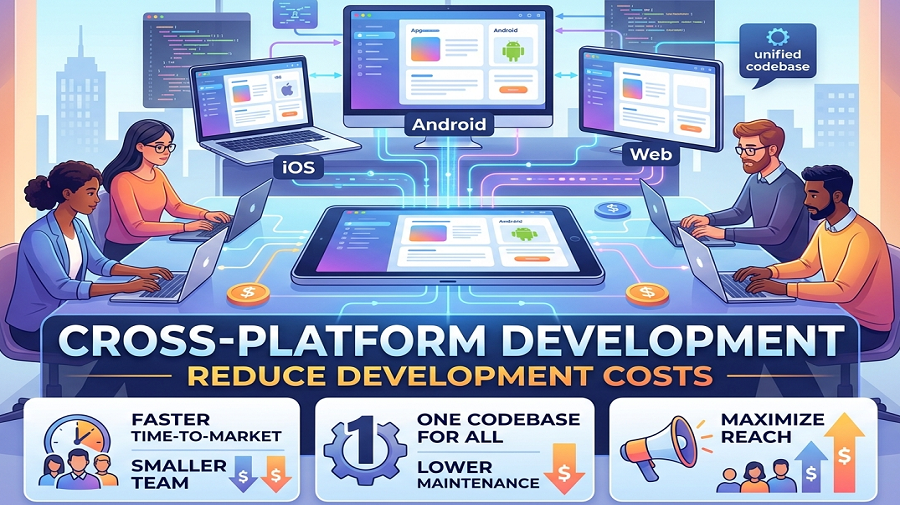
Making a mobile application is not just “ build and done”, it often means a lot of money has to be set aside, development time, team capacity, testing efforts, ongoing maintenance, and also the next round of updates. Before launching something, businesses have to think it through pretty carefully. And then, if the goal is to reach both iOS and Android users, the usual path can become kind of costly, because each platform tends to demand a slightly different solution, or at least a separate workflow.
That’s where cross platform app development steps in. Rather than creating two fully separate applications, a company can put effort into one shared system that runs across multiple platforms. In practice, this can lower the development spend quite a bit, while still giving companies the option to connect with a broader audience.
Also, partnering with an experienced cross platform app services provider can really help, because they tend to guide the project toward a better balance between cost efficiency, smooth performance, and scalability, not only “getting it working”.
Let’s dig into how cross-platform apps allow businesses to tune their development budgets, without losing momentum.
What Are Cross-Platform Apps?
————————–
Cross-platform applications are applications developed for mobile devices which can work on more than one operating system using the same code base. In place of building two different applications for iOS and Android, developers build one application which is able to work on both the platforms.
Traditional approach in developing an application typically includes:
- Developers building different apps on different iOS and Android platforms
- Different codebases for iOS and Android
- Different testing and maintenance
With cross-platform application frameworks like Flutter, React Native and .NET MAUI, developers can leverage the same codebase on different platforms.
One Codebase Means Lower Development Costs
————————–
Code reuse is one of the biggest financial benefits when creating cross-platform applications.
When developing natively, businesses have to invest in two development processes at once. Even if the applications have the same functionality, each of them will be created separately.
With cross-platform app development, all codebases are reused, allowing developers to develop core functionality once and adjust what needs to be done specifically for certain platforms.
It allows businesses to save on:
- Development time
- Costs of engineering
- Project complexity
- Required resources
Startups and other businesses trying out something new get an opportunity to create their mobile application on several platforms with no investment in two different products.
Faster Development Reduces Time-to-Market Costs
————————–
The rate of development directly impacts the costs associated with the development process. The longer the development process is, the more resources are needed, and the later the time when a business is able to receive user feedback or earn money.
Cross-platform development makes the development process easier due to the fact that developers work only on one application rather than two – iOS and Android.
With fast development, companies are able to:
- Roll out their product faster
- Get their concepts validated quicker
- Receive feedback from customers faster
- Implement improvements quickly
For instance, a company launching a marketplace app is able to validate its idea through both platforms without having to wait for the development of two different apps.
Smaller Development Teams
————————–
Building native apps usually means you end up with separate specialists for each platform, like you know iOS, Android, and maybe even more people to help line everything up. A company might require iOS developers, Android developers, and also extra hands to coordinate both teams, otherwise it just gets messy.
Cross platform development helps reduce that kind of complexity because the developers can work inside one shared technology stack. You still can’t fully remove the requirement for skilled professionals, but it does let businesses put their resources to use in a more efficient way. Instead of juggling several development streams at once, companies can redirect the budget toward upgrading product functionality , and also the overall user experience , which tends to matter a lot.
For smaller orgs this style can also make mobile development feel more practical to manage financially.
Reduced Testing and Quality Assurance Expenses
————————–
Testing is yet another field where the use of cross-platform applications can save on costs.
Native applications should be tested separately for iOS and Android, while testers should ensure that the functionality, compatibility, and performance of the application are checked.
In case of cross-platform development, a lot of the application code will remain the same, thus reducing testing tasks for the team.
QA experts should pay attention to:
- Common functionality
- Specific features of platforms
- Performance problems
Even though cross-platform applications require testing as well, it is more efficient than testing two separate applications.
Lower Maintenance and Update Costs
————————–
Application development is an ongoing process that involves debugging, enhancing security, and adding more functionalities.
Two native applications require separate implementation of any changes and updates, which adds up to expenses and delays the improvement process.
Cross-platform applications make it easier to maintain apps due to the possibility of making changes to the common code once.
The benefits for businesses include:
- Quick bug fixing
- Easy adding of new features
- Lower maintenance expenses
- Predictable costs in the long run
Those who plan further development of their products will see a tangible difference.
Cross-Platform Apps Are Effective for MVP Development
————————–
A lot of companies use mobile apps to sort of try new ideas out. But, putting real money into two separate native apps before they even confirm whether people actually want the product can add extra risks, kinda needless ones.
Cross platform development works as a solid route for making a minimum viable product, or MVP for short. Teams can push out a working application, then watch what users say, collect opinions, and finally decide which parts are worth more attention and spending.
When Cross-Platform Development Works Best
————————–
Cross platform applications are rather suited for lots of business situations, say like:
Business Applications
Internal tools and employee platforms really can use that faster development, and also the easier maintenance part, plus workflow applications in general. It tends to help when things are built quicker, but still staying manageable in the long run, kinda.
Customer-Facing Apps
Platforms like booking systems, market places, and those service apps can really get solid outcomes using cross platform technologies. Sometimes it feels like you just use the same underlying tools and suddenly the results show up.
Startups and MVPs
Companies that need to quickly validate an idea can lower the first investment a bit, and also reach more users in the process.
Apps With Standard Functionality
Apps that include the usual stuff like user profiles, payments, messaging ,and content management are often pretty decent candidates for cross platform development. You know, the kind of app where those features show up, it tends to make sense to go with it.
When Native Development May Be a Better Choice
————————–
Cross-platform development is not always appropriate for all projects. Certain applications demand native development since they rely on the capabilities of the device or need top performance.
Examples of products that might benefit from native development include:
- Complex video games
- Highly performing graphic applications
- Applications with deep integration with hardware
- Applications with highly platform-specific needs
It all depends on the product needs, not the development budget.
How to Reduce Mobile App Development Costs
————————–
Technology selection is only one thing that affects the total project expenses, though. Businesses also need to kind of follow a more strategic development approach, not just pick tools. It’s like a blend, even if the tech decision looks central at first, the bigger plan still matters.
Define Requirements Clearly
A detailed project scope helps avoid a bunch of unnecessary features and really expensive changes during development, like you know, later on.
Start With Essential Features
By launching with core functionality, companies can sorta validate their ideas first before putting more advanced capabilities into the mix. It feels like, you check if its actually a fit, and only then you spend more.
Choose Scalable Architecture
A good application structure, kind of makes later improvements easier, and also less expensive, like you know without so much fuss.
Work With Experienced Specialists
An experienced development crew can help pick the proper technology approach, and somehow dodge those expensive technical decisions that come back later.
Final Thoughts
Cross-platform apps help companies cut development costs because the whole process can be more streamlined , plus it tends to reduce maintenance work , and teams can push the same kind of product to several platforms with less people.
With a common codebase, quicker iteration cycles, and updates that are simpler to manage, cross-platform solutions become especially useful for startups and for businesses trying to tune up their mobile approach.
Still, the best direction really depends on what the project wants to achieve, the technical constraints, and where they plan to be later. If a company picks the development path that fits , it can end up with mobile apps that actually bring benefit while costs stay kind of in check.